

PINKBIKE FIELD TEST
Ibis HD6
Words by Matt Beer; photography by Tom Richards
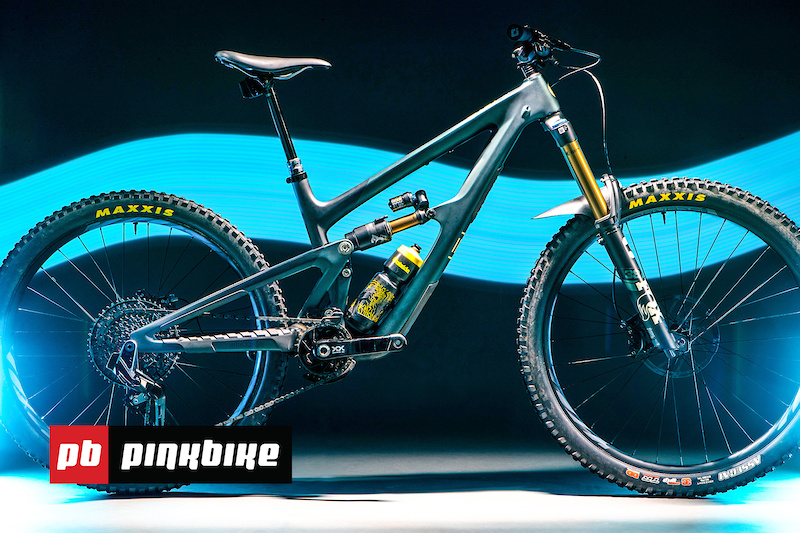
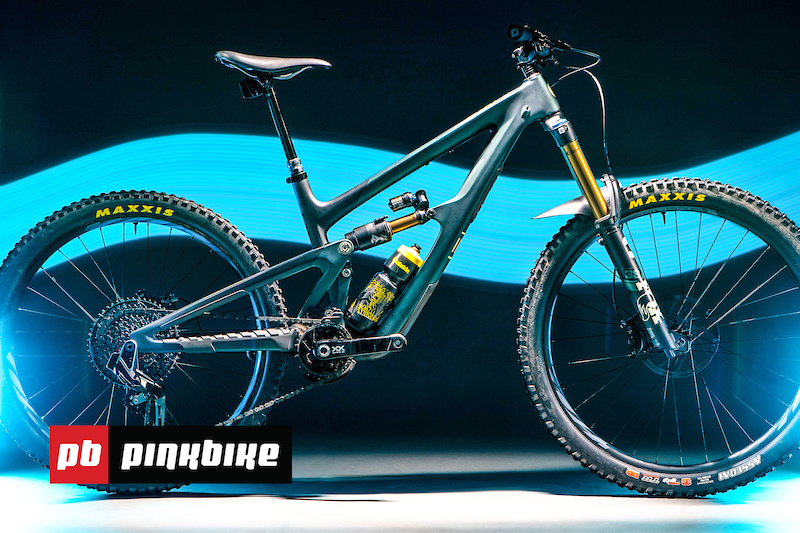
When Ibis dropped the all-new HD6, it slotted into their lineup as the brand’s most aggressive enduro bike to date. That didn’t come as a total surprise because carbon prototype sightings appeared in early 2023. Previously, their enduro racers had been modifying the front and rear travel of the popular Ripmo model, but still left more to be desired.
The all-new HD6 is a highly capable race bike that is light and snappy, with 165mm of travel out back. Ibis hasn’t deviated from the DW-Link suspension, but most noticeably, the tube shapes are rather straight-cut and less swoopy than in the past. Space inside the front triangle allowed for water bottle fitment and top tube accessory storage. Overall, it’s a specific bike with no geometry adjustments and runs exclusively on mixed wheels.
Ibis HD6 Details
• Carbon frame
• Travel: 165mm / 180mm fork
• Mixed wheels
• DW-Link suspension
• 64° head angle
• 76.5° seat angle
• Reach: 430, 454, 480 (tested), 508, 541mm
• Chainstay: 435mm
• Sizes: 1, 2, 3, 4,5
• Weight: 15.1 kg / 33.4 lb
• Price: $11,199 USD
• More info: ibisbicycles.com
That all sounds grand, except taller riders may find some shortcomings in terms of geometry. Given that the fork travel runs long at 180mm, Ibis has chosen a short 95mm headtube on the size 3 frame. Compared to the Nukeproof Giga 297, which uses a fork of equal length, the stubby head tube is 15mm shorter and may raise eyebrows for some riders who appreciate a taller stack height.
Then there are the chainstays to consider – the 435mm length remains the same on all sizes, which we’ll discuss in both climbing and descending.
The HD6 a stunning bike in terms of appearance, but it’s also pricey, at least for the version we tested. Unlike the Ripmo, there’s no aluminum frame options here. Our top-of-the-line build kit with Fox Factory suspension, house-branded carbon bars and 35mm rims, plus the latest electronic shifting and dropper post from SRAM totals $11,199 USD.
All of that sums up to a mass of 15.1 kg (33.4 lb), nearly 3 kg lighter than the heaviest bike on test, the Nicolai Nucleon 16.
Climbing
Out of the gate, the HD6 is quick on its feet. The DW-link suspension offers a solid platform to stand up and put the power down without giving up much in terms of climbing traction. The 76.5-degree seat tube angle isn’t the steepest on test, but testers found it to be it to be more comfortable for pedaling on flatter terrain compared to some of the other bikes with what felt like nearly vertical seat tube angles. Out of the eight bikes we had in this round of testing, the HD6 ranks near the top when it comes to how easy it is to climb. Its low weight certainly doesn’t hurt, but the blend of grip and support deserves credit too.
Our size 3 bike was able to clamber up tricky climbs without much fuss, but the balance of the two larger sizes may not be as ideal – the size 5 has a whopping 541mm reach, still with those compact 435mm chainstays. It is good to see that the seat angle does steepen on the larger bikes, which is meant to help ensure that riders don’t end up with their weight too far over the rear wheel.
Descending
Why do we keep going on about why the HD6 being a superb enduro race bike? In the right hands, it can be an absolute weapon on the descents. In a straight line, the monstrous 180mm fork can eat heavy impacts, making you feel invincible at times. However, depending on how you set up the fork, that can cause an imbalance with the 165mm of travel out back. Compared to a typical 170mm fork, it yields more sag and a steeper head tube angle, therefore faster steering. When you get into steep, chunky trails, found in Whistler’s Garbanzo Zone, the front end height can feel extra low as the fork moves into its plentiful travel. Unlike the similarly aligned Commencal Meta SX V5, it’s not as secure feeling in steep terrain or quite as forgiving in terms of stiffness.
Why the long fork then? Simply put, more travel means increased comfort and grip over the course of an enduro race weekend.
At the trailing end, the HD6’s DW-Link suspension handles impacts of all sizes effectively, but most importantly, with consistency. No, it doesn’t have that bump-erasing quality of the high-pivot Slash, nor does it have the squishy comfort of the Nukeproof Giga, but it allows you to focus less on what “might happen” at the rear wheel, keeping it predictable across various trail types.
When the race mode is engaged, you can attack just about everything you’d find in a bike park. There’s an excellent pairing of stiffness and forgiveness provided by the frame flex and suspension too, at least for expert level riders. On the flip-side, for those that don’t have Enduro World Cup ambitions, pedalling the long-travel HD6 around less taxing trails wouldn’t be a total burden either, making it suitable choice for those that prefer to be over-equipped in terms of travel.
Technical Report
Ibis Handlebars: Handlebars are a personal preference, so why not put something middle of the road on there and let the rider pick their own if they have an odd favorite. These 31.8mm carbon bars had a ton of backsweep, yet state a 9-degree angle. They’re on the softer side for flex and make sense for survivng all-day enduro descents. One interesting feature which I haven’t seen on any other carbon bar is the integrated alloy ends that thread in to add or subtract length.
Ibis Carbon Rims: Another unique component carrying the Ibis name are the extra-wide, 35mm carbon rims. Those give the tires a more square profile, which can help to engage the shoulder knobs earlier and improve tire stability at lower pressures. Plus, none of us had any complaints about them being overly stiff. A minor issue to note was that the spokes lost tension sooner than expected and require finagling to hold straight as they’re tightened.
SRAM Code RSC brakes: One might consider Code RSCs the bread and butter of braking. They’re linear in power, fairly reliable and spare parts are readily available. However, we wished that the HD6 came with the thicker HS2 rotors which dissipate heat faster.