

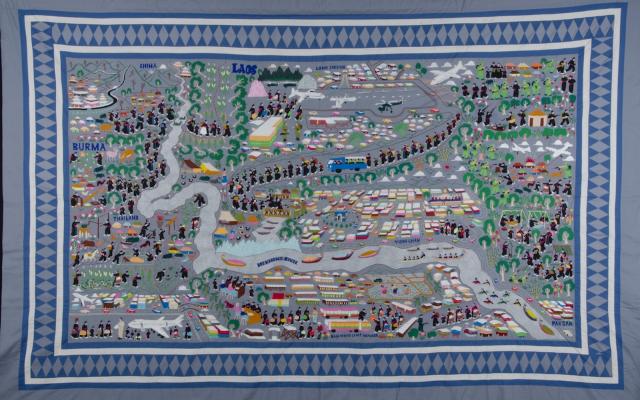
The museum emphasizes that no one definition encompasses folk art, but guidelines for the collection describe folk art as “of, by, and for the people; all people, inclusive of class, status, culture, community, ethnicity, gender, and religion.”
Folk art is humanity’s visual storytelling. And the stories oftentimes are subversive, encoded tales conveyed during trials or about tribulations.
“In our tradition, folk art is not just a lone voice,” Villela explains. “There are a number of people making these objects, often with techniques passed down from master to apprentice, elder to younger, as with Navajo weavings or Native American pottery. In communities with these traditions, it was a social opportunity to get together and discuss current events and things in people’s lives while making art.”
Since the museum’s inception in 1953, exhibitions have showcased social justice issues oftentimes woven into, painted onto or otherwise part of folk arts. A former art history professor, Villela highlighted the museum’s status in the International Coalition of Sites of Conscience.
“Most [Sites of Conscience] are Holocaust museums or museums of memory that commemorate traumatic events,” Villela said. “Some commemorate incidents or years-long histories of brutal dictatorships murdering people.”
The folk art museum’s Gallery of Conscience has presented numerous exhibitions that spotlighted folk art created in response to oppression of women around the world, the scourge of AIDS, injustices associated with immigration, Japanese-American internment camps, and other displacements.
Villela cited a 2007 exhibit of Peruvian folk art: “This Latin American folk art reflected on the political situation in Peru, a twenty-year civil war, The Shining Path, up to 80,000 people disappeared, killed, many indigenous,” he said.