


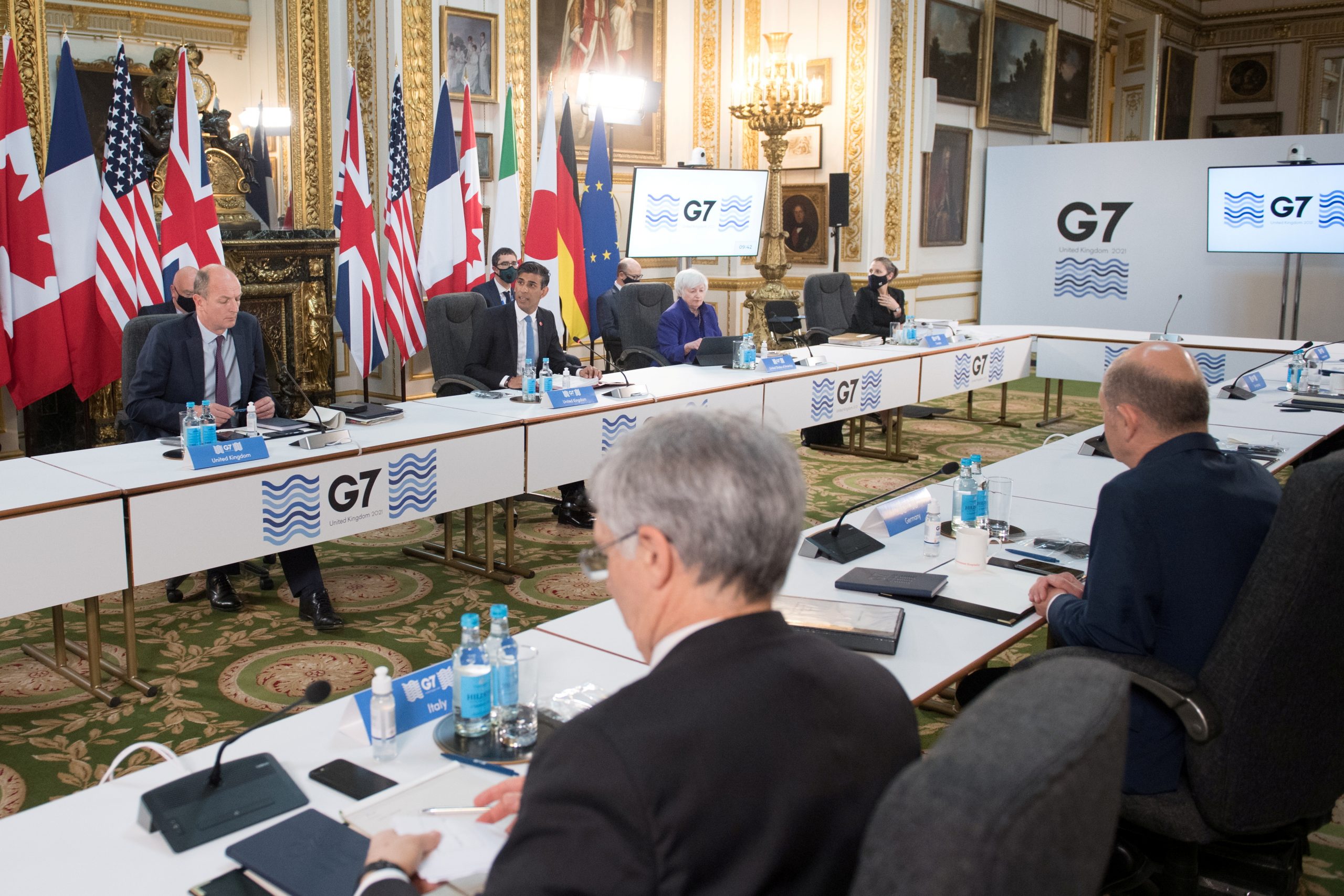
London, United Kingdom (UK)- G7 Finance Ministers from the United States (US), United Kingdom (UK), France, Germany, Italy, Canada and Japan have agreed to put a price cap on purchases of Russian oil.
The price cap which has not yet been decided is set to limit funding for Russian President, Vladimir Putin‘s military operations in Ukraine.
“We will curtail Putin’s capacity to fund his war from oil exports by banning services, such as insurance and the provision of finance, to vessels carrying Russian oil above an agreed price cap.
(This will) protect our citizens from oil price shocks next year. That is a significant step forward. It will mean that Putin can’t profiteer from excessively high oil prices and of course, protect all of us from oil price shocks next year and beyond.
Putin has to know that this strategy is not going to work. He thinks that actually using energy as a tool to get back at us will work. It’s not going to work, and actually, today’s G7 is another reminder to him why we are going to coordinate and we are going to deal with these energy price shocks collectively and will continue to help Ukraine reclaim their country,” said Nadhim Zahawi, UK’s Chancellor of the Exchequer.
However, former Russian President Dmitry Medvedev who is currently the deputy chairperson of Russia’s Security Council has warned, that Russia will halt its gas supplies to the European Union (EU) altogether should the bloc impose a price cap on Russian fossil fuel.
“It will be much like with the oil. There simply won’t be Russian gas in Europe,” said Medvedev.
In addition, energy analysts have been skeptical that it can successfully corral oil prices. The maritime insurance industry, which would be responsible for making sure that buyers and sellers were honouring the price cap, has warned that they lacked the capacity to police the transactions.
Following the start of Russia’s offensive against Ukraine in late February, gas prices have reached record highs in Europe. This, in turn, has seen overall inflation go up considerably, too.
To make matters worse, Russia has incrementally reduced gas supplies to the EU to a fraction of pre-February levels over the past few months.
Nevertheless, nations such as China and India have been buying Russian oil at heavily discounted prices, which has allowed Putin to support his economy despite global sanctions that have been imposed on its Central Bank, financial sector and military industry.
Follow Canada News Media
Get the day's top Canadian stories and our two daily 60-second news videos wherever you scroll.
X Threads Facebook Instagram LinkedIn TikTok YouTube Pinterest Reddit Substack Flipboard Newsletter RSS