

A Literary Giant in Black Canadian History
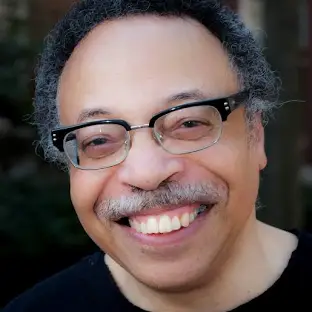
As Black History Month 2025 unfolds, the celebration of Black Canadian voices must include the extraordinary contributions of George Elliott Clarke, an acclaimed Africadian poet, playwright, and public intellectual. Clarke, born in Windsor, Nova Scotia in 1960, has spent his lifetime chronicling the struggles and triumphs of Black Canadians, particularly those of Nova Scotia and New Brunswick, whom he calls the Africadians.
“Clarke’s work is nothing short of a revolution in Canadian literature,” says Dr. Afua Cooper, historian and author of The Hanging of Angélique. “He forces us to look at the Black Canadian experience with fresh eyes, through the lens of history, poetry, and resistance.”
With a career spanning over four decades, Clarke has garnered numerous accolades, including the Governor-General’s Award for Poetry, the Dr. Martin Luther King Jr. Achievement Award, and the Pierre Elliott Trudeau Fellowship Prize. He has also been appointed to the Order of Nova Scotia and the Order of Canada at the rank of Officer, a testament to his indelible impact on Canadian culture and literature.
Chronicling Africadia: A History of Struggle and Survival
Through his poetry and plays, Clarke creates a powerful narrative of Africadian history, a term he coined to describe the Black Canadian communities of Nova Scotia and New Brunswick. His work grapples with themes of racism, segregation, forced relocation, and identity, reflecting the lived experiences of generations of Black Canadians who, despite systemic discrimination, have fought for justice and belonging.
“Africadia is about reclaiming the past, honoring our ancestors, and building a future where we are no longer invisible in Canadian history,” Clarke said in an interview with CBC Arts. “My work is both a love letter to my people and a battle cry against injustice.”
His poetry collections, such as Execution Poems (2001) and Blues and Bliss: The Poetry of George Elliott Clarke (2008), weave a cultural geography that is deeply rooted in the Atlantic Canadian experience.
“Clarke’s poetry gives voice to those who have been historically silenced,” says Wayde Compton, a Black Canadian poet and essayist. “He turns pain into power, history into verse, and struggle into storytelling.”
Clarke’s Influence on Black Literature and Academia
Beyond poetry, Clarke has been a pivotal figure in academia. As the E.J. Pratt Professor of Canadian Literature at the University of Toronto, he has shaped the next generation of scholars in Canadian and African diasporic literature.
“George Elliott Clarke is a beacon for young Black writers in Canada,” says Canisia Lubrin, an award-winning poet and professor. “His work as an educator ensures that Black voices in literature continue to thrive, breaking down institutional barriers that have historically kept Black narratives on the margins.”
In 2016, Clarke was appointed Canadian Parliamentary Poet Laureate, further cementing his role as a national literary icon.
“The appointment of a Black poet to this position was historic,” says Dr. Karina Vernon, a scholar of Black Canadian literature. “It sent a clear message that Black voices belong in national conversations about culture, identity, and justice.”
The Political Power of Poetry: Confronting Racism and Discrimination
Clarke’s writing does not shy away from Canada’s history of racism and discrimination. His poetry often delves into the atrocities of slavery, segregation, and racial violence, illuminating the darker chapters of Canadian history.
“Clarke challenges the myth of Canada as a racially harmonious society,” says David Austin, author of Fear of a Black Nation: Race, Sex, and Security in Sixties Montreal. “He exposes the deep-seated racism that still exists today and demands that we reckon with it.”
One of Clarke’s most poignant themes is the forced relocation of Black communities in Nova Scotia, particularly the destruction of Africville in the 1960s. His work serves as both a remembrance and a call to action for reparative justice.
“The loss of Africville was not just about bulldozed homes; it was about erasing Black identity and community,” Clarke said during a TEDxToronto talk. “We need to honor these histories and make sure they never happen again.”
Beyond Literature: Clarke’s Impact on Black Canadian Advocacy
Clarke is not just a literary figure—he is also an activist. His work in racial justice, education, and cultural preservation has made him a respected voice in the fight for Black equity in Canada.
“We don’t just need Black poets—we need Black poets who are willing to speak truth to power,” says Desmond Cole, journalist and author of The Skin We’re In. “Clarke does that, and he does it fearlessly.”
His advocacy extends beyond the written word. Clarke has been involved in projects promoting Black Canadian literature, archival preservation, and curriculum development to ensure Black history is taught in Canadian schools.
“Our children deserve to know the full history of Canada, not just the sanitized version,” Clarke emphasized in a panel discussion at the Toronto International Festival of Authors. “That includes the stories of Black resilience, Black creativity, and Black excellence.”
Looking Ahead: The Future of Black Canadian Literature
As Clarke continues to write, teach, and advocate, his influence on Black Canadian literature and identity remains unmatched. He has opened doors for young Black poets, encouraged critical conversations about race and history, and inspired a new wave of literary activism.
“We owe George Elliott Clarke a debt of gratitude,” says Dionne Brand, former Toronto Poet Laureate. “He has fought tirelessly for Black voices to be heard, and his legacy will endure for generations.”
With Black History Month 2025 serving as an opportunity for reflection and progress, Clarke’s work reminds us of the power of literature in shaping national identity and collective memory.
“Poetry is not just about aesthetics,” Clarke once said in a lecture at Harvard University. “It’s about justice. It’s about resistance. It’s about the right to be seen and heard.”
As we honor Black history and celebrate the contributions of Black Canadians, George Elliott Clarke’s poetry, activism, and scholarship stand as a testament to the enduring fight for freedom, equity, and cultural recognition in Canada.
References
- Clarke, George Elliott. Execution Poems. Gaspereau Press, 2001.
- Clarke, George Elliott. Blues and Bliss: The Poetry of George Elliott Clarke. Wilfrid Laurier University Press, 2008.
- CBC Arts, “George Elliott Clarke on Africadia and Black Canadian Identity.”
- Interviews with Dr. Afua Cooper, Wayde Compton, Canisia Lubrin, Dr. Karina Vernon, David Austin, Desmond Cole, and Dionne Brand.
- Toronto International Festival of Authors Panel Discussion, “Black Canadian Literature: Then and Now.”
Follow Canada News Media
Get the day's top Canadian stories and our two daily 60-second news videos wherever you scroll.