

The work of respiratory therapists (RTs), and the essential care they provide to people living with chronic conditions like asthma or COPD as well as those with acute respiratory illness like influenza, is widely recognized by both the people they care for and the colleagues they work alongside. But for the general public, the specialized skills and support that RTs provide for patients who are struggling to breathe, was thrust into the spotlight largely due to the COVID-19 pandemic.
As experts in airway management, RTs provide breathing treatments and support for people with chronic and acute lung diseases but also manage airways for anyone in need of mechanical ventilation. They are a critical support within all health care environments – in hospital, long term care facilities, community settings and as part of interprofessional emergency critical care and transport teams. In the response to COVID-19, the expertise of RTs has been in high demand.
“Unless you were there, it’s hard to describe the experience of the past few years,” said Perry Komonko, an Advanced Practice RT and founding member of the Adult Patient Transport team who has been involved in the safe transport of patients requiring breathing support for more than 22 years.
“Wearing full PPE, sweat running down our backs, transferring very challenging and critically ill patients, and constantly worrying about the COVID patients whose condition could take a turn, often without any warning.”
COVID is not the first time that RTs have been asked to commit their skills to a pandemic response. RTs are highly trained to conduct respiratory tests, monitor oxygen levels and support patients in need of specialized equipment and are regularly called upon during respiratory virus outbreaks – whether influenza, SARS, H1N1, and now COVID-19 –to help people breathe.
It’s a role that does not have a “typical” day, with treatments and tasks largely determined by the care environment and patient population being supported.
“In our heads, we are constantly running through every scenario of what might lie ahead, what might happen and then what we would do, how we would react and intervene,” said Komonko. “Anticipating and reacting are key skills that RTs develop over time. Regular skill days in the simulation lab are so important to an RT’s ability to anticipate and react, while keeping up and evolving our practice.”
Komonko supports the continuous education of a number of colleagues in his role as a Clinical Services Lead, supporting RTs in practicing scenarios with conditions they may not often encounter, allowing them to refresh their training on equipment and with skills they may require when caring for a patient.
“I hope that my experience and my history can support the team and offer a voice of reason or guidance that will help them as they manage their patients,” added Komonko.
It’s this supportive environment, where experiences are shared and ongoing learning is prioritized, that has kept Todd Mortimer, an Advanced Practice RT and Clinical Services Lead with the Child Health Transport Team, energized and invested in his work as a RT for more than 33 years.
“It’s a bit more of an obscure allied health profession but it’s a fascinating field with broad opportunities to work in so many different areas, whether acute, critical care, long-term, chronic,” said Mortimer. “No matter what area you work in, however, you need to be nimble, a problem-solver, able to adapt and able to collaborate. We work with so many other members of different health professions.”
COVID-19 isn’t Mortimer’s first pandemic. In 2009, he worked on the front-lines of Manitoba’s response to H1N1, supporting the care of children admitted to the pediatric intensive care unit at HSC Winnipeg’s Children’s Hospital. His experience – and the role of respiratory therapists in “Helping Kids Breathe Easier” helped to inspire the next generation of RTs, including John Huynh.
“I became an RT approximately nine years ago after seeing a feature about the role of RTs at HSC Children’s during the H1N1 virus,” said Huynh, an RT and member of the Shared Health Inter-Facility Patient Transport Team. “RTs were obviously making a big difference for all of those kids, supporting their breathing. I investigated the role further and I’m so glad to this day that I kind of stumbled onto this profession.”
“Respiratory therapy is the perfect profession for anyone who wants to work in a career that involves close human connections and has a commitment to lifelong learning. Every single day you will make a difference and learn something new,” added Huynh.
The next generation of RTs includes new graduates like Hannah Chale, who has been on the job for only a few months since completing her education at the University of Manitoba Rady Faculty of Health Sciences.
“I finished my schooling but I have my entire life to learn about the role of RT and how we can improve the quality of care for our patients,” said Chale who works as a member of the Adult RT team at HSC. “I can’t say enough about how much I love that this profession will continue to evolve, grow my skills and change over time. The learning doesn’t stop when you finish school.”
“RTs play a critical role in the hospital and in the community helping with the treatment of respiratory conditions as well as improving the quality of life for the large population of people who suffer from breathing problems,” added Chale. “Being able to contribute your skills and knowledge and then seeing how much your work can improve someone’s outcome and quality of life is very rewarding.”
This week, as we celebrate the contributions of respiratory therapists not only this year, but every year, we invite RTs, their health care colleagues and patients from across the province to reflect upon the difference this group of professionals make every day in the lives of Manitobans. Send us your stories to [email protected] or tag @sharedhealthmb in your posts on social.
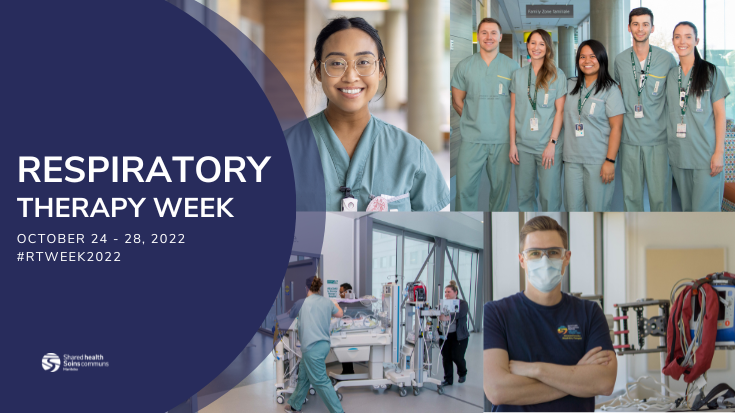
October 24 to 28 is Respiratory Therapy Week. For more information, visit Canadian Society of Respiratory Therapists website.