



/cloudfront-us-east-1.images.arcpublishing.com/tgam/VDJMQDGIXFBOHFEDTNDBOB3WZA.JPG)
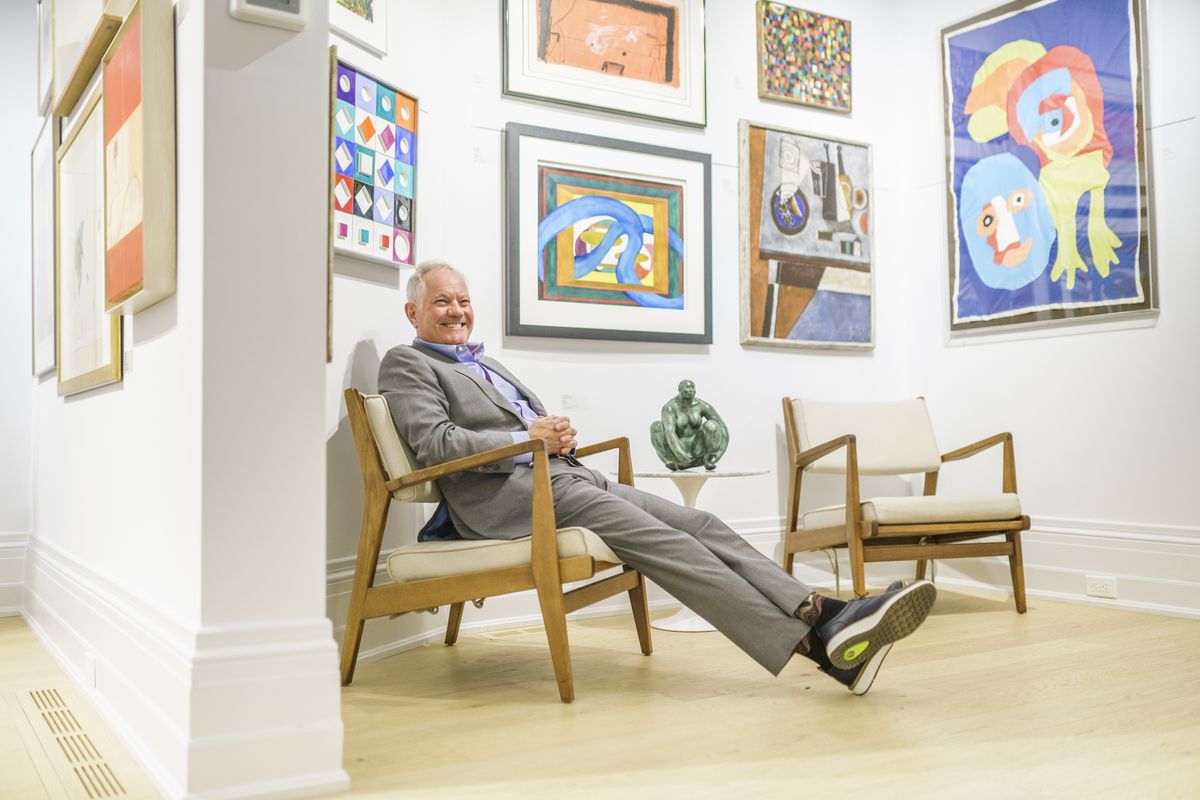
David Heffel, president of the Heffel Fine Art Auction House, at the gallery in Toronto, on Oct. 16, 2020.
Mark Blinch/The Globe and Mail
Dev Ramsumair got a call from a law firm in September on his first day as curator at the Art Gallery of Mississauga.
“The lawyers were moving to smaller offices and wanted to donate 50 paintings,” Mr. Ramsumair said. So the first task for the curator, who has worked at galleries in New York and Philadelphia and at the Royal Ontario Museum in Toronto, was cataloging and valuing the pieces, restoring some and finding space to exhibit them. The collection includes works from Ontario landscape painter George Raab and B.C. artist Pat Service.
Mr. Ramsumair and other art experts say the donation is among the first in a wave of pandemic-induced art divestments from corporate Canada.
As the global health crisis led to an increase in working from home, many companies said they plan to permanently reduce the number of employees in office towers. The transformation is playing out at banks, insurers, law firms and accounting practices that are home to some of the country’s largest art collections. Having far less real estate means fewer walls to hang paintings.
“The way we use office space is changing,” said Rob Cowley, president of Cowley Abbott Fine Art.
Corporations routinely sell significant pieces – Calgary-based TC Energy Corp. is offering an Emily Carr oil painting called Forest Glade at a Cowley Abbott auction in December, and the auctioneer predicts the work will fetch $150,000. However, Mr. Cowley said, while TC Energy has been selling pieces as part of a strategic, multiyear process to manage its collection, many companies are likely to part with long-held paintings simply because they no longer have a place to show them.
“We expect to see stunning corporate collections come to market over the next few years,” said David Heffel, president of Heffel Gallery Ltd.
He said the Vancouver-based auction house is already doing preliminary work with a handful of Canadian companies, cataloging their pieces ahead of planned moves to smaller office space. Mr. Heffel said the pandemic is creating a sense of urgency around decision-making, and “where art may have been put in storage in the past, corporate clients are now looking to monetize earlier, rather than later.”
Corporate collections are also being culled at businesses looking to cut costs and raise money during what many expect will be a prolonged economic downturn. In June, cash-strapped British Airways announced it would sell some of the most valuable works from a 1,500-piece collection, including paintings by U.K. artists such as Damien Hirst, Bridget Riley and Peter Doig, which auction house Sotheby’s says are worth a total of $1.7-million or more. While the art sale, which was prompted by an employee suggestion, will do little to fix the finances of an airline burning through $290-million each week, the move was seen as symbolically important for a company seeking government and public support.
Canadian businesses will be selling their Group of Seven, Emily Carr and Jean-Paul Riopelle works at a time when demand from private collectors is soaring, gallery owners say. Mr. Cowley said with the pandemic forcing everyone to spend more time at home, some wealthy individuals want to upgrade the art they look at each day. “We’ve been very fortunate, during COVID, to see increased engagement with many collectors,” he said.
A number of Canadian businesses have built deep collections over several decades, and sales would shake up the art market, if experience is any guide. The high water mark for a Canadian painting was set in 2016, when a Lawren Harris work called Mountain Forms sold at a Heffel auction for $11.2-million. The painting was owned by Imperial Oil Ltd., and went on the block after the company left office towers in Calgary and Toronto for a campus in the Calgary suburbs. As part of the downsizing, Imperial Oil sold more than 4,000 works.
The quality of corporate collections is all over the map, the AGM’s Mr. Ramsumair said. Some reflect the personal tastes of one buyer – typically the founder – and don’t age well. At the other extreme are professionally curated collections that rival any museum – a decade back, the AGM played host to a show of paintings owned by Royal Bank of Canada.
As a rule, “pieces that are timeless, or push boundaries, will retain their appeal,” Mr. Ramsumair said. “There will be less interest in works from artists that were simply of a time.”
Art is an “invisible” asset on most company’s balance sheets, Mr. Heffel said. Tax laws allow companies to depreciate the value of their art by 20 per cent each year. That means over time, a painting may rise in value on the market, but be marked down to nothing on a corporate balance sheet.
To date, Canadian gallery owners say, financial distress is not driving the corporate art divestments. Mr. Heffel said most companies that sell art donate some or all of the proceeds to charities.
Source:- The Globe and Mail
Follow Canada News Media
Get the day's top Canadian stories and our two daily 60-second news videos wherever you scroll.
X Threads Facebook Instagram LinkedIn TikTok YouTube Pinterest Reddit Substack Flipboard Newsletter RSS