




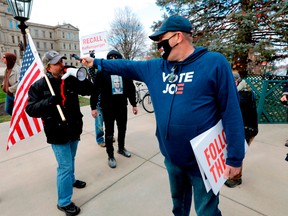
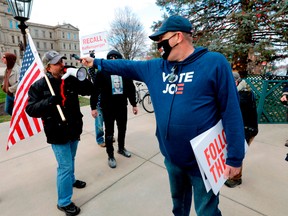
Dread is on the rise across the United States as the nation slides toward its next tempestuous election. The mood is dark. Just 23 per cent of Americans say the country is on the “right track,” according to a New York Times poll published on Aug. 1, and 65 per cent say the nation is headed in the “wrong direction.” President Joe Biden’s approval rating stands at about 40 per cent, and half of voters who align with his Democratic party don’t want him to seek re-election next year. Also on Aug. 1, twice-impeached former president Donald Trump was indicted for the third time, in this case for trying to steal the 2020 election. His national approval numbers are even lower than Biden’s.
These gaps in perception have predictably created a deep polarization among elected officials in Washington. Today, because the political debate is so polarized, there is far less ideological overlap between the most liberal elected Republicans and the most conservative Democrats, leaving politicians with less political incentive for cross-party compromise, much less collaboration.
Instead, Americans have experienced a cascading flood of both misinformation (undiluted media injections of partisan political propaganda) and disinformation (deliberately false reporting designed to sow confusion and anger among voters). Americans now consume information from media outlets, people and institutions that confirm their prejudices, while hearing few unfiltered voices that challenge their assumptions — about life in America and the world beyond.
Making matters worse, neither the tech companies that profit from this anger nor the politicians who raise campaign cash from angry citizens have incentives to limit the inevitable damage to American society.
This trend has sharply undermined American public confidence in virtually all the country’s leading institutions. In recent surveys, fewer than half of Americans say they have confidence in the nation’s police officers, doctors, religious leaders, education system, trade unions, banks, judges, technology companies or the media itself. But the effects of the bitter partisanship stoked by misinformation and disinformation in the United States aren’t limited to election results or political discussions.
America’s polarization isn’t just a problem for Americans. Allies and partners know they cannot trust the next U.S. president to follow the path created by the current chief executive.
Throughout modern U.S. history, power in Washington has oscillated between the country’s two major parties. But Republicans and Democrats once agreed that U.S. alliances were crucial to the nation’s security, that cross-border trade boosted prosperity and that the integrity of America’s most important political institutions must be protected. These certainties are gone. The differences between Biden and Trump — and between Democratic and Republican voters — over both America’s identity and its role in the world are becoming starker
One more ominous sign worth watching: a survey published in June by the University of Chicago found that 12-million Americans say they would support violence to help return Donald Trump to power, and 22-million Americans say violence would be justified if it could restore abortion rights that were sharply limited by recent Supreme Court rulings.
In short, 2024 will be a dangerous year for politics in America and for the nation’s relationships around the world. But the toxic impact of the nation’s polarized media guarantees that these problems will remain no matter who wins next November.
Follow Canada News Media
Get the day's top Canadian stories and our two daily 60-second news videos wherever you scroll.
X Threads Facebook Instagram LinkedIn TikTok YouTube Pinterest Reddit Substack Flipboard Newsletter RSS