

The German economy has navigated the crisis better than its major European peers, helped by generous government support and a strong manufacturing sector.
Germany risks severe economic consequences if it fails to contain the pandemic, according to one of the country’s leading economists.
“I believe we massively underestimate the economic risks of the second wave,” Marcel Fratzscher, president of the German Institute for Economic Research, or DIW, told journalists. “Many companies are over-indebted and have exhausted their reserves. I’m afraid we’re too optimistic about getting out of this crisis quickly.”
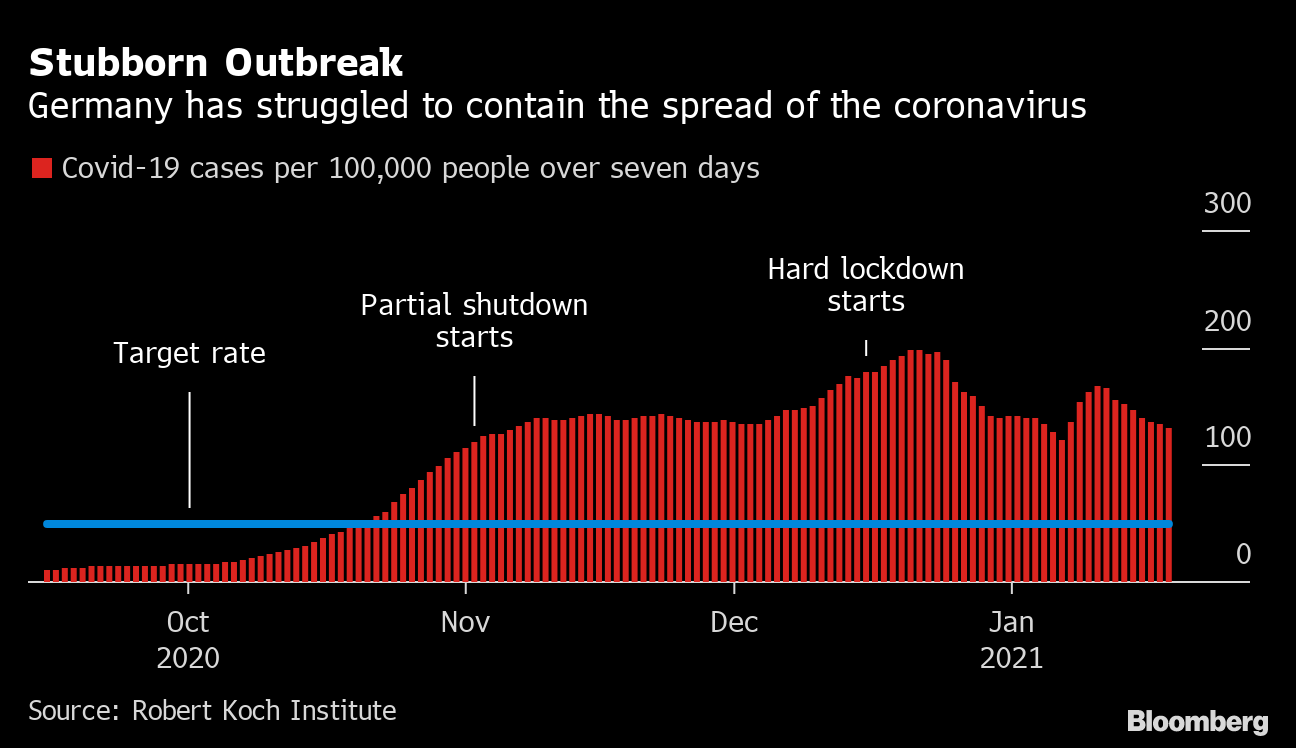
Stubborn Outbreak
Germany has struggled to contain the spread of the coronavirus
Source: Robert Koch Institute
.chart-js display: none;
Fratzscher’s warnings sharply contrast with a report published earlier on Tuesday showing investors grew more confident in Germany’s outlook at the start of the year, betting that a nascent global recovery would bolster exports.
The German economy probably avoided a contraction in the fourth quarter, thanks in part to generous government support and a strong manufacturing sector that isn’t as directly affected by virus curbs that have hit restaurants and the travel sector.
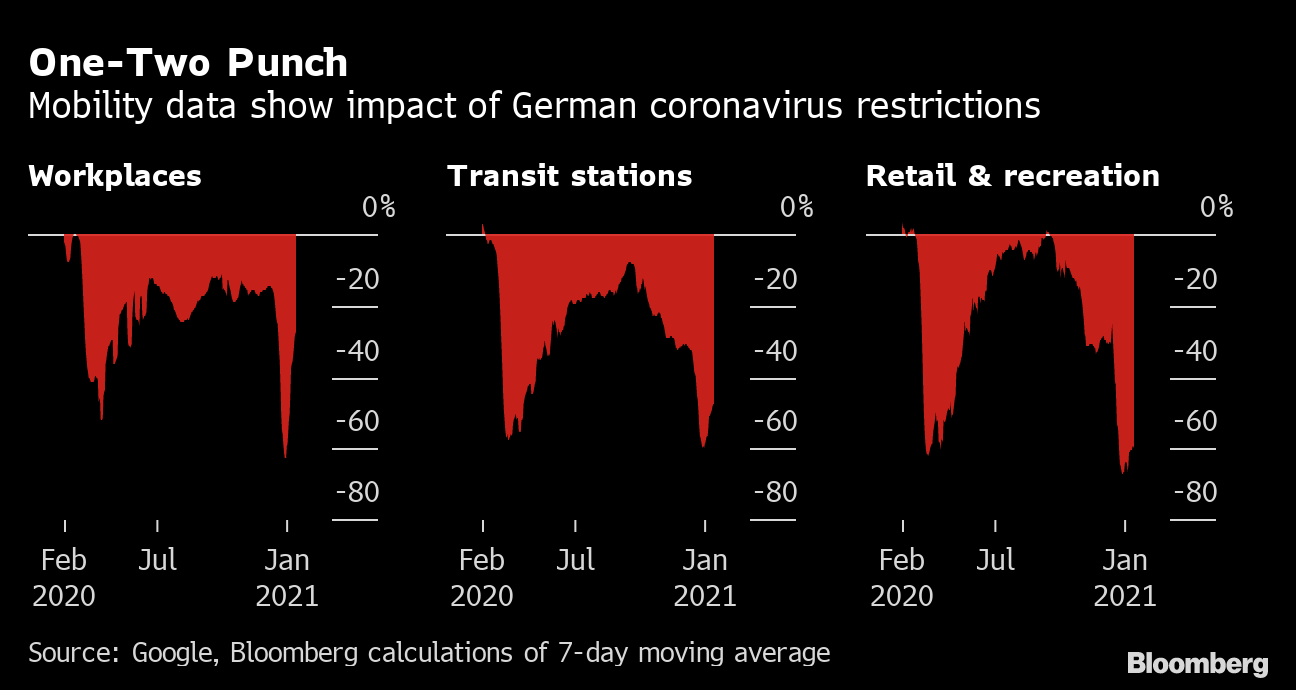
Prospects for the first quarter are dire though. Chancellor Angela Merkel and state premiers are likely to extend already tough restrictions until at least mid-February and may impose yet more stringent contact rules as well as nighttime curfews and curbs on the number of people going to the office.
One-Two Punch
Mobility data show impact of German coronavirus restrictions
Source: Google, Bloomberg calculations of 7-day moving average
.chart-js display: none;
Even if the lockdown ended at the end of January as currently planned, output in the first quarter would shrink some 2%, Fratzscher said.
The country won’t see an “economic reboot” until the third quarter at the earliest, he added — contingent on completing vaccinations and reaching herd immunity.
“Politicians must be prepared for and make people aware that if the second wave can’t be contained, the consequences will be enormous,” Fratzscher said.
The economy contracted 5% in 2020, the most since the global financial crisis, and most forecasts indicate it will take until 2022 to recover the ground lost.
— With assistance by Harumi Ichikura, and Kristian Siedenburg