

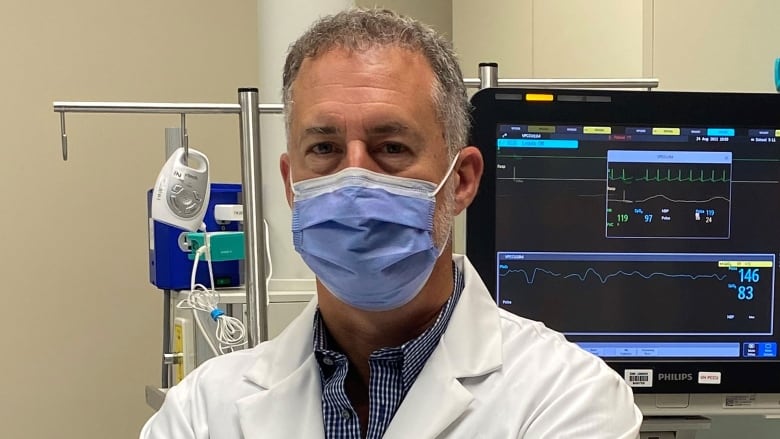
Researchers in London, Ont., have discovered the secret to diagnosing long COVID — and it’s in blood.
The team at Lawson Health Research Institute found “unique blood biomarkers” in long COVID patients and are now working to develop a first-of-its-kind blood test for wider use. The discovery could lead to new treatments and medications for long COVID patients, researchers say.
“It has a huge impact because the numbers of long COVID patients are increasing,” said Dr. Douglas Fraser, Lawson scientist and critical care physician at London Health Sciences Centre.
COVID affects about 30 to 40 per cent of people who have had a COVID-19 infection, he said. “The last estimate I saw in the US was 111,000 patients were being diagnosed daily, and that’s based on clinical grounds.”
“It’s a significant problem and a growing problem.”

Those suffering from long COVID can experience fatigue, shortness of breath, and cognitive and gastrointestinal issues. Symptoms can appear weeks or months after the initial COVID-19 infection and can affect multiple organs including the brain, heart and lungs.
New test would make diagnosis quick and easy
The study, published in the Molecular Medicine journal on Monday, looked at 140 blood samples from participants at London Health Sciences Centre and St. Joseph’s Health Care in London — some with presumed long COVID, inpatients with COVID-19 and control subjects.
Researchers focused on studying blood vessels because they are “the one part of the body that connect all the different organs,” said Fraser. They discovered long-COVID patients had 14 elevated biomarkers associated with blood vessels.
“After COVID-19, our theory is the blood vessels are quite injured and they’re trying to not only heal themselves, but they’re also reaching out and trying to find healthy tissue that’s remained after the illness,” he said.
Currently, long COVID diagnosis is typically done clinically based on symptoms. The team is now working on developing a “point-of-care” test to allow people to receive a diagnosis “very easily and very quickly.” It could be used in urgent care clinics, family doctors’ offices or off-the-shelf, said Fraser, who is also a professor at Western University.
The test would offer some great advantages, he said. “It allows you to give your patient reassurance of what’s going on. It also stops the myriad of tests that clinicians will do when someone comes in with very vague diffuse symptoms.”
[embedded content]
The research could also lead to new treatments for the illness, along with “repurposing” medications that may already be available. Currently, medications that influence blood vessel growth are available, so now research can be done to see if they will be helpful for long-COVID patients, he said.
‘The sooner the better’
The study is encouraging news for long-COVID patient Wendi Heal.

The 70-year-old said a new diagnostic test would be “monumental.”
“Early intervention is really, really important for any cognitive or brain malfunction,” she said. “The sooner you get to rehabilitation services, the better off your results will be.”
“With long COVID, that would mean that you could have the treatments that you needed earlier.”
Once a jazz singer and long-distance walker, her battle with long-COVID has changed her life. For a time, she couldn’t walk across her kitchen without huffing and puffing, she said.
She’s been suffering since being hospitalized with COVID-19 at Victoria Hospital in December 2020. “That’s one year and 10 months that I still am dealing with some issues,” Heal said.
Today, she still lives with fatigue and brain fog.
She finds herself fortunate to have support to manage her symptoms from the post-acute COVID-19 program at St. Joseph’s Health Care in London. She accessed respirology, occupational therapy, physical therapy and neurology supports, she said. For her, a diagnosis came much easier than some.
“I had the best care I’ve ever possibly could have had, and I know this sounds strange to say, but I feel lucky that I was able to be in hospital and have access to these programs from the beginning,” she said.
She knows others that haven’t been so fortunate. Without a diagnosis, supports are harder to access.
“I feel sympathy for people who have not been able to get that help,” she said.