


.JPG "'It's not a cold, it's not the flu': 4 reasons why Peterborough Public Health says COVID is still a concern – The Peterborough Examiner")
/https://www.thepeterboroughexaminer.com/content/dam/localcommunities/peterborough_this_week/news/2022/04/06/it-s-not-a-cold-it-s-not-the-flu-4-reasons-why-peterborough-public-health-says-covid-is-still-a-concern/10602517_TrentWastewaterMonitoring_(1).JPG)
Just weeks after Peterborough Public Health (PPH) made the decision to halt regular public COVID-19 updates in the community, high transmission rates and wastewater indicators helped trigger a special virtual update meeting Wednesday, April 6.
Here are four take-aways from that meeting:
IT’S NOT AS SIMPLE AS LABELLING OMICRON AS A COLD OR FLU: “I think it’s really important that people understand that COVID-19 is not a mild illness. This still is no cold. This still is no flu,” said Dr. Thomas Piggott, the PPH’s medical officer of health. “The severity is much worse and the concern, too, is with the longer-term impacts of the infection on people.” He said the impact of long COVID can be debilitating and disastrous for some. “Just this morning I was speaking with a health-care provider in our area who’s been off for a prolonged period of time and unable to provide care … they themselves had long COVID and this was somebody otherwise healthy and young, who has been significantly debilitated by this illness.”
WASTEWATER INDICATORS ARE SIGNIFYING HIGH COVID COUNTS IN AREA: Piggott said on top of significant transmission rates in the community shared through local reporting, wastewater evidence shows we have surpassed even the January peak of infection. “It hasn’t yet pushed us into ‘very high’ overall risk rating, but we are close and I’m very concerned if the trend that we’re observing continues. We have seen a worsening in several of our indicators, including deaths in the past week.” He said in Peterborough, wastewater indicators suggest the local COVID rate has surpassed the January peak of Omicron in the Peterborough wastewater surveillance that is monitored. “We’re seeing a very significant increase that has been evolving in the Lakefield sampling as well, and it also has surpassed the peak in Millbrook.”
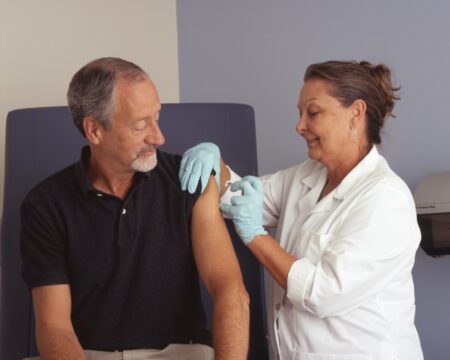
WHAT TO SAY TO THOSE CLAIMING VACCINES AND BOOSTERS AREN’T STOPPING THE SPREAD: Piggott says the vaccines, and the booster in particular, reduce the risk of spreading the virus, but the risk of severe disease goes down as well. “When we’ve looked at the data, it is helpful and protective, especially in people who are at risk of more severe disease. But in everyone, it is protective still against hospitalization, ICU admission, and death. And so, the booster dose is really critical protection. We’ve been able to track the science, which is why the recommendation for the third dose has gone out.” Certain segments of the population — those in the highest risk group — are now eligible for a fourth dose as well. “That will add some important protection for them. I am quite concerned for people that have had one or two doses, that their protection is being left behind.”
GIVEN THE CONCERN, WHY AREN’T HEALTH UNITS OVERRIDING THE LIFTING OF MANDATES: There is a precedent where some health unit regions have gone beyond provincial requirements, but there’s a lot to consider with that, Piggott said. The Act that allows for this is in place, but he said it is not the best tool because of significant challenges with the enforcement and with the inconsistency from health unit to health unit. “If not everyone is aligned with that, it is not the best tool, which is why the province did step in with provincial legislation through the Reopening Ontario Act.” But if it reaches a point, health units will step in themselves, he added. “It is something that we are looking at and we would consider, but at this stage it is not ideal, and I hope with the evolving context there would potentially be provincial consideration of the precautions that are needed in the context of mitigating the sixth wave.”