

/arc-anglerfish-tgam-prod-tgam.s3.amazonaws.com/public/236OLXR2OVGMRCQ2LLLCQFGAZU.JPG)
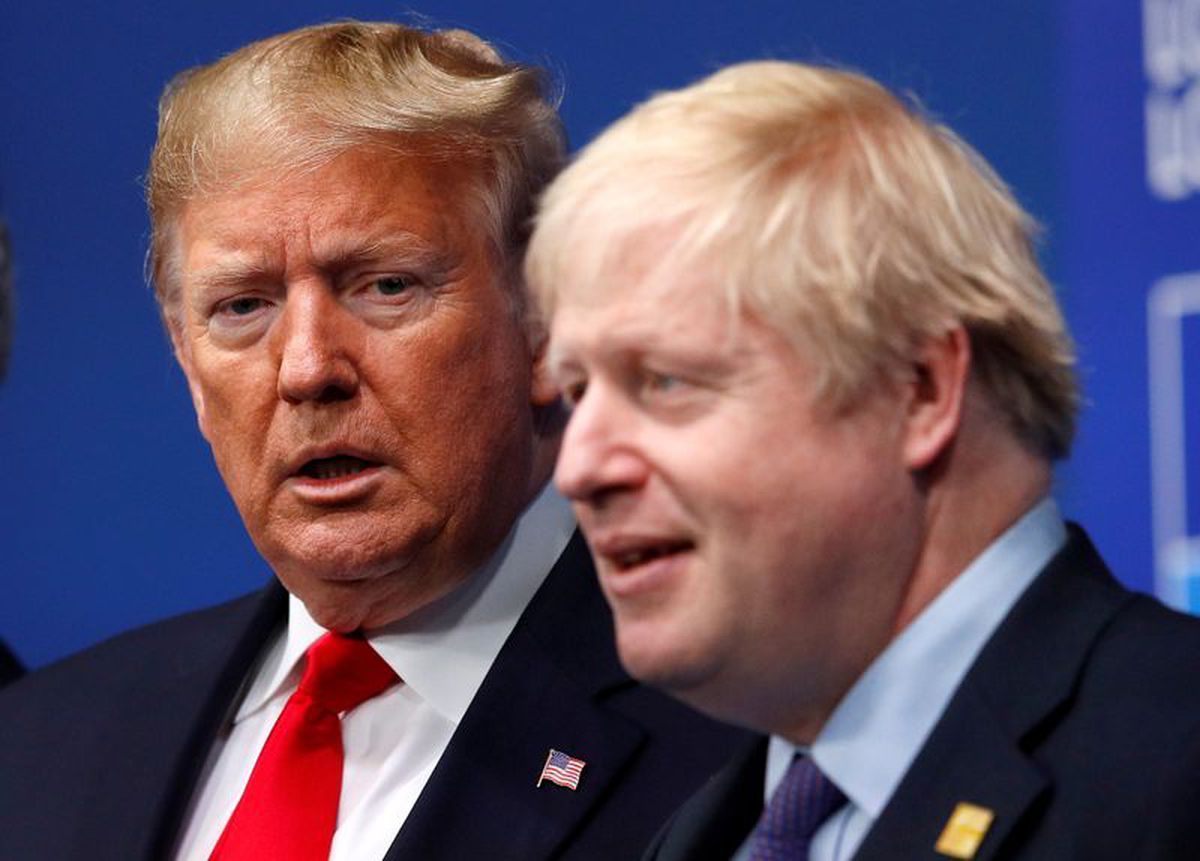
Britain’s Prime Minister Boris Johnson welcomes U.S. President Donald Trump at the NATO leaders summit in Watford, Britain December 4, 2019. We often complain about politicians who fail to put country before party, but we fail to recognize the risks of propelling those to office who have never been required to put party before self.
Peter Nicholls/Reuters
Scott Reid is a political analyst and principal at Feschuk.Reid, and served as director of communications to prime minister Paul Martin.
The problem with politics these days is the alarming absence of party loyalty.
That might come as a shock to those who view the creep of overt partisanship with despair. But lost in that analysis is the fact that party ties don’t just bind partisans together, they help to strap down our entire political system – an essential, cohering function that is increasingly under duress. In fact, the erosion of party loyalty risks causing severe damage to our democratic traditions and speeding us even faster down a road where elected leaders recognize little obligation toward the political machines that deliver them into office, and therefore respect increasingly fewer constraints on their own exercise of power.
If left unchecked, this trend will inevitably produce more leaders of a certain sort: self-indulgent, isolated and even despotic in their tendencies.
The United States, not surprisingly, is the most immediate example of this concern.
Two of the candidates most likely to emerge as the Democratic presidential nominee are running in defiance of, as much as in service to, that party’s history and conventions. Senator Bernie Sanders, who was first elected to office as mayor of Burlington, Vt., by unseating a Democratic incumbent, has sat in Congress for decades as an independent. He has rarely displayed a willingness to suffer the sacrifices and compromises required of those who play the team sport of party politics. His campaign for the presidential nomination today, as it was in 2016, is a takeover bid – plain and simple.
Mike Bloomberg is just as concerning. A former Republican, he operates so solitarily that his only visible contribution to the Democratic Party appears to come from his cheque book. He has barely participated in the nomination process beyond the purchase of advertising, one historically atrocious debate performance and some splendid punking of Mr. Trump on social media.
The Republicans are an even greater catastrophe. The shameless farce of President Donald Trump’s impeachment trial was roundly condemned as an example of excessive partisanship. In reality, it was a monumental, even suicidal, betrayal of party unity. Each of those senators placed Mr. Trump’s personal interests ahead of the collective interests of the GOP. In November, these Republicans – who used to argue for fiscal rectitude, smaller government and a robust foreign policy – will stand for election emasculated and inscrutable with no guiding beliefs beyond what they learn from Mr. Trump via Twitter tantrums.
So far, Canada has largely avoided this failing. Justin Trudeau served alongside caucus colleagues for years before becoming leader. The same can be said for Conservatives such as departing leader Andrew Scheer and frontrunners Peter MacKay and Erin O’Toole. If anything, Canadian voters have tended to punish seeming carpetbaggers in recent years, such as Michael Ignatieff and Tom Mulcair.
Still, this threat reaches beyond the U.S. British Prime Minister Boris Johnson displays open disdain for the history and conventions of the political party he now leads. His rule has been punctuated by the expulsion of Conservative Party stalwarts and the condemnation of loyalty to any cause beyond that of which he approves. Brexit is a symptom, not a cause, of his leadership style.
Obviously, independence is not an inherent vice. Free-thinkers are needed within political parties to challenge stale ideas and unleash renewal. What might the 20th century have looked like without the iron example of the party-switching Winston Churchill?
But let’s not be surprised when leaders who lack any sense of project beyond their own self – who live their lives as free agents, and not team players – lack the empathy and perspective necessary to make decisions in the public interest.
We often complain about politicians who fail to put country before party. Yet we fail to recognize the risks of propelling those to office who have never been required to put party before self. Those who concede to the discipline of party loyalty and who occasionally quiet their own voice in service to a wider chorus, develop certain skills and accumulate certain lessons.
It just might be that these same skills and lessons help to teach our leaders that the advancement of one’s own agenda is not always the only thing that matters. Such education might come in awfully handy when, having been rewarded with power, we hope that these same leaders might govern within some fence-line of norms other than their own personal satisfaction.
Healthy and effective political parties produce better political leaders. And by teaching leaders the value of loyalty beyond themselves, even when that manifests as partisanship, our political parties serve a vital public service that is needed now more than ever.
Keep your Opinions sharp and informed. Get the Opinion newsletter. Sign up today.

Follow Canada News Media
Get the day's top Canadian stories and our two daily 60-second news videos wherever you scroll.
X Threads Facebook Instagram LinkedIn TikTok YouTube Pinterest Reddit Substack Flipboard Newsletter RSS