


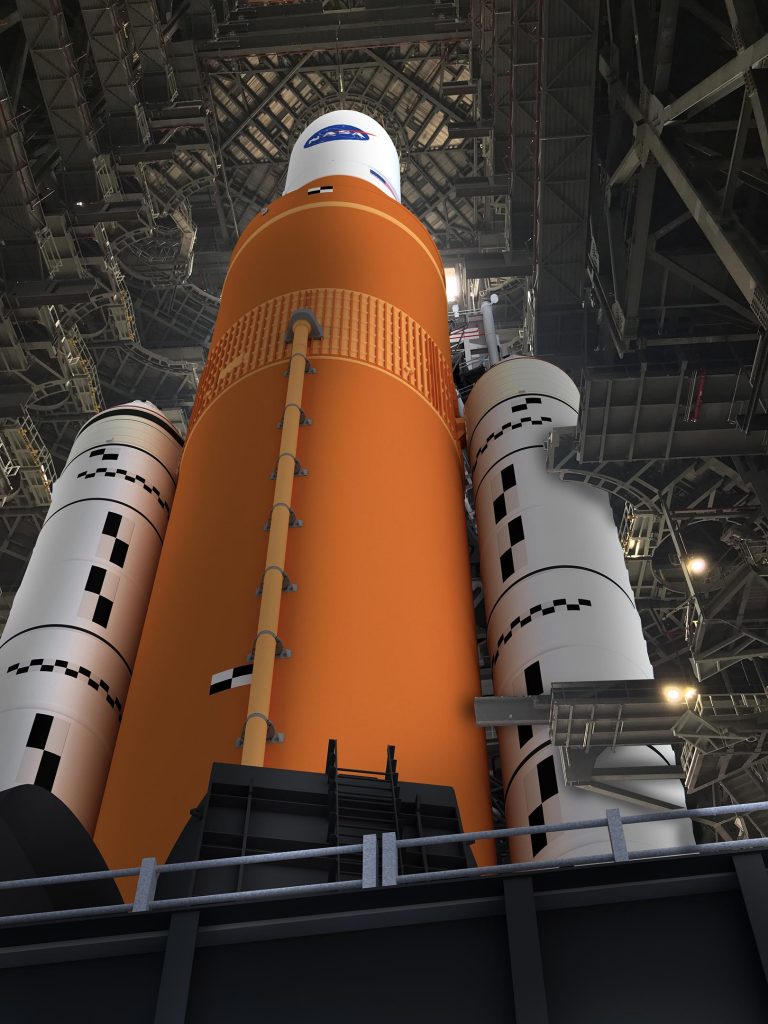
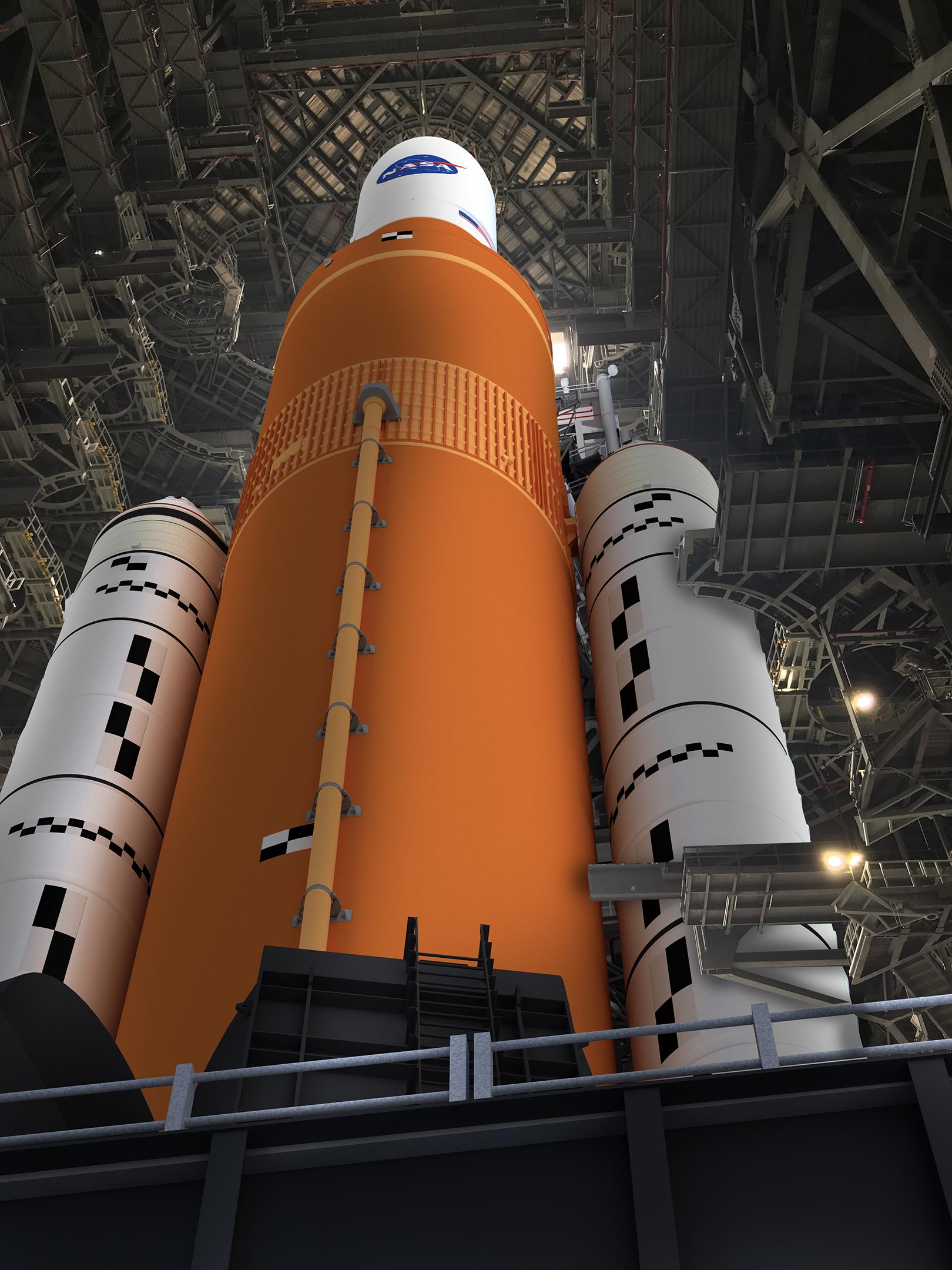
This illustration shows NASA’s Space Launch System (SLS) in its Block 1 configuration inside the Vehicle Assembly Building at NASA’s Kennedy Space Center in Florida. From top to bottom, the entire rocket measures about 312 feet high and has the capability of lifting payloads with a mass of more than 26 metric tons (57,000 pounds). Credit: NASA
Twin solid rocket boosters that will produce a combined 7.2 million pounds of thrust at liftoff, a towering core stage, and the only human-rated spacecraft in the world capable of deep-space travel – together, <span class="glossaryLink" aria-describedby="tt" data-cmtooltip="
” data-gt-translate-attributes=”["attribute":"data-cmtooltip", "format":"html"]”>NASA’s Space Launch System rocket and Orion spacecraft stand ready to usher in a new chapter of exploration. Now fully assembled at Kennedy Space Center in Florida, <span class="glossaryLink" aria-describedby="tt" data-cmtooltip="
” data-gt-translate-attributes=”["attribute":"data-cmtooltip", "format":"html"]”>SLS and Orion will soon roll to the launch pad.
[embedded content]
Artemis I will be the first integrated test of NASA’s deep space exploration systems: the Orion spacecraft, Space Launch System (SLS) rocket and the ground systems at Kennedy Space Center in Cape Canaveral, Florida. The first in a series of increasingly complex missions, Artemis I will be an uncrewed flight test that will provide a foundation for human deep space exploration, and demonstrate our commitment and capability to extend human existence to the Moon and beyond.
During this flight, the spacecraft will launch on the most powerful rocket in the world and fly farther than any spacecraft built for humans has ever flown. It will travel 280,000 miles from Earth, thousands of miles beyond the Moon over the course of about a four to six-week mission. Orion will stay in space longer than any ship for astronauts has done without docking to a space station and return home faster and hotter than ever before.
“This is a mission that truly will do what hasn’t been done and learn what isn’t known,” said Mike Sarafin, Artemis I mission manager at NASA Headquarters in Washington. “It will blaze a trail that people will follow on the next Orion flight, pushing the edges of the envelope to prepare for that mission.”
[embedded content]