




As Canada moves into 2024, the economy is navigating through a critical transition shaped by the Bank of Canada’s aggressive measures to tame inflation. These efforts have stabilized the key interest rate at 5%, leading to a nuanced economic landscape.
While this has impacted consumer spending and business investments, it has also created favourable conditions for everyday traders. With the advent of online trading accounts, Canadians can engage in financial markets more actively, benefiting from these economic shifts.
This economic recalibration, although challenging for lower-income households facing increased living costs, is gradually controlling inflation. Global factors like easing price pressures and resolving supply chain issues contribute to this balance. However, the effects vary across different societal sectors, with some benefiting more than others.
In 2024, many Canadians will likely face higher mortgage renewals, necessitating careful financial planning. The economy may experience mild recessionary pressures in the first half, with unemployment peaking at 7.0% and slower wage growth. Despite these challenges, there’s a sense of cautious optimism for a gradual recovery and growth in the latter part of the year.
The Bank of Canada’s role remains crucial in steering the nation through these uncertain times, with its policies playing a pivotal role in shaping a stable economic future.
| Year | GDP Growth (%) | Unemployment Rate (Peak) | Interest Rate (%) | Inflation Rate (%) | Key Economic Trends |
| 2023 | 1.1 | N/A | 5.0 | N/A | Strong population growth, 430,000 jobs created, uneven growth with housing slowdown. |
| 2024 | 0.9 | 7.0 | Expected Decrease in Summer 2024 | 2 to 3 | Slight lower growth, possible mild recession, improvement in second half. |
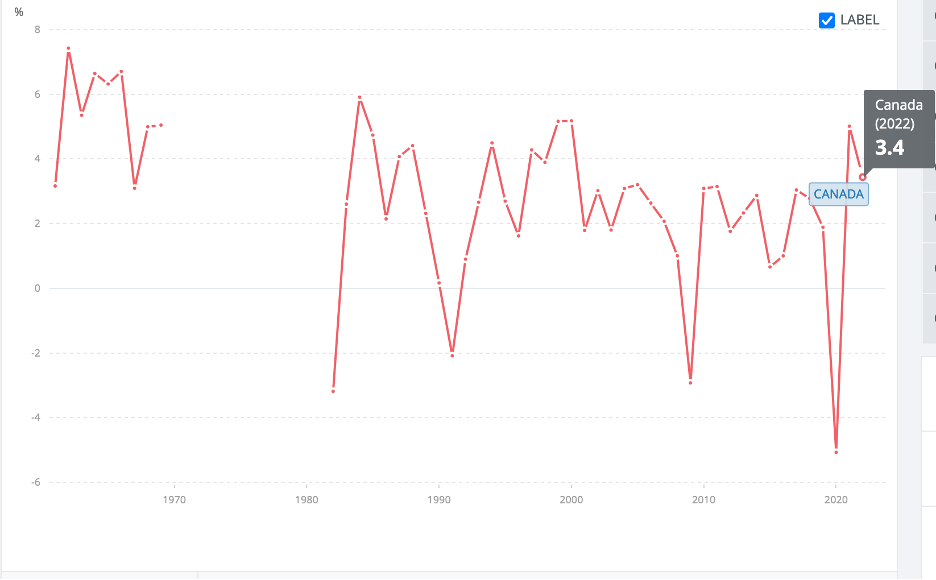
2023 saw a GDP growth of 1.1%, slightly lower than the economy’s potential but higher than initial forecasts. This was largely due to strong population growth fueling demand and supporting the labour market, with approximately 430,000 jobs created. The Bank of Canada’s response to this resilience was to increase the key interest rate to 5.0%.
Looking ahead to 2024, the forecast predicts a modest GDP growth of 0.9%. The economy is expected to avoid a recession, but growth will remain limited due to the ongoing impact of high-interest rates. The unemployment rate is anticipated to peak at 7.0%, and an interest rate decrease is expected by the summer of 2024. The inflation rate is projected to be between 2% and 3%, indicating a stabilization compared to previous years.

These figures reflect a period of transition and adjustment as Canada navigates through economic uncertainties and works towards a more stable and predictable environment. In 2024, Canada’s economic landscape is set to undergo a notable shift, particularly in terms of inflation and monetary policy:
Inflation Trends

Historically, Canada’s inflation rate has been fairly stable, averaging around 2% annually. However, in contrast to the high inflation periods of the 1970s and 1980s, 2024 expects a gradual decrease in inflation, with projections placing it between 2% and 3%. This rate is slightly above the usual target but represents a stabilization from the more volatile rates of recent years.
Sector-Specific Inflation
Certain sectors, like food and housing, will continue to see above-average inflation rates. Food prices are anticipated to increase by 4-5% due to global market influences and the Canadian dollar’s position. Similarly, housing costs, encompassing rent and mortgage interest, are expected to escalate beyond the Bank of Canada’s 2% inflation target, especially in the first half of the year.
Monetary Policy Outlook
- The Bank of Canada is set to ease off on the aggressive interest rate hikes that marked the past 40 years, bringing more predictability to the financial environment.
- A reduction in the key rate is expected by summer 2024, although it’s unlikely to reach the neutral level of 2.5% before 2025.
- The central bank’s policy rate and inflation trends indicate that while rates will remain elevated compared to the past 15 years, they will begin to align more closely with current inflation levels.
As Canada moves into 2024, the economic focus will be on managing these inflationary trends and adapting to the evolving monetary policy, with a keen eye on sectors that might continue to experience higher inflation rates.
Ultimately, 2024 will be a testament to Canada’s enduring spirit of innovation and collaboration, as it navigates through these changing economic tides to emerge stronger and more prosperous.
Follow Canada News Media
Get the day's top Canadian stories and our two daily 60-second news videos wherever you scroll.
X Threads Facebook Instagram LinkedIn TikTok YouTube Pinterest Reddit Substack Flipboard Newsletter RSS