

In a drop-in class each week in downtown Hamilton, 25 to 30 people come together to make art. Working with local guest artists, they draw, paint, make zines or miniatures.
Participants are people with lived experience of homelessness and substance use. The collective can be a way for them to unwind, create and find community.
Now, some of their art is on display in the Art Gallery of Hamilton (AGH), showing perspectives not often seen in galleries.

Kelly Wolf, the artistic producer of non-profit Hamilton theatre company Open Hearts, started doing the drop-in arts programming early in the pandemic as a way to ensure a welcoming space existed in the city.
“When you are isolated through addiction, I think you feel like there’s nobody who gets you or understands you,” she said.
“There might be people who are working through addiction or still actively addicted, or are not. …We’re not here to fix it. We’re not here to really talk so much about it. Just to know in this space, you can be who you are,” she said.
Exhibit to help make more people feel welcome at AGH
Wolf’s work evolved into a program coordinated with another organization, Keeping Six, in which different artists would host workshops.

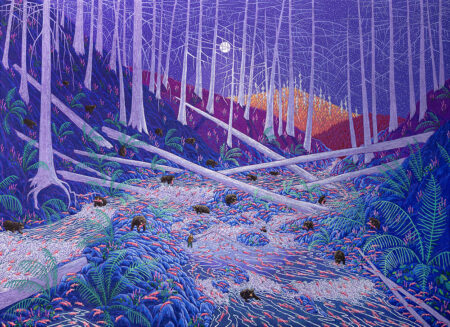
For curator Kelly Wolf, this charcoal project represents the idea of the Keeping Six Arts Collective.
Keeping Six is a harm-reduction group, which means it works to make people who use drugs safer, rather than taking a treatment- or abstinence-first approach to providing help.
The creative works from the group is now on display in an exhibit called This is Our Space Too, scheduled to be up until March 16. It fills The Jean and Ross Fischer Gallery space, in which the AGH often hosts events.
Wolf says she wants to challenge perceptions that certain people can’t do art or don’t belong in a gallery. She worked with Sara Dickinson, the AGH’s interim head of programming and community engagement to arrange an exhibition.
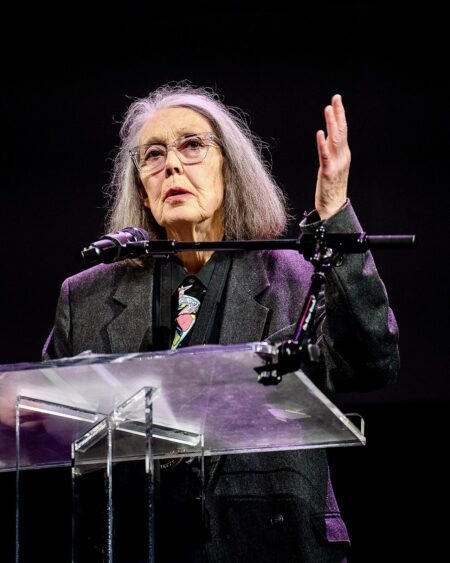
“We are really trying to make this a place where everyone feels welcome,” Dickinson said of the AGH. “We’re not accessible enough to the community.”
She said too often Hamiltonians don’t see themselves reflected in the exhibits or programming. “We have a lot of work to do to make this a community hub. Not something that is unattainable or unreachable or that people feel it is somehow for a different demographic.”

Sara Dickinson with the Art Gallery of Hamilton says it’s beautiful to see so much community artwork on display.
‘Opportunity to be heard, to be seen’
About a year ago, Marie Sinclair took over from Wolf as coordinator of Keeping Six’s arts collective.
For Sinclair, who shares lived experience with many of the participants, “the opportunity to not only participate but to offer something as well” matters.
The collective has shown its work at local music and arts festival Supercrawl, and Sinclair said members’ excitement about the AGH exhibit was building for months leading up to it. People are proud to be part of something, she said.

“I think it’s having an opportunity to be heard, to be seen and to be recognized. To share. To offer something.”
In mid-January, Keeping Six held an open-mic night in the gallery, which Dickinson said close to 150 people attended. Art is an easy way for people who don’t know much about Keeping Six to connect with them, Wolf said. She added that sharing art that reflects people’s experiences can help build empathy and understanding as well.

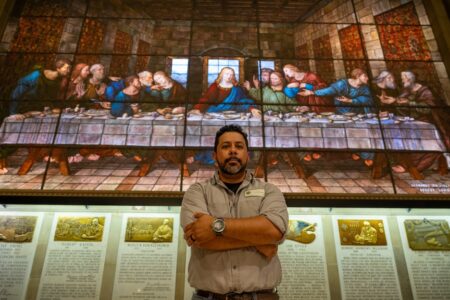
Exhibit curator Marie Sinclair says the Hamilton miniatures members created emphasize the idea that everyone belongs in the city.
Of all the art on display, Sinclair said the piece entitled “Little Hamlet (This is our Space Too)” speaks to her in particular. The collection of photographs by Josh Ducharme showcases miniatures participants created to showcase their ideal Hamilton spaces.
“It was just a way to take back Hamilton and see it as our own,” she said. “I love Hamilton. I want it to be a space that is welcoming.”

Follow Canada News Media
Get the day's top Canadian stories and our two daily 60-second news videos wherever you scroll.
X Threads Facebook Instagram LinkedIn TikTok YouTube Pinterest Reddit Substack Flipboard Newsletter RSS