

Published on Jan. 9, 2024, 1:05 AM
The colourful algae colonize thousands of North American snowfields each summer
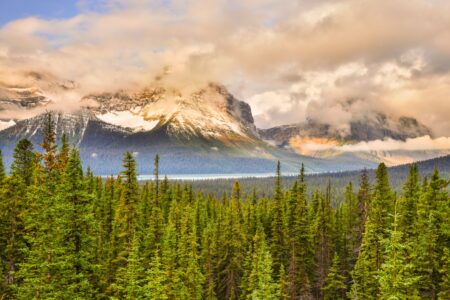
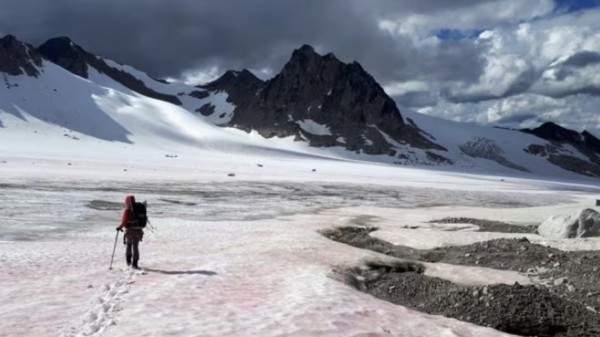
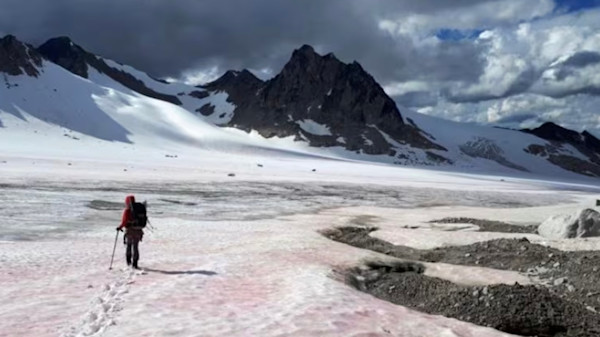
The Rocky Mountains conjure up images of grey rugged peaks capped with white. But within the upper reaches of the harsh mountain landscapes, a rosier hue often blooms.
Watermelon snow, also known as glacial blood, is caused by algae that turns the snow a startling shade of red.
The algae blooms in summer, forming on the snowfields that linger on glaciers, frozen lakes, rugged peaks and icy valleys in the upper reaches of mountain terrain.
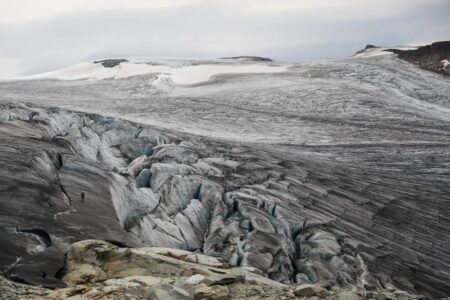
The darker the snow, the faster it melts — and new research sheds light on the threat snow algae poses to shrinking glaciers across northwestern North America.
Snow algae researcher Lynne Quarmby, lead author of a study recently published in Science Advances, said the findings serve as a warning about our changing climate.
‘Canary in the mine’
“We don’t really need any more canaries in this mine, but they’re yet another canary in the mine,” said Quarmby, a professor of molecular biology and biochemistry at Simon Fraser University.

Follow Canada News Media
Get the day's top Canadian stories and our two daily 60-second news videos wherever you scroll.