

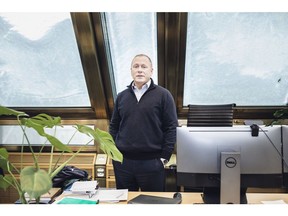
(Bloomberg) — Norway’s $1.5 trillion wealth fund recommended that private equity be added to its investment portfolio, reflecting a broader shift among large pension and sovereign funds to diversify beyond public assets.
“An increasingly larger share of global value creation takes place in the unlisted market,” Norges Bank Governor Ida Wolden Bache said Tuesday. “We believe that such an opening could give higher returns for the fund over time. We think it will be possible to invest in unlisted equities in a way that meet our expectations on transparency and responsibility.”
Read More: Norway Wealth Fund CEO Wants to Invest in Private Equity
It is possible to regulate investments in unlisted equities “in the same way as the fund’s existing unlisted investments,” the fund said in a letter sent to the ministry. If given the green light to proceed, the fund would aim to gradually build up a portfolio of unlisted equity assets, it said.
In March, the government asked the central bank, which oversees the fund, to examine various aspects of unlisted equities as a basis for further consideration. Finance Minister Trygve Slagsvold Vedum will use this feedback, as well as input from parliament, to assess the issue, with a final decision likely to come in the annual white paper early next year.
Assets under management by private equity have grown more than 12% annually since 2010, the fund said in a discussion note published in September. Leverage buyouts, in particular, have outperformed public equities by between 3% and 4% annually on average, the fund said.
“If the fund is permitted to invest in unlisted equities, we will invest primarily in mid-sized and large buyout funds,” Wolden Bache and Tangen said in the letter published Tuesday. “This will enable us to develop good relationships with a select few partners.”
Elsewhere in the world, funds similar to Norges Bank Investment Management invest anywhere between 8% to 30% of assets in private equity, Blackstone Inc.’s global head of private equity Joseph Baratta said in September. The sector also offers new opportunities for influencing how companies tackle sustainability goals, a key priority for the fund, he said at the time.
“The success of the oil fund is based on its disciplined investing, holding a broadly diversified portfolio at a low cost,” Thornburn said in an interview Friday. “The fund was early to adopt a passive index strategy that has now become the gold standard of investing,” she said. “Why change a successful concept without a good reason?”
Read More: Biggest Wealth Fund Urged to Explain Formula One Investment
While, politicians and the public has come to understand swings in the global stock market, they have little tolerance for risks they can’t see or judge, she said.
“The risk in private equity investments is not symmetric for the fund: the downside is potentially much costlier than the upside gains,” she said.