

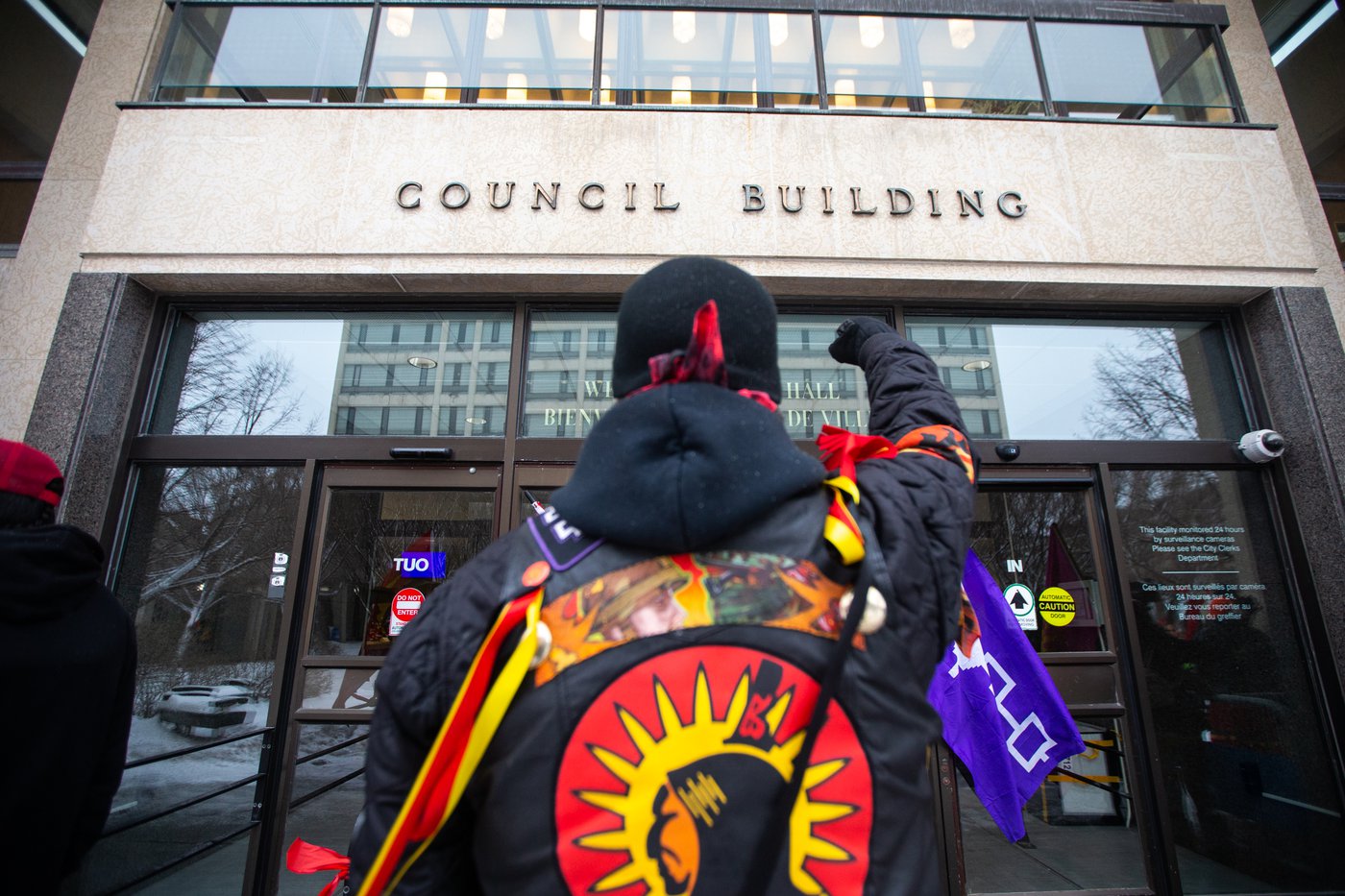
In 2025, despite decades of advocacy, policy changes, and public outcry, Indigenous peoples in Canada continue to be overrepresented in the criminal justice system. From being disproportionately targeted by law enforcement to facing higher rates of incarceration, Indigenous communities are grappling with systemic issues that have deep historical roots. One of the most pressing concerns raised by advocates is the “school-to-prison pipeline,” a term used to describe how educational policies and disciplinary measures contribute to the criminalization of Indigenous youth, leading many directly from classrooms to prison cells.
This systemic issue is complex, deeply rooted in Canada’s colonial history, and shaped by current inequalities that persist in education, social services, and law enforcement. Indigenous leaders, legal experts, and community members have been vocal in calling for change, but the numbers paint a bleak picture of a problem that continues to affect generations.
To understand the overrepresentation of Indigenous peoples in the Canadian criminal justice system, one must first examine the legacy of colonialism. The forced assimilation of Indigenous peoples through residential schools, the Sixties Scoop, and continued systemic discrimination have created intergenerational trauma that manifests in various aspects of life, including interactions with the justice system.
Natan Obed, President of Inuit Tapiriit Kanatami, has consistently highlighted how colonial policies set the stage for these injustices: “The criminal justice system in Canada was not designed to serve or protect Indigenous peoples. It was built to control us, marginalize us, and erase our cultures. The overrepresentation we see today is a direct result of those policies.”
The Canadian Human Rights Commission has reported that despite making up approximately 5% of the national population, Indigenous people represent over 30% of the federal prison population. This statistic is a glaring indicator of systemic discrimination within policing, judicial processes, and correctional institutions.
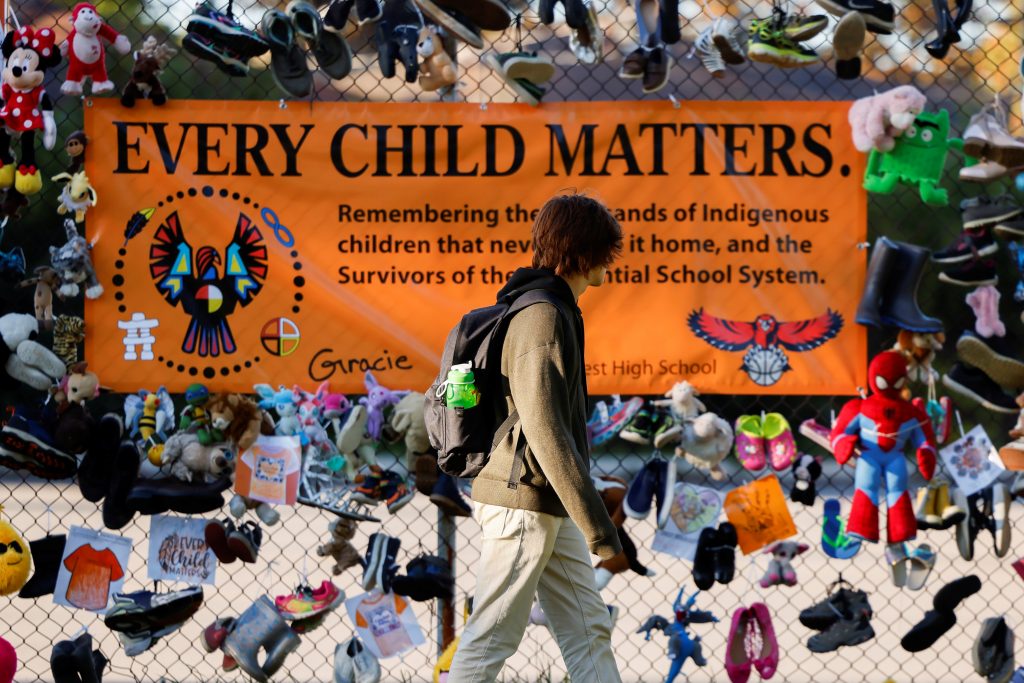
A critical factor contributing to the overrepresentation of Indigenous peoples in prisons is the school-to-prison pipeline, a phenomenon in which children—often those from marginalized communities—are funnelled out of educational institutions and into the criminal justice system. Harsh school disciplinary policies, lack of cultural sensitivity, and inadequate support for Indigenous students have all been cited as key contributors to this pipeline.
Sheila Cote-Meek, a professor at York University and author of Colonialism and the Criminalization of Indigenous Peoples, explains: “Many Indigenous students face disproportionate suspensions, expulsions, and interactions with school resource officers, which increases their likelihood of becoming involved in the justice system. Schools are supposed to be safe havens for learning, but for too many Indigenous youth, they are gateways to criminalization.”
In many cases, behaviours that stem from cultural differences or the trauma experienced by Indigenous families are misinterpreted as delinquent or dangerous, resulting in punitive measures rather than restorative practices. This is particularly evident in regions with large Indigenous populations, where community leaders have called for changes in how schools handle disciplinary issues.
For many Indigenous families, the impacts of this pipeline are personal and painful. Maryanne, an Indigenous mother from Alberta whose teenage son was recently expelled from school for what she describes as “minor misconduct,” shares her frustration: “It feels like they’re waiting for our kids to slip up, like they want to push them out of school as fast as they can. My son was suspended three times in two years for things that other kids get away with. Now, he’s sitting at home, and I’m terrified he’s going to end up in the system like so many others.”
Another common sentiment echoed by Indigenous community members is the lack of cultural understanding and representation in the education system. Many Indigenous children grow up in environments where their culture, language, and history are not reflected in the curriculum, leading to feelings of alienation and disengagement from school. This cultural erasure, combined with the disproportionate use of punitive measures, creates a breeding ground for criminalization.
“I remember being in school and feeling like I didn’t belong,” says Charlie, a young Cree man who was incarcerated at the age of 17. “There was nothing for me there. They didn’t understand me, and I didn’t understand them. It wasn’t long before I got into trouble, and that was it. I was done with school, and school was done with me.”
Beyond the educational system, systemic racism within policing and sentencing also plays a significant role in the overrepresentation of Indigenous peoples in Canadian prisons. Indigenous individuals are more likely to be stopped, searched, arrested, and charged by police. Once in the judicial system, they are often given harsher sentences than their non-Indigenous counterparts for similar offences.
One prominent example of systemic bias is the use of mandatory minimum sentences, which disproportionately affect Indigenous offenders. These sentences remove judicial discretion and often fail to take into account the unique circumstances faced by Indigenous individuals, such as the impacts of colonization and intergenerational trauma.
Pam Palmater, a Mi’kmaq lawyer and activist, emphasizes the need for justice reform: “Indigenous peoples are more likely to be charged, more likely to be convicted, and more likely to be sentenced to longer terms of imprisonment. This isn’t a reflection of higher rates of criminality—it’s a reflection of systemic bias at every level of the justice system.”
While the statistics are dire, Indigenous leaders, legal experts, and advocates are proposing a range of solutions to address the overrepresentation of Indigenous peoples in the criminal justice system. Many of these solutions focus on breaking the school-to-prison pipeline, reforming sentencing laws, and creating culturally appropriate alternatives to incarceration.
One such initiative is the increased use of Indigenous legal traditions and restorative justice practices. Restorative justice, which focuses on repairing harm and addressing the root causes of criminal behaviour, has been shown to be particularly effective in Indigenous communities. In recent years, Indigenous-led justice programs have been gaining traction across the country, offering alternatives to the traditional punitive justice system.
“We need more restorative justice programs that are rooted in Indigenous ways of knowing,” says Elder Mary Thomas, who works with a community-based justice initiative in British Columbia. “Our people have been using restorative justice for centuries, and it works. It’s about healing, not punishment. It’s about accountability, not retribution.”
In addition to justice reform, advocates are calling for significant changes in the education system. This includes increased funding for Indigenous-focused programs, hiring more Indigenous teachers and administrators, and implementing restorative practices in schools to reduce suspensions and expulsions.
The overrepresentation of Indigenous peoples in the Canadian criminal justice system is not a problem that can be solved overnight. It requires a multifaceted approach that addresses the root causes of criminalization, including the legacy of colonialism, systemic racism, and the school-to-prison pipeline.
As Indigenous leaders, advocates, and allies continue to push for justice reform and systemic change, there is hope that the future will bring greater equity and fairness for Indigenous peoples in Canada. But as the statistics show, there is still much work to be done.
As Sheila Cote-Meek reminds us: “We cannot talk about justice in Canada without addressing the overrepresentation of Indigenous peoples in prisons. Until we confront the systemic racism that permeates every aspect of our society, we will continue to fail our Indigenous brothers and sisters. Justice must be more than a word—it must be an action.”
Follow Canada News Media
Get the day's top Canadian stories and our two daily 60-second news videos wherever you scroll.
X Threads Facebook Instagram LinkedIn TikTok YouTube Pinterest Reddit Substack Flipboard Newsletter RSS