



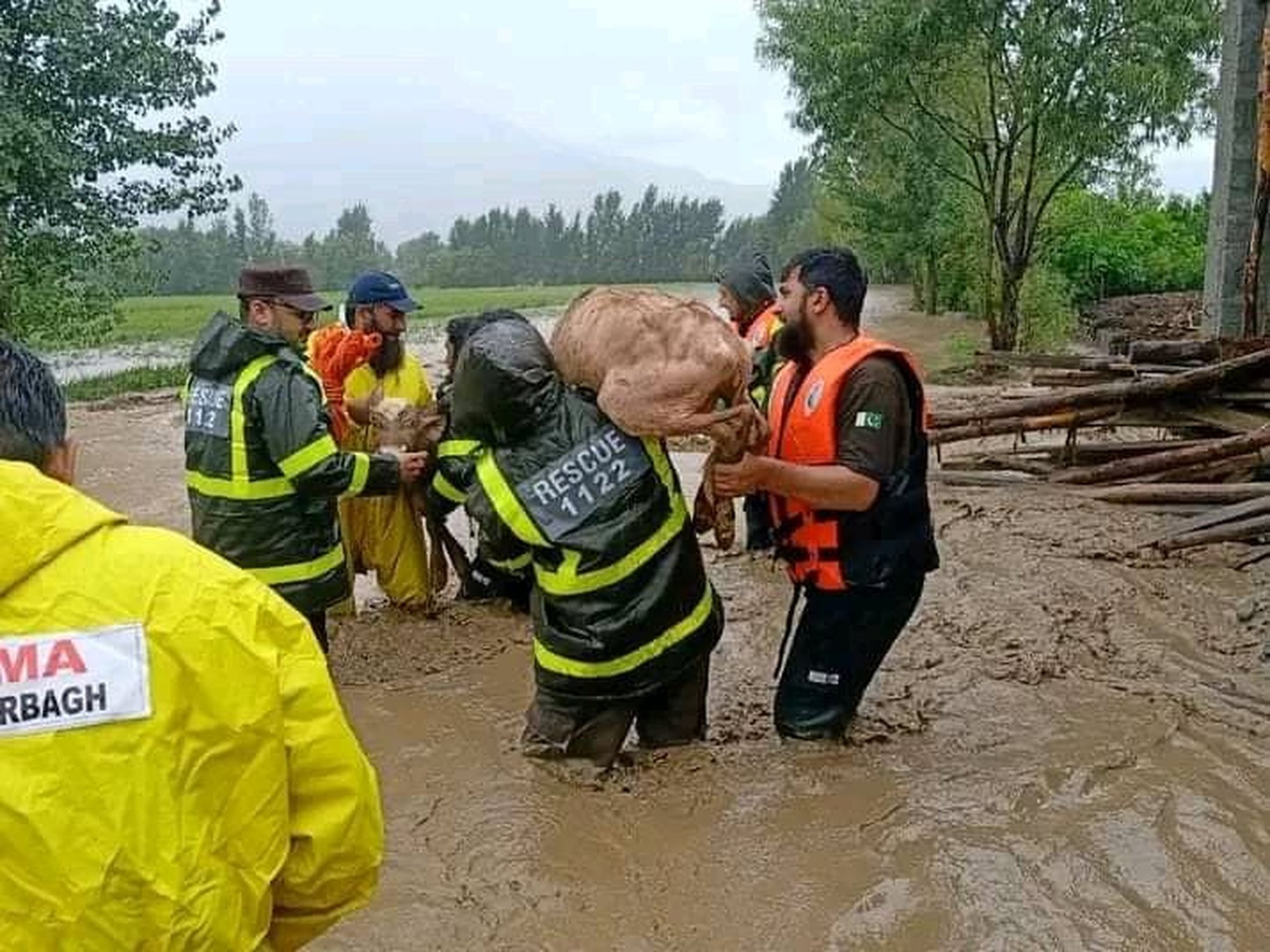
Islamabad, Pakistan- The National Disaster Management Authority (NDMA) has confirmed that 1 208 including 416 children have lost their lives since the flash floods made landfall in June this year.
According to initial government estimates, the devastation has caused US$10 billion in damages.
Pakistan, which was already grappling with political and economic turmoil, has been thrown into the front line of the human-induced climate crisis as food is in short supply after water covered millions of acres of crops and wiped out hundreds of thousands of livestock.
Nevertheless, aid continues to arrive with planes bringing food, medicine and tents forming a humanitarian air bridge.
The ninth flight from the United Arab Emirates (UAE) and the first from Uzbekistan were the latest to land in Islamabad overnight as a military-backed rescue operation elsewhere in the country reached more of the three million people affected by the disaster.
So far, Pakistan has received aid from China, Saudi Arabia, Qatar, Turkey, Uzbekistan, UAE and other countries. This week, the United States announced it would provide US$30 million worth of aid for the flood victims.
Meanwhile, aid agencies have warned of an uptick in infectious diseases, leaving millions vulnerable to illness.
Local health officials are already reporting an outbreak of waterborne diseases in the flood-affected areas as authorities to step up efforts to provide clean drinking water to hundreds of thousands of people who have lost their homes in the disaster.
Diarrhea, skin diseases and eye infections are spreading at relief camps set up by the government.
Moreso, on Friday, authorities were warning people in the district of Dadu in the southern Sindh province to move to safer places ahead of the arrival of flood water from the swollen Indus river, which is expected to hit the region this week.
Further rain is forecast across the country over the next few days, including the capital Islamabad, threatening to exacerbate the situation.
United Nations (UN) Secretary-General António Guterres has warned the world is sleepwalking into environmental destruction.
“South Asia is one of the world’s global climate crisis hotspots. People living in these hotspots are 15 times more likely to die from climate impacts. As we continue to see more and more extreme weather events around the world, it is outrageous that climate action is being put on the back burner as global emissions of greenhouse gases are still rising, putting all of us, everywhere, in growing danger,” said Guterres.
Follow Canada News Media
Get the day's top Canadian stories and our two daily 60-second news videos wherever you scroll.
X Threads Facebook Instagram LinkedIn TikTok YouTube Pinterest Reddit Substack Flipboard Newsletter RSS