


OTTAWA — As the “Freedom Convoy” rolled toward Ottawa in late January, the city’s police chief said he would be “very surprised” if the protesters stayed longer than one weekend, the former chair of the police board said Wednesday.
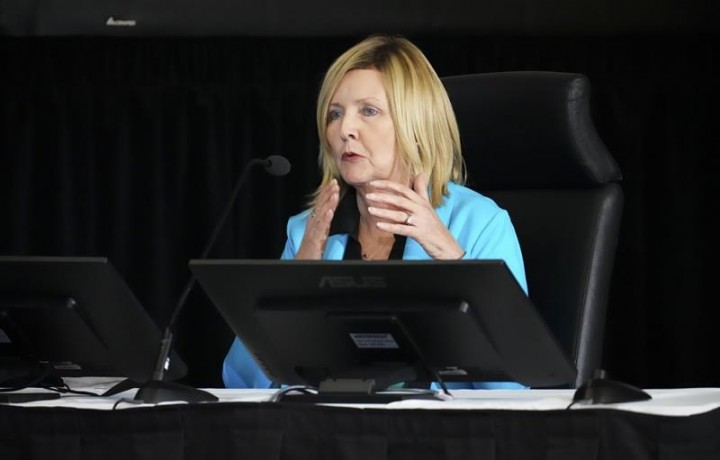
Coun. Diane Deans told the public inquiry examining the federal government’s unprecedented use of the Emergencies Act that she was in constant contact with then-chief Peter Sloly as the protest unfolded. But she said she was not always given a full picture of the situation.
Documents filed with the Public Order Emergency Commission show the former chief told the police services board in a Jan. 26 briefing that trucks were expected to arrive in Ottawa that weekend and may stay for an “extended period.”
But Deans told the inquiry that in a one-on-one conversation, Sloly had a different take.
“He said to me, ‘What are you worried about?’” Deans said during her appearance Wednesday.
“I recall Chief Sloly saying to me that he would be very surprised if (the protesters) were still there on Monday.”
An Ontario Provincial Police intelligence report dated the same day as that meeting showed the protesters had “no expressed departure date,” but Deans said those facts were not shared with her or the board.
She said no specific intelligence reports were shared with the oversight board, even in confidential sessions.
When asked what led Deans to understand the board wasn’t entitled to that intelligence information, she said she took Sloly “at his word.”
The trucks began arriving in Ottawa on Jan. 28, and gridlocked the downtown core near Parliament Hill for about three weeks. The City of Ottawa declared a state of emergency on Feb. 6, and the province declared its own state of emergency five days later.
In the days after the Trudeau government invoked the Emergencies Act on Feb. 14, Sloly resigned as police chief. Deans was removed as chair of the police board by her city council colleagues.
Deans told the inquiry that she and the police services board never lost confidence in Sloly.
The testimony from Deans suggests Sloly’s resignation was the result of pressure from the public, city hall and within the police service itself.
Deans said she mentioned to Sloly during one of their regular phone calls that there were a lot of people in the city who wanted him gone, as public frustration about the protest grew.
“His reply was, ‘Well, cut me a cheque and I’ll be out of here,’” Deans told the commission. “I didn’t expect that and I didn’t know if it was kind of just said passing, if it was flip, it was just frustration in the heat of the moment.”
In the days after that, Deans learned some of her city council colleagues planned to table a motion to formally ask Sloly to resign. She said there’s no way a motion like that would make it to the council floor without the knowledge and consent of Mayor Jim Watson.
“And then there was what I would describe as some sort of insurrection from within that was happening,” Deans said.
She said she learned from a producer at CBC that the news outlet was about to publish a story that included allegations against Sloly made by members of the service.
The CBC published a report on Feb. 15 citing multiple unnamed sources alleging that Sloly “belittled and berated” senior Ottawa police officers in front of their co-workers.
Deans told the commission on Wednesday that they were the “kind of accusations that clearly came from within the (police) service.”
Deans said she called Sloly late that evening to ask him if he meant it when he said he would leave, and he told her he intended to see the convoy through to the end.
The next morning he called her. “He said, ‘I want to leave,’” she said.
This report by The Canadian Press was first published Oct. 19, 2022.
Laura Osman, The Canadian Press
Follow Canada News Media
Get the day's top Canadian stories and our two daily 60-second news videos wherever you scroll.
X Threads Facebook Instagram LinkedIn TikTok YouTube Pinterest Reddit Substack Flipboard Newsletter RSS