


Good Thursday morning,
A handful of Parliamentarians from Canada, New Zealand, and the U.K. have banded together to call on their governments to establish a special envoy for Hong Kong to address the situation in Hong Kong, where a new national security law from China that bypasses the city’s legislature is expected to come into effect this fall. Liberal MP Michael Levitt, the Canadian representative of the group, issued a press release saying “we must move rapidly to ensure there is a system in place for the observation and transparent reporting of the true impact this new law will have on currently legal freedoms in Hong Kong.” The group sent letters to Prime Minister Justin Trudeau and UN Secretary General António Guterres, appealing to them for their support in providing a mandate for an envoy to be deployed when the special session convenes later this month.
Hong Kong leader Carrie Lam said that foreign detractors who are raising alarm over the new law are applying “blatant double standards.” She argued that China within its rights to introduce the law because of the local resistance.
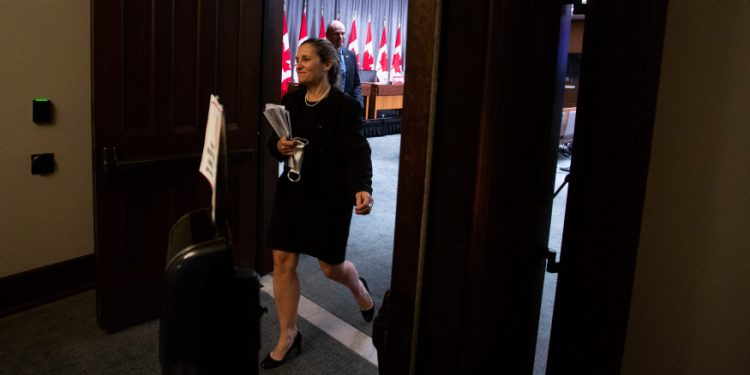
Deputy Prime Minister Chrystia Freeland, in a press briefing, said the some 300,000 Canadians living abroad in Hong Kong are “very, very welcome to come home anytime.” She was asked whether the government is considering following the U.K.’s lead in pledging to admit three million people from Hong, making what he called would be one of the “biggest changes” to the country’s visa system. Ms. Freeland declined to say whether it’s being considered, only noting that “Canada continues to be a country that welcomes immigrants and asylum seekers from around the world.”
A joint Canada-U.S. study found that hydroxychloroquine—the drug frequently touted by U.S. President Donald Trump as a preventative medication for COVID-19—is ineffective at inoculating one’s self from contracting the virus. Mr. Trump had made the claims about its effectiveness without scientific basis, saying that he was taking the drug himself.
Canada’s Supreme Court is ready to make the switch to virtual hearings amid the pandemic. Starting next week, the top court will be conducting hearings over Zoom.
All four police officers at the scene where George Floyd died now face charges for their alleged role in his death. The lesser charges include aiding and abetting, while Derek Chauvin, the white officer who was first charged, is now facing second-degree murder, which was upgraded from third-degree murder.
Former Conservative cabinet minister Stockwell Day stepped down from his post as a board member of Telus amid outcry over his comments equating racism with getting teased for wearing glasses during an interview with CBC. The telecom giant issued a statement distancing itself from Mr. Day, saying his views “are not reflective of the values and beliefs of our organization.” In a tweet, retreating from his remarks the previous day, Mr. Day said, “by feedback from many in the Black and other communities I realize my comments in debate on Power and Politics were insensitive and hurtful.I ask forgiveness for wrongly equating my experience to theirs.”
Prime Minister Justin Trudeau is scheduled to deliver remarks during the virtual Global Vaccine Summit, which the U.K. is hosting. The summit kicks off at 8 a.m.
In other scheduled events, the House Affairs and Procedure Committee is scheduled to meet at 11 a.m. to hear from former Speaker Bill Blaikie and former acting clerk Marc Bosc, among others. The House Finance Committee, meanwhile, is scheduled to meet at 3 p.m. to hear from a range of witnesses, including Genome Canada and the Colleges and Institutes Canada.
The Human Resources Committee, meanwhile, will meet at 4 p.m. to hear from groups such as the Canadian Women’s Foundation and Big Brothers Big Sisters of Canada.
The Hill Times

Follow Canada News Media
Get the day's top Canadian stories and our two daily 60-second news videos wherever you scroll.
X Threads Facebook Instagram LinkedIn TikTok YouTube Pinterest Reddit Substack Flipboard Newsletter RSS