

This week’s cover story in the Georgia Straight focused on the impact that the pandemic might be having on our sleep.
Here’s what I discovered from researching this article: if we aren’t exposed to sufficient natural light, it can disrupt our circadian rhythms. That can lead to serious health problems over time, including depression, cardiovascular disease, and diabetes.
There’s an easy way to prevent this—get outside in the natural light for 15 minutes in the morning.
So in that spirt, I went out for a walk on Saturday morning and made another discovery.
I was strolling near the Drill Hall, home to the B.C. Regiment (formerly the Duke of Connaught’s Own).
Many readers will be familiar with this building, also known as the Beatty Street Armoury, completed in 1901.
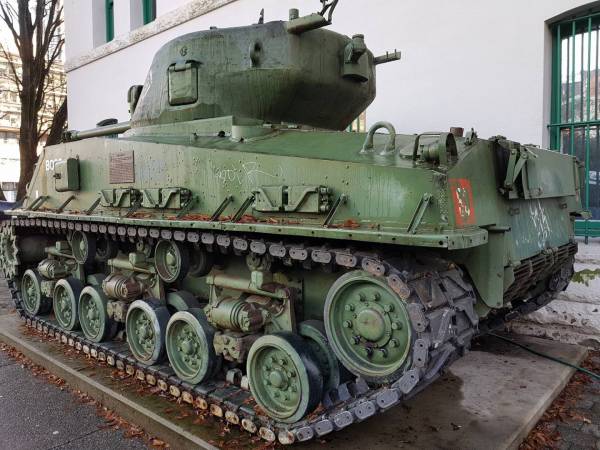
There’s an old tank and cannon outside, appearing like anachronisms amid shiny Yaletown towers.

There’s also a pocket park immediately to the south that celebrates a great romance.
Until yesterday, I had never walked through this area, known as St. Julien Square.

Much to my surprise, I discovered that this pocket park includes a commemorative sculpture called Writing to You, installed in 2007.
Created by Canadian artists Yvonne Lammerich and Ian Carr-Harris, it features two bronze sculptures at opposite ends of a grassy area.

On the west is a trunk, with a letter on top. On the eastern edge of the square is a table with another letter on top.
It tells the story of a member of the B.C. Regiment, Maj. Lloyd G. Augustus, and his wife, Mary. They exchanged more than 800 letters while he was serving in the Second World War.
The table represents Mary at home with one of Lloyd’s letters. And the trunk depicts where Lloyd stored the letters sent by his wife.
The disrupted ground below the trunk and the smooth floor beneath the table demonstrates how different life was for both of them during this tumultuous time. The distance between the objects speaks for itself.
It’s a poignant work of art that drives home the sacrifices made by our veterans and their families.

It also left me thinking about the difficult times we’ve experienced during this pandemic.
So far, there have been 13,350 deaths from COVID-19 in Canada this year alone.
That’s almost one-quarter of the number of Canadian fatal battle casualties in the First World War from 1914 to 1918.
How will this agonizing period be reflected for future generations in the public arena for those who didn’t live through it?
What ideas will our artists have to show the heartache of those unable to be with their loved ones as they took their final breath?
How can sculptors showcase the brave and loving sacrifices made by our health-care workers and emergency responders as they rushed into danger in the course of their duties?
And where in Vancouver would be the best locations to place these memorials?
Outside local hospitals? In Stanley Park? Or in šxʷƛ̓ənəq Xwtl’e7énḵ Square on the north side of the Vancouver Art Gallery?
Let’s hope that once vaccines beat back this pandemic, city council takes the time to do it right—just as Lammerich and Carr-Harris did in exhibiting how love helped beat back the anguish of a bygone era.