

Canada, a country celebrated for its multiculturalism and diversity, has long promoted itself as a nation where people from all backgrounds are welcomed. However, for many racialized individuals, the experience of travelling through Canadian airports tells a different story—one where racial profiling remains a deeply troubling and persistent issue. From being pulled aside for additional security checks to facing invasive questioning based on skin colour, racial profiling in Canadian airports is a problem that many are calling out, advocating for systemic change and fair treatment for all passengers.
Racial profiling, broadly defined, refers to the discriminatory practice of targeting individuals for suspicion of crime or security risks based on their race, ethnicity, religion, or national origin. While Canadian authorities have long denied the existence of systemic racial profiling in airport security, numerous accounts from travellers suggest otherwise.
For many racialized Canadians, airports are spaces where they are made to feel like suspects purely based on their appearance. The experience of being singled out, questioned, or subjected to excessive scrutiny is something they say they endure more frequently than their non-racialized peers.
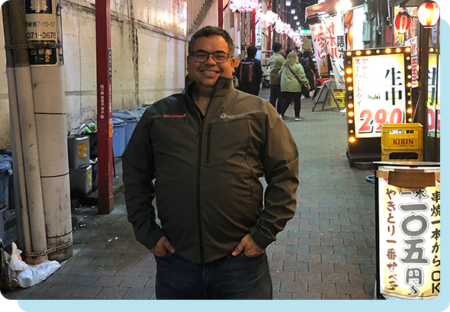
“I can’t count how many times I’ve been ‘randomly selected’ for additional screening at airports,” says Ahmed, a Canadian of Pakistani descent who travels frequently for work. “It’s always the same—being pulled aside, asked where I’m going, why I’m travelling, and sometimes even having my belongings swabbed for explosives. It makes me feel like I’m guilty of something just because of the way I look.”
Ahmed’s experience is far from unique. Countless travellers from Black, Indigenous, and racialized backgrounds report similar encounters at Canadian airports, where they believe they are treated with suspicion due to their race or religion.
Muslim and Middle Eastern travellers are particularly vulnerable to racial profiling in Canadian airports. Since the events of 9/11, heightened security measures have disproportionately impacted people of the Muslim faith or those perceived to be Muslim. The stereotype of Muslims as security threats has led to increased scrutiny of travellers from these backgrounds, regardless of their citizenship or travel history.
Fatima, a Canadian-born Muslim woman who wears a hijab, describes the anxiety she feels every time she passes through airport security. “It’s nerve-wracking. I’ve learned to mentally prepare myself for the likelihood that I’ll be stopped and questioned. I’ve been asked how often I pray, whether I attend mosque regularly, and if I’ve ever travelled to certain countries in the Middle East—all of which have nothing to do with why I’m flying,” she explains.
This form of religious profiling is not only invasive but also creates an environment of fear and humiliation. For Fatima and many others, the mere act of travelling becomes an ordeal filled with the anticipation of discriminatory treatment.
The issue of racial profiling is not limited to Muslim and Middle Eastern communities. Black and Indigenous Canadians also report being disproportionately targeted for searches, questioning, and invasive security measures.
“I’ve been stopped at the airport more times than I can count, and every time it happens, it feels like I’m being judged for who I am, not for what I’ve done,” says Jason, a Black man from Toronto who frequently travels for business. “I’ve been pulled aside and questioned about where I’m going, how long I’ll be gone, and sometimes even whether I can afford my ticket. It’s dehumanizing.”
Similarly, Indigenous travellers have shared experiences of being unfairly targeted for additional checks at airports. Tanya, an Indigenous woman from British Columbia, recalls being stopped and questioned about her travel plans when flying to a conference. “It’s frustrating. I’m just trying to get to my destination like everyone else, but I always feel like I have to justify my presence. They ask about where I’m staying, why I’m traveling, and whether I’m carrying anything suspicious. It’s not something my non-Indigenous friends seem to go through.
While these personal accounts paint a vivid picture of the racial profiling that takes place at Canadian airports, they are supported by a growing body of research that highlights the issue. A 2019 report from the Canadian Human Rights Commission (CHRC) found that racialized groups, particularly Black, Indigenous, and Muslim travellers, were more likely to be stopped and searched at airports than their white counterparts.
The report, which analyzed data from airport security checkpoints across the country, concluded that racial profiling in Canadian airports was “persistent and widespread.” It also called for increased accountability and transparency within Canada’s air security agencies, urging them to implement bias training for staff and adopt policies that explicitly prohibit racial profiling.
“Racial profiling is not just about individual prejudice; it’s about systemic discrimination that is baked into our security practices,” explains Dr. Anthony Morgan, a Toronto-based human rights lawyer. “When certain groups are repeatedly targeted for additional screening or questioning, it sends a message that they are inherently suspicious or dangerous. This is not only unfair but also a violation of their human rights.”
Beyond the immediate inconvenience and humiliation of being profiled, the long-term psychological toll of racial profiling can be profound. Many travellers report feelings of anxiety, frustration, and anger as a result of being repeatedly targeted at airports.
“It’s exhausting,” says Miriam, a Somali-Canadian woman who has been subjected to additional screening multiple times while flying. “Every time I go to the airport, I’m filled with dread. I’m always thinking about whether I’ll be stopped, whether I’ll miss my flight, and whether I’ll be treated with suspicion. It’s mentally and emotionally draining.”
For some, the experience of racial profiling can lead to lasting trauma. Studies have shown that repeated encounters with racial discrimination—whether at airports, in policing, or in other areas of life—can contribute to higher rates of depression, anxiety, and stress among racialized individuals. The psychological burden of navigating these experiences can have long-lasting effects on mental health and well-being.
In response to growing concerns about racial profiling, Canadian government agencies, including the Canadian Air Transport Security Authority (CATSA) and the Canada Border Services Agency (CBSA), have made commitments to address discrimination in their security practices. CATSA, for instance, has introduced bias-awareness training for its employees and has stated that racial profiling is prohibited under its guidelines.
However, many advocates argue that these measures are insufficient and that more needs to be done to ensure accountability. “Bias training is a step in the right direction, but it’s not enough,” says Fo Niemi, executive director of the Center for Research-Action on Race Relations (CRARR). “We need stronger oversight mechanisms and independent bodies that can investigate complaints of racial profiling. Right now, the process for holding airport security officials accountable is opaque and difficult to navigate.”
Several civil rights organizations have also called for the collection of disaggregated data on airport security practices, which would allow for a clearer understanding of how racial profiling impacts different communities. “We need to know exactly who is being stopped, searched, and questioned at airports,” says Niemi. “Without that data, it’s impossible to measure the extent of the problem or to hold authorities accountable for discriminatory practices.”
Racial profiling at Canadian airports is not an isolated issue—it is part of a broader pattern of systemic discrimination that affects racialized communities across the country. While steps have been taken to address the issue, much more needs to be done to ensure that all travellers, regardless of their race or ethnicity, are treated with fairness and dignity.
For many, the solution lies in a combination of stronger legal protections, increased accountability, and a cultural shift within Canada’s security agencies. “We need to change the mindset that certain people are more suspicious or dangerous because of the colour of their skin or their religion,” says Dr. Morgan. “That’s the only way we can move towards a system that truly respects the rights of all Canadians.”
As Canada grapples with its commitment to diversity and inclusion, addressing racial profiling at airports will be a critical test of its resolve. For now, travellers like Ahmed, Fatima, Jason, and Tanya continue to navigate the complexities of air travel with the hope that, one day, they will no longer be singled out for the way they look—but simply treated as passengers, like anyone else.
Follow Canada News Media
Get the day's top Canadian stories and our two daily 60-second news videos wherever you scroll.