

![Report: The U.S. Is Falling Short On Infrastructure Investment [Infographic] – Forbes](https://canadanewsmedia.ca/wp-content/uploads/2021/03/_0x0.jpg "Report: The U.S. Is Falling Short On Infrastructure Investment [Infographic] – Forbes")

The American Society of Civil Engineers (ASCE) has released its 2021 Report Card for America’s Infrastructure, a comprehensive assessment of 17 major infrastructure categories compiled once every four years. It focuses on a range of criteria such as capacity, condition and public safety in order to evaluate current and future infrastructure needs through a simple A to F school report card format. The good news is that incremental progress has been made with the country’s score climbing from a D+ in 2017 to a C- in 2021. That marks the first time in 20 years that U.S. infrastructure has climbed out of the D range.
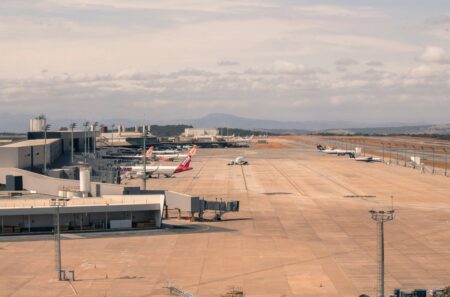
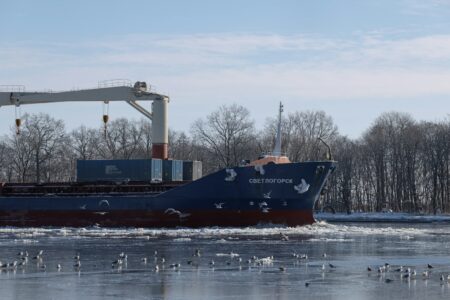
Progress was not even everywhere and the research states that 11 out of 17 categories are still stuck with D grades. Five saw their grades increase – aviation, drinking water, energy, inland waterways and ports while a single category – bridges – deteriorated. Despite the fact that things are going in the right direction, the bad news is that the country’s long-term investment gap continues to grow. The U.S. is only paying half of its infrastructure bill and the investment gap has climbed from $2.1 trillion over 10 years to nearly $2.59 trillion over 10 years.
The ASCE states that continued underinvestment in infrastructure at current rates will result in a range of serious economic consequences by 2039. These include the loss of $10 trillion in GDP, $2.4 trillion in exports and more than three million jobs. By the end of the next decade, the problem will cost the average American household $3,300 a year or $63 per week. The report recommends a strategic and holistic plan to renew, modernize and invest in infrastructure, making maintenance its central focus. As it stands, roads that will become too rough to travel on, levees that will not keep storms at bay and bridges that will not be able to accommodate heavy traffic will cause economic havoc.
Looking at the problem in more detail, where is the infrastructure investment gap most pronounced? The U.S. has some $5.9 trillion in funding needs for its infrastructure up to 2029, of which $3.35 trillion is in place. Surface transportation such as roads, highways, bridges and public transportation systems have the biggest cap in funding and require a further $1.2 trillion of investment over the coming decade. Drinking water, wastewater and stormwater also require a considerable financial boost to the tune of $434 billion while schools have the third-highest gap with a further $380 billion required.
*Click below to enlarge (charted by Statista)

Follow Canada News Media
Get the day's top Canadian stories and our two daily 60-second news videos wherever you scroll.