


A Manitoba researcher worries people in the province could shy away from enrolling in a drug trial because of the politics attached to the medication being studied.
The study hopes to find out if taking the drug hydroxychloroquine can help prevent frontline healthcare workers — who are most at risk of coming into contact with COVID-19 positive patients — from getting the disease.
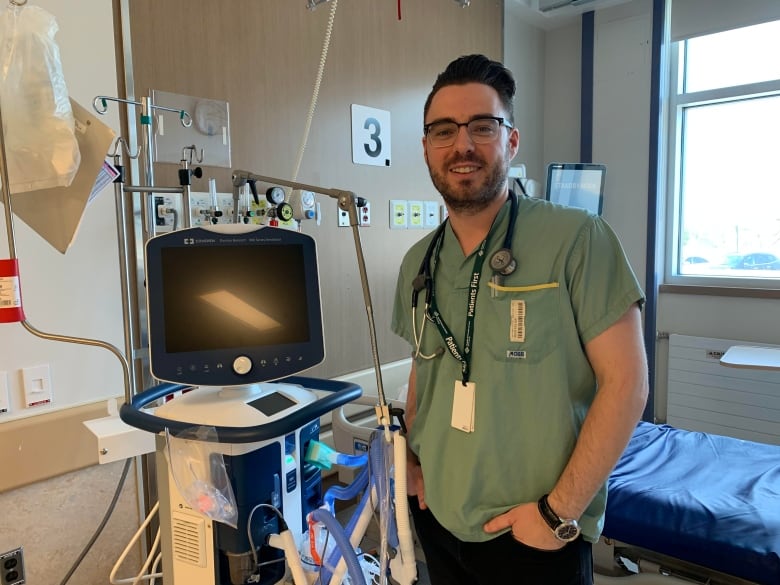
“Some of the challenges have been that hydroxychloroquine, unfortunately, has been a very politically charged kind of drug in this COVID-19 epidemic,” said Dr. Sylvain Lother, an infectious disease and critical care physician at the U of M and a sub-investigator on the drug trial.
On Monday, U.S. President Donald Trump told reporters that he has been taking the malaria drug to protect against coronavirus for about a week and a half, despite warnings from his own government that it should only be administered for COVID-19 in a hospital or research setting due to potentially fatal side-effects.
Trump spent weeks pushing the drug as a potential cure or prevention for COVID-19 against the cautionary advice of many of his administration’s top medical professionals. The FDA has cautioned against using the drug outside of a clinical setting because of a potential for harmful side effects when taking with other medications.
“Very early on in early April, many people on social media and in mainstream media were touting hydroxychloroquine to be a game changer and thinking that this drug was going to completely revolutionize the pandemic,” Lother said.
“And because of that, people have sort of developed very polarized opinions about hydroxychloroquine.”
The trial is part of a collaboration of researchers on both sides of the Canada-U.S, border.
the University of Manitoba is heading up a part of the study here in conjunction with the University of Minnesota in the United States and the Research Institute of the McGill University Health Centre.
Hydroxychloroquine has been used for decades to prevent and treat malaria, as well as in treatment for lupus and rheumatoid arthritis.
The study is a pre-exposure prophylaxis trial, which means it’s looking to see if the use of the drug before being exposed to the virus can prevent the disease.
“We view it as a tool in the whole toolbox of things that we use to prevent ourselves from getting infection,” said Lother, who works directly with COVID-19 patients.
“We know that even in the context of wearing appropriate PPE, that healthcare workers are disproportionately affected by COVID-19 across the world.”
Few Manitoban applicants for trial
Lother said the study aims to include 3500 participants on both sides of the border. So far in the U.S there are just over 1400 people enrolled in the trial. Lother said since launching the trial in Canada last week there have been just three applicants from Manitoba.

“It’s been politically charged and that has prevented us from enrolling as quickly as we would have liked to over the last few weeks, so we hope that, you know, people will see past that.”
It’s not just Manitoba seeing a lull in participation, Lother said, recruitments for hydroxychloroquine studies have become an issue on both sides of the border.
“We know that for sure it’s been a problem in both Canada and the US because we have been studying hydroxychloroquine now for several weeks in different populations with different studies.”
“And initially we had a lot of large amounts of enrolments in these trials. And we’ve really seen a flattening of the curve in terms of our enrolment just from different opinions that have been coming out,” he said.
Despite earlier warnings from the FDA, researchers say the drug is safe if used in a clinical trial because participants are screened and monitored closely. The drug has also safely been used to prevent other infections, like malaria, for years.
Lother said in addition to the polarizing political views on the drug, the relatively low number of COVID-19 cases in the province may also be a factor.
“Some of that initial fear might be dwindling away. And for that reason, people might feel a little less vulnerable than they did initially,” he said.
Lother said healthcare workers still face a significant risk, and studying the drug could be very helpful for preparing for a second wave of the virus if it occurs.
“We hope that enrolment happens quickly because these are things that we need answers on as soon as we can in order for us to be prepared.”
Many people may also be avoiding a clinical trial because of the fear of receiving a placebo, Lother said. He speculates that some healthcare workers may want to take the drug anyway, but that could prevent scientists from learning if it’s effective.
“Because the bottom line is we don’t know if this medication works or not. That’s why we’re studying it. And we need good science to do that. There’s a chance that it could work. But we need to prove that scientifically with trials.”
On Thursday, Manitoba’s chief public health officer said taking the drug only makes sense as part of a clinical trial.
“The only reason for using [hydroxychloroquine] for the treatment or prevention of COVID-19 would be as part of a clinical trial because there isn’t evidence that it’s effective in preventing or treating a COVID-19,” Dr. Brent Roussin said.

Follow Canada News Media
Get the day's top Canadian stories and our two daily 60-second news videos wherever you scroll.
X Threads Facebook Instagram LinkedIn TikTok YouTube Pinterest Reddit Substack Flipboard Newsletter RSS