


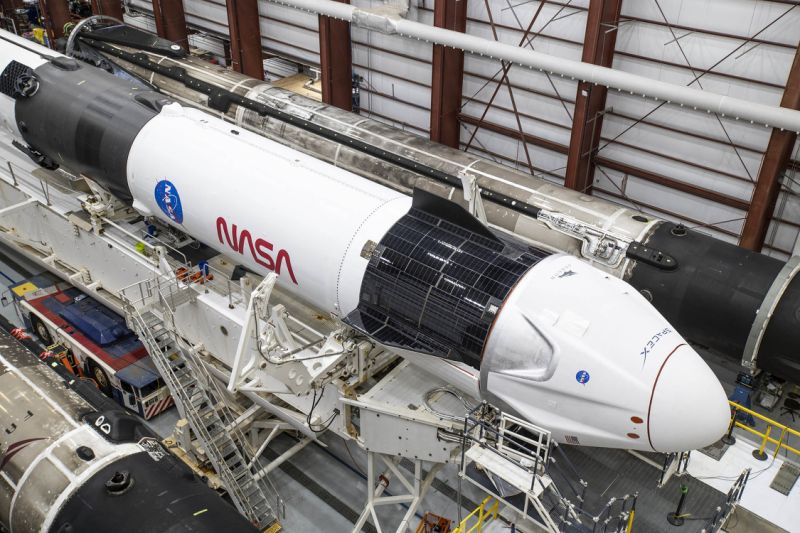

<p class="canvas-atom canvas-text Mb(1.0em) Mb(0)–sm Mt(0.8em)–sm" type="text" content="NASA announced the milestone via its official blog, noting that this certification included a Flight Readiness Review in preparation for the first ever official ISS crew mission of the Falcon 9 and Dragon, which is set for this Saturday, November 14 – weather permitting. That will carry four astronauts, including three from NASA and one from Japan’s space agency, to the ISS for an official full-length stay conducting experiments and maintaining the orbital station.” data-reactid=”20″>NASA announced the milestone via its official blog, noting that this certification included a Flight Readiness Review in preparation for the first ever official ISS crew mission of the Falcon 9 and Dragon, which is set for this Saturday, November 14 – weather permitting. That will carry four astronauts, including three from NASA and one from Japan’s space agency, to the ISS for an official full-length stay conducting experiments and maintaining the orbital station.
<p class="canvas-atom canvas-text Mb(1.0em) Mb(0)–sm Mt(0.8em)–sm" type="text" content="This is the final step in the multi-mission certification process, which included a number of previous launches including an uncrewed ISS docking mission, which ran fully automated, and a launch pad abort test to demonstrate how the launch vehicle's safety system would work in the unlikely event of an accident following launch but prior to reaching orbit. SpaceX also developed and extensively tested a new parachute system for controlling the descent of the Dragon crew capsule upon it’s return from the station to Earth.” data-reactid=”21″>This is the final step in the multi-mission certification process, which included a number of previous launches including an uncrewed ISS docking mission, which ran fully automated, and a launch pad abort test to demonstrate how the launch vehicle’s safety system would work in the unlikely event of an accident following launch but prior to reaching orbit. SpaceX also developed and extensively tested a new parachute system for controlling the descent of the Dragon crew capsule upon it’s return from the station to Earth.
NASA says that it and SpaceX performed an “extensive analysis of the test flight data” following the Demo-2 mission, which concluded in August with a successful return to Earth carrying Behnken and Hurley back from the station.