



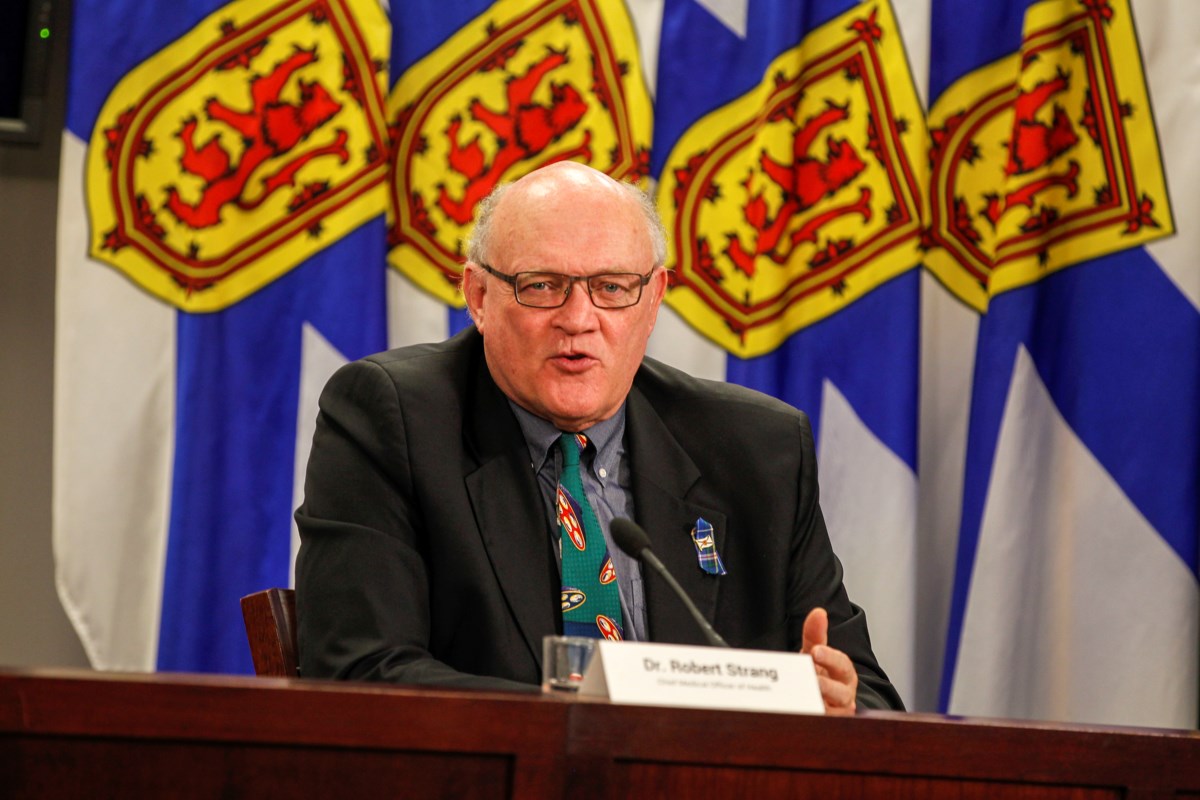
As Nova Scotia continues to see a second wave of COVID-19, the province’s chief medical officer urges people to maintain their overall health.
At yesterday afternoon’s COVID-19 briefing, Dr. Robert Strang gave Nova Scotians advice as the province shuts down for two weeks.
“It’s even more important that we take good care, each of us, of our physical and mental health,” Strang said. “The things that are going to keep up healthy during this time are the ones that will keep us COVID-safe as well. It might sound somewhat trite but it’s true.”
In order to stay healthy, Strang said people must prioritize sleep, find ways to maintain social connections, maintain a healthy diet and spend time exercising.
“This may sound like stereotypical doctor advice but these things are important,” he said. “So, do the best you can do. These will impact your physical health, but we also know all of these things are good for your mental health.”
Moreover, people should create a personal COVID plan on top of following Public Health guidelines. Strang said this will give people a sense of control which can reduce fear and anxiety.
This plan could include the following:
- What would I do if I have to self-isolate?
- How can I stay connected to family and friends if I can’t see them in person?
- What do I do if schools and daycare are closed?
As of Nov. 27, Nova Scotia has 119 active cases of COVID-19.
Since Nov. 23, new restrictions came into effect in the Halifax Regional Municipality and parts of Hants County. Those include a gathering limit of no more than five visitors at a time, the closure of in-person dining at restaurants and bars, a limit of people inside retail stores and the closure of facilities such as fitness establishments, the casino, libraries and museums.
Currently, Strang said there are no plans for further restrictions. However, he’ll make changes if it’s necessary.
“Unlike in the first wave, we do have more time to think about and plan in advance how we deal with this situation,” he said. “We have the plans in place, if necessary, to go further.”
Strang said that if people follow restrictions for the next two weeks and the success of testing continues, then people are putting themselves in the “best possible path” to reducing restrictions as soon as possible.
He said some of the things people can do is explore their neighbourhoods like they did in the first wave, play games with family, spend time outdoors and even shop online.
He also said outdoor areas such as trails and parks are not high-risk areas for transmission. Keeping these areas open is important for health and does not create a risk, so there are no plans to shut them down.
“Wave one, we didn’t know as much about the virus, so we shut down a whole bunch of stuff,” he said. “Wave two, we know much more about how the virus is transmitted, so we’re focusing our restrictions in areas that are high-risk for transmission.
“Our approach right now, acting early and aggressively to stop the second wave, is being watched across the country. I recognize that acting early and aggressively is tough, and we recognize the challenges of the situation. We are asking a lot of you, but I’ll repeat again, ‘It’s hard but hard is not impossible.’”