
Alberta, often celebrated for its vast landscapes and economic prowess, harbors a less-acknowledged facet — the lived experiences of people of color grappling with overt racism, cruel comments, and even violent confrontations. In this sprawling province, home to diverse communities, the struggle for acceptance and belonging takes center stage, revealing a stark contrast to the province’s natural grandeur.
Kisha Daniels, a Black woman who has spent her entire 40 years in Alberta, shares a poignant narrative of acclimatizing to racism as a part of her daily existence. For her, the most hurtful comments are those urging her to “go back to her country.” Yet, as she eloquently puts it, the history of North American slavery denied her ancestors the luxury of a designated homeland. Daniels, resilient despite facing hate groups attempting to disrupt anti-racism events, emphasizes her Canadian identity, challenging the notion that people of color should be relegated to the margins.
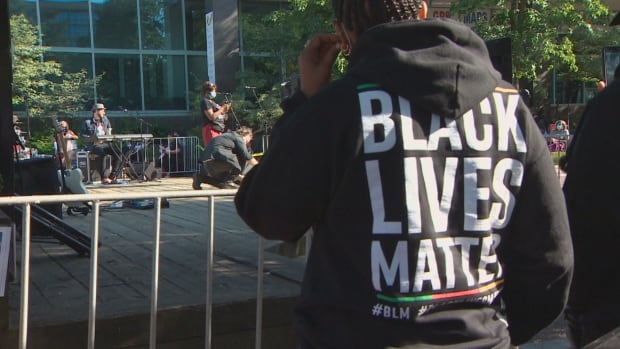
The recent altercation at an anti-racism event in Red Deer, where a member of a far-right group physically assaulted a demonstrator, symbolizes the escalating tensions between anti-racism activists and individuals connected to extremist ideologies. These confrontations, echoing instances from past years, underscore the increasingly volatile environment in Alberta, where far-right demonstrators clashed with residents in a north Edmonton neighborhood.
Dieulita Datus, a Black resident of Lacombe near Red Deer, moved to Canada from the Bahamas in 2007. She speaks to the incessant questioning of her Canadian identity, highlighting instances where her Afro was touched without consent. The daily struggle of being viewed as an outsider prompts her to feel compelled to wear the “badge” of a woman of color, reinforcing a sense of non-belonging.
In response to the challenges faced by racialized Canadians, Daniels and her friend Sadia Khan established the advocacy group Ubuntu. Their mission is to shine a light on the experiences of racialized individuals in a province that is still less diverse than its counterparts. Khan’s successful efforts to have stickers promoting a white nationalist website removed from Red Deer underscore the group’s commitment to combating hate.
Alberta’s diversity has been increasing, outpacing the national average, with 23.5% identifying as visible minorities in 2016. Despite this demographic shift, the province has witnessed a steady rise in hate crimes, reporting 207 incidents in 2018. Notably, this comes at a time when the rest of Canada, except for Alberta, reported a decrease in police-reported hate crimes in 2018.
Daniels, committed to anti-racism activism, reveals that she and her family have received death threats as a consequence. Her activism, ignited by the George Floyd incident, led her to co-found the Black and Indigenous Alliance Alberta. She emphasizes the urgency to break the cycle of racism, envisioning a better future for her children, where acceptance is not a distant dream.
The confrontations at anti-racism events raise questions about the role of the police in dealing with far-right groups. Despite receiving threats and facing disruptions, Daniels notes a consistent lack of police involvement. Supt. Gerald Grobmeier acknowledges the challenge but emphasizes the need for a thorough review to identify gaps and improve future responses.
John McCoy, an adjunct professor at the University of Alberta, sheds light on the overlap between far-right groups, anti-vaxxers, and anti-lockdown proponents. The pandemic has provided fertile ground for the dissemination of disinformation and the recruitment of individuals into extremist ideologies. McCoy suggests that hate-crime laws need reevaluation to proactively address individuals promoting violence and hate speech.
As Alberta grapples with the complexities of diversity and rising hate incidents, voices like Kisha Daniels’ and advocacy groups like Ubuntu emerge as beacons of hope. The struggle for acceptance, identity, and safety is a shared narrative among people of color in Alberta, inviting introspection on the province’s journey toward genuine inclusivity and harmony.
Follow Canada News Media
Get the day's top Canadian stories and our two daily 60-second news videos wherever you scroll.
X Threads Facebook Instagram LinkedIn TikTok YouTube Pinterest Reddit Substack Flipboard Newsletter RSS