




Two Swiss votes that had the potential to alter the corporate landscape of a country known for low taxes and light-touch regulation failed.
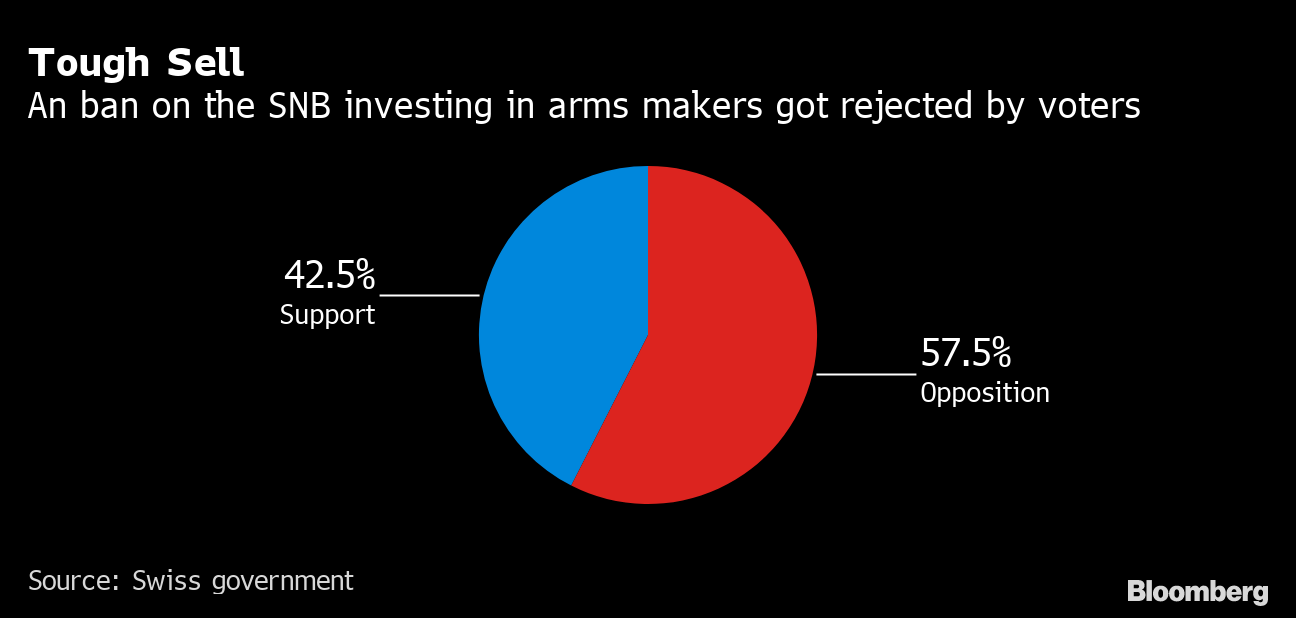
Nearly 60% of voters on Sunday rejected a measure that would’ve banned the Swiss National Bank from investing in defense companies.
A second measure, the Responsible Business Initiative, was also unsuccessful. It would’ve held multinational corporations responsible for human rights and environmental lapses abroad but failed to get the requisite majority among the country’s cantons, or states.
Tough Sell
An ban on the SNB investing in arms makers got rejected by voters
Source: Swiss government
.chart-js display: none;
While activists pushed for the two initiatives in a bid to force businesses and investors to adhere to higher moral standards, Switzerland’s government argued they’d hurt the economy.
Multinational corporations also campaigned against the RBI, saying it would’ve saddled them with additional bureaucracy and had the potential to cause a flood of lawsuits.
“Of course I’m disappointed,” lawmaker Mattea Meyer, who supported the RBI, told broadcaster SRF.
SNB Stocks
For the SNB, the vote result means it escapes having to offload stocks valued at almost 20 billion francs ($22 billion). The central bank holds the equities as part of its mammoth 870 billion francs in reserves, built up during a decade of currency interventions.
The initiative would also have stopped pension funds from providing both debt and equity financing to companies that derive more than 5% of their revenue from arms sales.
The failure of the RBI paves the way for the adoption of the government’s less stringent counterproposal. It’ll institute new reporting and due-diligence for firms.
Initiatives require 100,000 signatures to make the national ballot in Switzerland. To be successful, they must get a majority of votes, as well as a majority of cantons.
Stefan Brupbacher, director of machine industry group Swissmem, said he was “relieved” that damage to the Swiss economy and employment was averted.
Source: – Bloomberg
Follow Canada News Media
Get the day's top Canadian stories and our two daily 60-second news videos wherever you scroll.
X Threads Facebook Instagram LinkedIn TikTok YouTube Pinterest Reddit Substack Flipboard Newsletter RSS