




Protest held at Alta. slaughterhouse dealing with deadly COVID-19 outbreak
Labour leaders gathered early Wednesday morning at the Red Deer, Alta., slaughterhouse that is at the centre of a COVID-19 outbreak that claimed the life of a 35-year-old employee.
The protest at Olymel Red Deer Food Processing Plant was organized by UFCW Local 401. As of Tuesday, an outbreak at the pork-processing plant was linked to 200 active cases, and more than 343 in total.
“We’re here because no workplace that’s unsafe should ever be allowed to operate in society, and surely people need to be put ahead of pigs,” union president Thomas Hesse told CBC News.
Hesse said the union had advocated for the closure of the plant — where 1,800 employees work in close proximity — a move supported by the vast majority of workers.
“We were so surprised and it really speaks to the level of fear when workers say, ‘I want my own workplace to close and I’ll take all of the risks associated with that,'” said Hesse.
On Monday, the Quebec-based company announced it would voluntarily close the plant with operations ceasing over the next few days.
During Tuesday’s daily COVID-19 update, Alberta’s chief medical officer of health, Dr. Deena Hinshaw, said processes in place at the Red Deer plant had previously been “very successful” in preventing spread.
“Unfortunately, I think there was a concurrence of a number of events that were not limited to events directly on that plant site, and therefore we did see an increase in cases,” said Hinshaw.
From The National

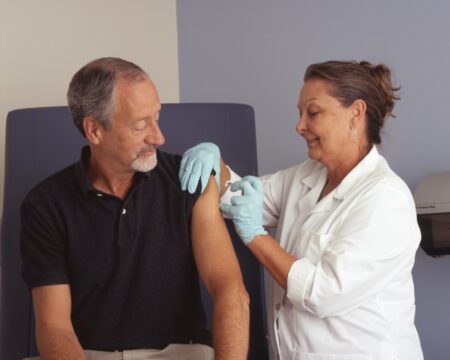
After weeks of delayed COVID-19 vaccine shipments, Canada is expected to see more doses start arriving this week. But there are concerns that the provinces aren’t ready to ramp up their vaccine rollouts. 2:01
IN BRIEF
Judge denies B.C.’s request for injunction against churches breaking COVID-19 rules
The B.C. government may ultimately win its case against three Fraser Valley churches flouting COVID-19 rules that prohibit in-person services, but on Wednesday the chief justice of British Columbia’s Supreme Court denied an application from the province for an injunction against the churches.
“Given the other remedies available to the respondents, I have reservations that an injunction alone, without enforcement by the B.C. Prosecution Service, would overcome the deeply held beliefs of the petitioners and their devotee,” Chief Justice Christopher Hinkson wrote in dismissing the application by B.C.’s attorney general and Provincial Health Officer Dr. Bonnie Henry.
The Riverside Calvary Chapel in Langley, the Immanuel Covenant Reformed Church in Abbotsford and Free Reformed Church of Chilliwack filed the petition last month challenging the province’s COVID-19 restrictions, arguing they violate the rights and freedoms of their parishioners.
“To be clear, I am not condoning the petitioners’ conduct in contravention of the orders that they challenge, but find that the injunctive relief sought by the respondents should not be granted,” Hinkson wrote in Wednesday’s ruling.
At a hearing last week, Hinkson said he had to consider the “balance of convenience” between sacrificing the Charter rights of the three churches and the public health damage the province claimed might happen without an injunction.
He said the balance favoured the churches, given that Henry still had other options to enforce her rules. The province’s Public Health Act says people who ignore health orders can face jail time and fines ranging from $25,000 to $3 million for causing a health hazard.
The challenge from the churches on the COVID-19 restrictions is set to be heard next month.
Incomplete national data makes it hard to assess exactly how far along Canada is on vaccination
The latest Public Health Agency of Canada numbers on vaccination are a gauge of how the country is actually doing when it comes to vaccinating those first in line for getting inoculated.
But officials in Canada’s most populous province are not submitting key COVID-19 data to the federal government’s health agency, making it difficult to get a clear, national picture of how the first phase of the country’s vaccination program is progressing.
Since Dec. 19, provinces and territories have been reporting the number of people vaccinated in three target populations that are top priority groups in the first phase: adults living in group settings, adults over the age of 80 and health-care workers.
The data is gathered by the Public Health Agency of Canada (PHAC) and published once a week on its vaccine coverage website — with one key exception.
“Data for Ontario are not included,” reads a disclaimer on the PHAC site. The reason given is that the province’s data is “not broken down by key population groups.”
In an email in response to CBC’s request for more information, a spokesperson for Ontario’s Ministry of Health said the ministry is working with PHAC to provide more data in “the near future.”
The issue comes as Prime Minister Justin Trudeau and other federal health officials have primed the country for an imminent and significant increase in the pace of vaccinations after setbacks with supply for both approved vaccines, from Moderna and Pfizer-BioNTech.
Montreal community groups press, once again, for race-based data on COVID-19
Nearly a year after the pandemic descended on Canada, community groups in Montreal are still pressing all levels of government to collect and publicize data on how COVID-19 is disproportionately affecting racialized minorities and low-income residents in the city.
Fo Niemi, the executive director of the Center For Research-Action on Race Relations, who was also at the news conference, said the information would helpful in dealing with the next challenge: vaccinations.
He pointed out that Canada’s national advisory committee on immunization issued new guidance earlier this week, recommending that adults from racialized communities disproportionately affected by the COVID-19 pandemic be prioritized for shots in the second stage of the vaccination campaign.
Dr. Jill Hanley, a social work professor at McGill University said at a virtual news conference on Tuesday that while researchers have been able to gather some information themselves, public health officials would be able to go deeper and allow policy makers to take more targeted steps at addressing the problem.
“Montreal as a city needs this information so that we can work together to send resources where they are most needed,” said Hanley, who conducted her own study last year on the impact of COVID-19 on ethnocultural communities in Montreal.
When asked about the issue of collecting race-based data, Quebec public health director Dr. Horacio Arruda said that he doesn’t think that’s the most relevant social factor to look at.
“We use that for some diseases when there is a racial effect of the disease because of the genetics. But most of the time, it’s not the race that is the problem, it’s the conditions of the person: poverty, crowding in houses,” said Arruda. “And I think it’s those elements which are more important for me: revenue, how many kids, university level. For me those are the factors that can explain why those communities are more [affected].”

Stay informed with the latest COVID-19 data.
AND FINALLY…
New lab processes thousands of rapid COVID tests to keep film industry rolling in B.C.

A man in costume holds flowers while walking down a street in Gastown during the filming of The Mysterious Benedict Society in Vancouver in November. (Ben Nelms/CBC News)
A new lab set up in Coquitlam, B.C., is processing thousands of coronavirus tests in under 12 hours each day to screen film industry workers for the virus and keep productions rolling.
Since January, Omega Laboratories Inc., working in partnership with Swedish-based First Wellness Testing, has responded to the huge demand for its specialized service.
Some experts say the film industry’s embrace of rapid asymptomatic testing is a direction other areas of the economy might consider, especially now that more infectious variants of the virus are emerging in B.C.
Gio Miletto, medical director for Omega Vancouver Laboratories, says the investment film companies are making to keep their employees safe is having the “knock-on” effect of screening out virus spreaders from the general community.
“We are finding the people that don’t have symptoms that are spreaders,” said Miletto.
The tests that U.S.-based Omega is employing in B.C. go beyond antigen tests, which detect fragments of SARS-CoV-2 virus proteins from a swab or sample. Its lab provides polymerase chain reaction (PCR) tests that employ a nasal swab collected by a trained nurse who goes on site.
One caveat: The tests are about $150 a pop.
It’s “enormously expensive, but maybe in the context of all the economic costs of COVID-19, it’s not looking like such a bad equation,” said Eric Brown of the Michael G. DeGroote Institute for Infectious Disease Research at McMaster University in Hamilton, which has looked at the efficacy of rapid tests.
Find out more about COVID-19
For full coverage of how your province or territory is responding to COVID-19, visit your local CBC News site.
To get this newsletter daily as an email, subscribe here.
See the answers to COVID-19 questions asked by CBC viewers and readers.
Still looking for more information on the pandemic? Reach out to us at [email protected] if you have any questions.