



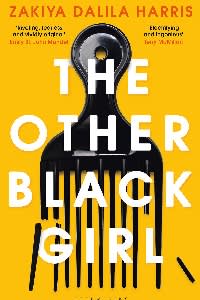
Zakiya Dalila Harris’s sly and unsettling debut novel The Other Black Girl has been marketed as a cross between Get Out and The Devil Wears Prada. But it’s a misnomer that does the book a disservice, even though Harris has declared herself as a big fan of horror and sci-fi.
While there are traits of both genres in the plot, it’s less misleading to describe this book as a genre-defying satire that offers a fresh take on the insidious nature of racism in overwhelmingly white corporate spaces.
The 26-year-old protagonist Nella Rogers, a middle-class, Ivy League-educated black woman, has been working as an assistant editor at the prestigious Wagner Books for two years. She’s determined to make her mark on the publishing industry but it’s a lonely existence: she’s the only black person — indeed, the only person of colour — who works at editorial level in the office.

Nella’s attempts to diversify the editorial workforce are labelled “extracurricular” by her boss and she’s asked to “blackify” Wagner’s Twitter and Instagram accounts during Black History Month, the only time the company demonstrates any inclination towards inclusivity.
So when Hazel, the titular other black girl (who smells distinctly of Brown Buttah, the same hair product Nella uses) joins the company, Nella is thrilled. Initially, the two women bond over office gossip and hair care but there’s a creeping sense that there’s something a bit odd about Hazel, and that having another black girl around doesn’t necessarily mean Nella has an ally.
Born in Harlem to civil rights activists, and with a grandfather who died protesting, impossibly cool Hazel matches Wagner’s ideas of what blackness should be in a way that Nella’s privileged upbringing never will. This causes Nella to doubt her own cultural authenticity and, in the process, increases her professional insecurities and paranoia. Worse, Hazel is fluent in the kind of code-switching that allows her to pander to her white colleagues while seeming to retain her authentic blackness.
Within two months, Hazel has encroached on Nella’s projects and eclipsed her professionally. Then the anonymous threatening notes begin to appear on Nella’s desk: “LEAVE WAGNER. NOW.”
Harris, who started writing the novel when she was herself an assistant editor at Knopf Doubleday in Manhattan, is uncompromisingly adept at immersing the narrative in the microaggressions that black women encounter every day and the compromises they must make. The decision to keep quiet about the problematic portrayal of black women (and other people of colour) by white male authors, for example, in order to succeed in the overwhelmingly white world of publishing, and the corporate world in general.
The dialogue in The Other Black Girl crackles with the biting wit, especially in Nella’s interactions with her best friend Malaika, that lends the story its satirical edge. Bemoaning the apparent retirement of an outspoken black male celebrity, Malaika says: “With Jesse on his weird hiatus, how will I be able to tell the difference between a microaggression and a sheet with holes in it?”
All the references to black women’s hair and its care are no coincidence and the cleverly placed prologue hints at why it’s the central conceit. Subsequent chapters zigzag between Nella’s point of view and those of other black women in publishing. Even if all of these stories, which lend texture and context to the plot, don’t quite converge satisfactorily, this book is still an engrossing contemplation of the gap between success and authenticity.
The Other Black Girl by Zakiya Dalila Harris, Bloomsbury £14.99/Atria $27, 368 pages
Join our online book group on Facebook at FT Books Café

Follow Canada News Media
Get the day's top Canadian stories and our two daily 60-second news videos wherever you scroll.
X Threads Facebook Instagram LinkedIn TikTok YouTube Pinterest Reddit Substack Flipboard Newsletter RSS