

“Our information is being weaponized against us with military efficiency. Billions of dollars change hands and decisions are made with a blind eye. These scraps of data, each one harmless enough on its own, are carefully assembled, synthesized, traded, and sold”. (Apple CEO Tim Cook).
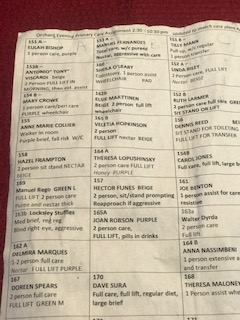
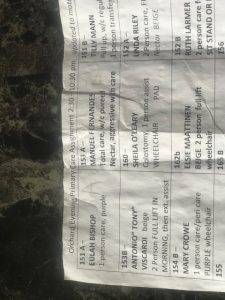
I was in my yard doing some gardening this past weekend. Cleaning up my yard I happened to find a piece of paper, a document subject “Orchard Evening Primary Care Assignment 2.30-10.30 pm Updated to match care plans 4/9/22”.
On this two-page document are the names of patients(1 or two-person care).
the type of care they are to receive and particulars-whether aggressive care, foods they must eat, exercise schedule.
personal information(married, single, whether in wheelchair, even if patient is blind).
As I read it I realized that this document can be considered privileged and private. It also made me quite upset because of how I found this information.
It is obviously from a care center for seniors and the ill. Senior home, critical care, or even hospital center. We are always hearing about how criminals try to steal private information and in fact other people’s identities. Whether this information can be used nefariously or not, is a concern to me. How are these documents disposed of, used, and destroyed? Reminds me of the multiple situations where paper documents were intended to be destroyed, but were left in the garbage or stolen by some criminal. We are talking about bank records, credit cards, and doctor’s documentation left in places unintended, forgotten perhaps.
The various organizations that carry out their professions well, often take it for granted that the large amount of documentation generated in the job will be dealt with appropriately. The compliant shredding industry is here for that reason, and many of these firms are compliant with Federal and Regional Laws. Could many firms with large accumulations of private files want to cut costs, and find cheaper ways to destroy what they are being paid to shred? Boxes of credit card and banking information are found in boxes in the back of a bank or thrown into a river in the countryside. Yes like the used food service cooking oil, old automotive oil, or the crud out of a septic tank, legal private information can be improperly discarded illegally. A problem for the police, but you too. Oil can be properly recycled, but criminals can acquire your private information, credit card #, codes, addresses, and health and security information from these documents. A thing to take seriously.
The shredding industry in North America is worth Billions of dollars. A business is essential that private citizens should consider. Bonded firms guarantee the destruction of what you want to discard. You cannot trust that your private information, whether online, paper, or digital is safe. Hacks, digital tracks, and the theft of physical paperwork happen daily by professional and amateurish criminals. The advertisement that told you “Only you can stop forest fires” remember? Well, the same goes for your private security in all things. Tell any organization that uses your personal information that it cannot be sold or used in any way except how it was intended. Your rights will be taken into account, but only if you demand it to be so.
When you go to hospitals, medical clinics, senior homes, healthcare facilities, or even banks, financial businesses think about how your private information is used and possibly shared intentionally or accidentally.
Steven Kaszab
Bradford, Ontario
[email protected]
Follow Canada News Media
Get the day's top Canadian stories and our two daily 60-second news videos wherever you scroll.