






The initial period of Canada’s immigration history is often overlooked, described by Hawkins (1989) as being “relegated to discreet silence.” Legal scholars, sociologists, and historians have since explored this period, revealing that Canada was largely constructed as an extension of Britain (Venkatesh, 2019). According to Jakubowski (1997), efforts to preserve Canada’s British identity led to policies that excluded certain groups from entering the country, while actively encouraging others, typically from Great Britain, the United States, France, and, to a lesser extent, Northern and Western Europe.
In the late 19th century, Canada sought White agriculturalists to populate the western prairies. These immigrants were perceived as being of “superior stock” compared to immigrants of colour (Jakubowski, 1997; Satzewich, 1991). Even after expanding the “White category” to include immigrants from Eastern Europe, Canada’s labour needs remained unmet, particularly in large-scale projects like the construction of the Canadian Pacific Railway (CPR) from 1881 to 1885, which relied heavily on Chinese workers (Bolaria & Li, 1988; Venkatesh, 2019).
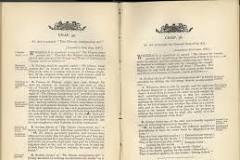
The arrival of Chinese labourers, while economically necessary, fueled xenophobic and racist responses. As Venkatesh (2019) explains, Chinese immigration policies epitomized the tension between migrant labour demand and anti-immigrant sentiment. Stereotypes about Chinese workers painted them as a threat to Canadian health and safety, prompting policies like the Chinese Immigration Act of 1885, which imposed a head tax on Chinese immigrants and severely restricted their entry into Canada (Triadafilopoulos, 2013; Abu-Laban, 1998).
Other discriminatory policies followed, such as the 1907 Gentleman’s Agreement with Japan and the 1908 Continuous Journey Stipulation, both of which aimed to limit Asian immigration, particularly from India and Japan (Bolaria & Li, 1988; Jakubowski, 1997). The Komagata Maru incident in 1914, where Indian passengers were denied entry into Canada despite being British subjects, exemplifies the deeply rooted racial exclusion embedded in Canada’s immigration policies.
This racial exclusion extended to African Americans as well. Between 1905 and 1912, while hundreds of thousands of Americans settled in Canada, only about 1,000 African Americans were admitted. Canadian authorities implemented a variety of tactics to prevent Black immigration, including deceptive practices and selective enforcement of regulations, driven by the belief that Black people were unsuited for Canada’s climate and society (Schwinghamer, 2021).
By 1910, Canada’s immigration policies explicitly prioritized “healthy, white” immigrants, with legislation empowering the government to exclude those deemed racially unsuitable. This was formalized through laws like the Chinese Immigration Act of 1923, which effectively halted Chinese immigration for decades (Bolaria & Li, 1988). The racial preference for European immigrants persisted until the mid-20th century, when the aftermath of World War II and the global shift toward human rights began to challenge these discriminatory practices.
In the post-World War II period, a global discrediting of racism began to influence Canadian immigration policy. However, as Triadafilopoulos (2012) and Thobani (2007) argue, while overt racial discrimination diminished, Canada’s immigration system continued to favor European immigrants under the guise of “assimilability.” The points system, introduced in 1967, marked a shift toward skill-based immigration, formally ending racial selection. Yet, scholars like Ellermann (2019) note that biases persisted, with discrimination continuing subtly through factors such as language proficiency and education levels that disproportionately favored immigrants from Western countries.
Canada’s immigration policies evolved significantly over time, but the legacy of racial discrimination continued to influence the country’s approach to both permanent and temporary migration. Programs like the Seasonal Agricultural Worker Program (SAWP) and domestic worker schemes, initiated in the 1960s, perpetuated these biases by restricting pathways to permanent residency for non-European immigrants. Scholars argue that these programs reflect a history of racist immigration policies that categorized non-White workers as temporary, unfree labour suited for low-wage jobs but not for integration into Canadian society (Perry, 2012; Venkatesh, 2019).
Canada’s transition toward a more inclusive immigration system has been gradual and complex, influenced by global pressures and domestic labour needs. While the formal removal of racial criteria from immigration policies represents progress, the persistence of implicit biases highlights the ongoing challenges in fully addressing the legacy of discriminatory practices in Canada’s immigration history.
Follow Canada News Media
Get the day's top Canadian stories and our two daily 60-second news videos wherever you scroll.
X Threads Facebook Instagram LinkedIn TikTok YouTube Pinterest Reddit Substack Flipboard Newsletter RSS