


Article content
The COVID-19 pandemic and an unexpected provincial election have put TransLink in a time crunch to finish a required update to its 10-year investment plan.
Metro Vancouver’s transit authority is obligated, by provincial legislation, to update the plan at least every three years. The current plan was approved on June 28, 2018, which means the new one is due by June 28, 2021.
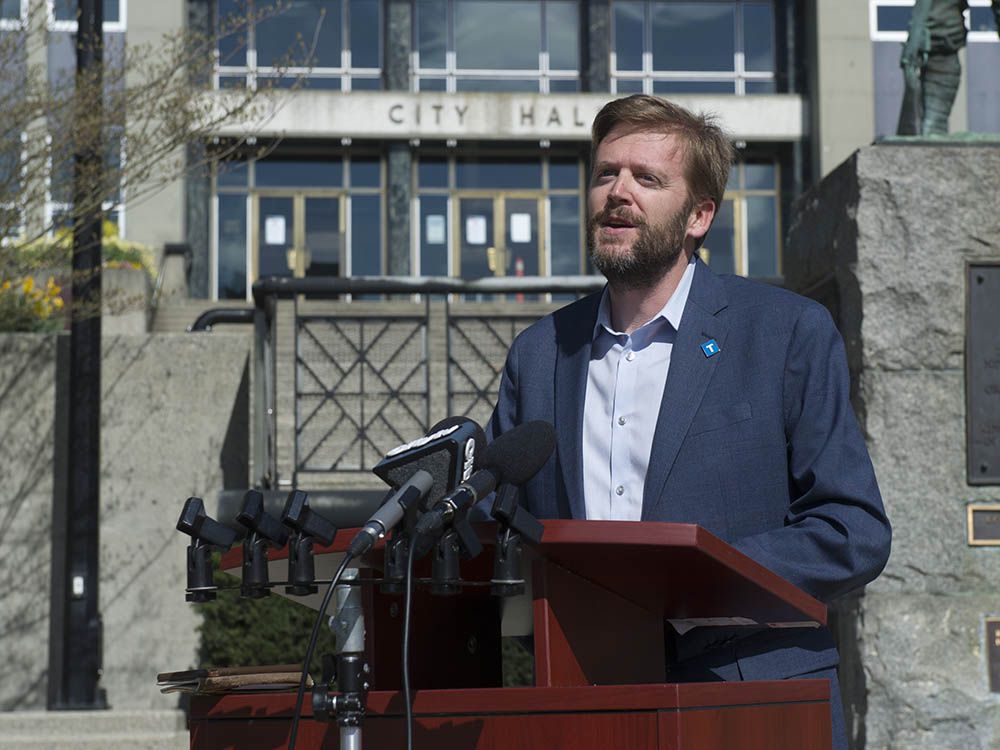
“Originally we had had planned for that to happen this year, but because of COVID-19 and dealing with the emergent financial challenges with that, that was not possible,” Mayors’ Council chair Jonathan Coté said following a meeting on Thursday. “But we’ve now reached the point where we need to start to work towards that.”
Priorities for the update include finding revenue to cover long-term COVID-19 losses. Although the federal and provincial governments will provide a combined $644 million to TransLink to cover its pandemic losses for 2020 and 2021, there will likely be shortfalls of $100 million to $300 million each year between 2021 and 2030.
The losses will depend on how long the pandemic lasts, the depth of economic damage and how quickly transit ridership recovers. The plan cannot show a deficit.
“Even with the near-term financial aid, we almost certainly have a fairly significant structural hole in our budget and we’re going to have to work to understand just what that hole is over the months to come,” CEO Kevin Desmond said after the meeting.
“There’s still a lot of uncertainty about the path of the pandemic.”
The investment plan will also deliver elements of the second phase of the 10-year regional transportation vision that are outstanding or were delayed due to the pandemic, plus approving projects that are already funded, such as a SkyTrain extension to Fleetwood and the next stage of the low-carbon fleet strategy.
A lot will have to be done before next June, including confirming federal and provincial contributions, finding new regional funding sources and setting rates, plus consultation with the public and local governments.
“No doubt this is going to be a significant part of our work plan and probably one of the more challenging things the Mayors’ Council is going to have to work on,” Coté said during the council meeting.