



(Bloomberg) — U.S. and European stock futures slumped and the yen advanced, retracing some of the previous day’s moves as traders continue to test where fundamental valuations lie amid rapidly changing news flow.
Rallies fizzled throughout Asia, with Japanese shares ending barely up after rising over 4% at one point. Sydney stocks plunged more than 6%, while shares in Hong Kong fell nearly 2%. S&P 500 futures once again fell by their limit after the index gained 6% on Tuesday. Australian and Japanese bond yields were higher, while the sell-off in Treasuries appeared to ease. As the Trump administration moves toward a big fiscal package and the federal government shifts to working from home, Treasury Secretary Steven Mnuchin warned the coronavirus could send U.S. unemployment up to 20% without government intervention. Oil resumed a slide to trade near the lowest since 2003 and copper slumped below $5,000 a ton.
Countries continue to ramp up measures to limit travel in a bid to contain the spreading virus, with Europe shutting borders, Australia advising citizens not to travel abroad and Taiwan barring most foreign visitors. Japan reported a further slide in exports as supply chains become increasingly disrupted around the world.
“The missing fundamental ingredient for a sustainable recovery in risk appetite is some evidence that the growth of global Covid-19 infection rates is peaking,” said Paul O’Connor, head of multi-asset at Janus Henderson Investors. “Clearly, we are not there yet.”
The Trump administration’s planned stimulus could amount to $1.2 trillion, aiming to stave off the worst impact of a crisis that already looks set to plunge many of the world’s economies into recession. Meantime, the Federal Reserve reintroduced additional crisis-era tools to stabilize financial markets. Those responses came after stresses appeared in the short-term funding markets.
“I don’t think we’re out of the woods yet in terms of liquidity,” Mark Konyn, chief investment officer at AIA Group in Hong Kong, told Bloomberg TV. “It’s a question of when the fiscal measures will have the most efficacy.”
In Germany, Angela Merkel said the government will not rule out joint European Union debt issuance to help contain the impact. And yet more companies are scrambling for cash, with Kraft Heinz, Caesars and MGM drawing down credit lines.
These are the main moves in markets:
Stocks
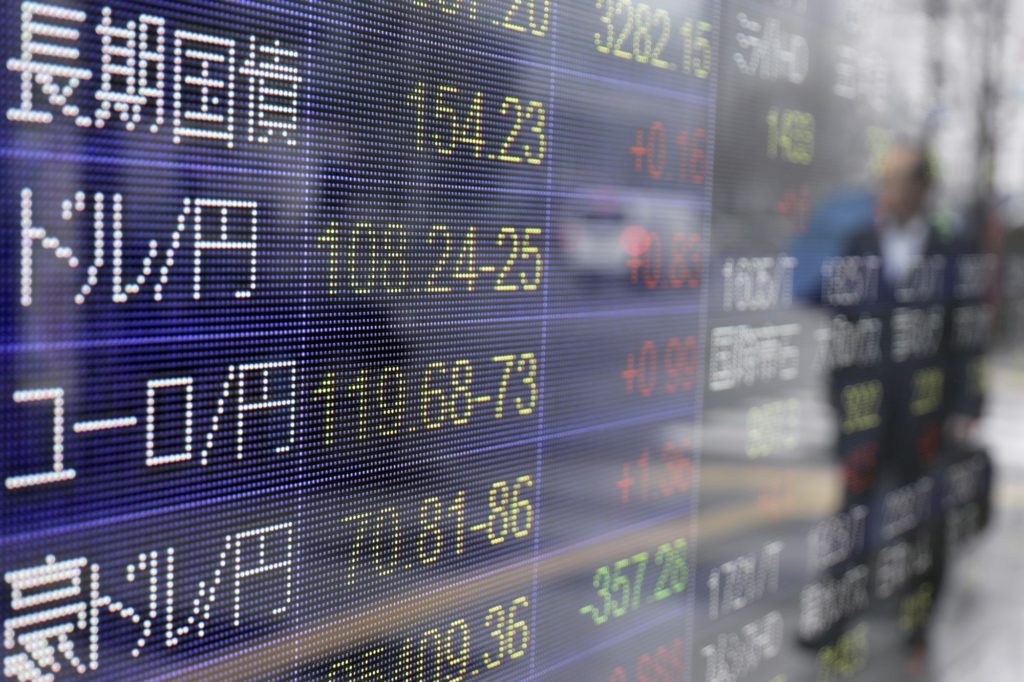
Futures on the the S&P 500 fell 3.7% as of 3:08 p.m. in Tokyo. The index rose 6% on Tuesday.Japan’s Topix index gained 0.2%.Hong Kong’s Hang Seng fell 2.1%.Shanghai Composite fell 0.7%.Euro Stoxx 50 futures lost 4.2%.Australia’s S&P/ASX 200 Index sank 6.4%.Kospi index was down 3.3%.
Currencies
The yen was up 0.7% at 106.97 per dollar.The offshore yuan was at 7.0340 per dollar.The euro bought $1.1018, up 0.2%.
Bonds
The yield on 10-year Treasuries fell eight basis point to 1.00%. It had risen 36 basis points on Tuesday.Australian 10-year yields climbed 18 basis points to 1.21%.Japan’s 10-year yield rose to 0.015%.
Commodities
West Texas Intermediate crude added 1.4% to $26.57 a barrel.Gold was down 1% at $1,512.83 an ounce.LME copper lost 3.6% to $4,958 a ton.
©2020 Bloomberg L.P.
Follow Canada News Media
Get the day's top Canadian stories and our two daily 60-second news videos wherever you scroll.
X Threads Facebook Instagram LinkedIn TikTok YouTube Pinterest Reddit Substack Flipboard Newsletter RSS