

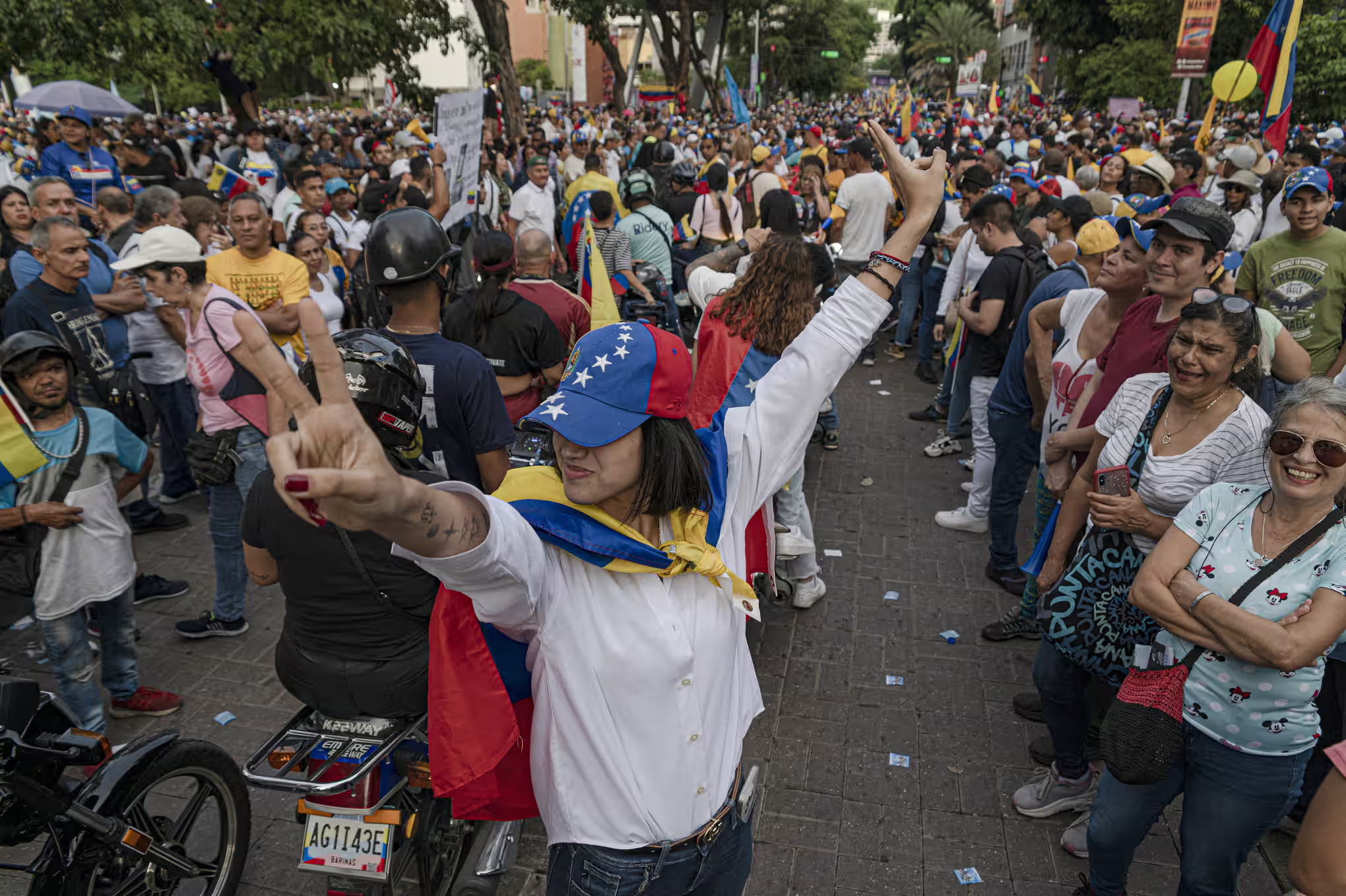
Venezuelans are heading to the polls on Sunday in a presidential election that holds the potential to end 25 years of socialist rule, but only if the vote is conducted fairly and transparently. The election has generated significant anticipation and anxiety, with opinion polls indicating that the current president, Nicolás Maduro, could be defeated by opposition candidate Edmundo González Urrutia.
Maduro, 61, who is seeking his third term, is up against González, a 74-year-old retired diplomat. While González is poised to garner more votes according to several polls, experts caution that achieving victory in the vote count is one thing, and being officially declared the winner by the National Electoral Council—aligned with Maduro’s government—is another.
Challenges and Irregularities
Independent observers have labeled this election as one of the most arbitrary in recent years, even by the standards of Maduro’s authoritarian regime, which has a history of manipulating electoral processes. The irregularities in this election range from barring candidacies and detaining opposition members to changing polling locations and preventing voters at home and abroad from registering.
“Establishing fair and free elections within an authoritarian regime is impossible,” said Jesús Castellanos, a consultant at Electoral Transparency, an NGO. “Fair elections assume that all parties have the opportunity to register their candidates.”
Reports from across Venezuela indicate long lines at polling stations, some of which opened late. Despite these challenges, many voters remain hopeful for change.
A Broad Desire for Change
Tibisay Aguirre, a 57-year-old cook in Maracay, expressed her desire for a new Venezuela: “I came to vote for change, for a new Venezuela, which will be reborn and because I’m a public worker and we need change to be able to have a dignified salary.”
Alejandro Sulbarán, 74, who got in line at his voting center in Caracas on Saturday evening, echoed similar sentiments: “We are all here for the change we want.”
The opposition coalition’s most prominent figure, former legislator María Corina Machado, initially won the primary with overwhelming support but was barred from running by a court loyal to Maduro. Despite these obstacles, Machado has remained active on the campaign trail, rallying significant support across the country.
International Concerns and Limited Monitoring
While the government has allowed some international observers, such as those from the UN and the Carter Center, their roles are limited. European Union observers and teams from countries previously seen as sympathetic to Maduro were disinvited. Brazil, for instance, decided not to send observers after Maduro made comments questioning the auditability of Brazilian elections.
Venezuelan Exiles and Voting Challenges
A significant challenge to fair voting is the disenfranchisement of millions of Venezuelans abroad. Although around 5 million exiles are eligible to vote, government obstacles have prevented most from registering. Only about 500 people have been added to the 69,000 registered before 2018.
William Clavijo, founder of the NGO Venezuelans In Brazil, highlighted the difficulties faced by voters in the diaspora: “Of all the people I spoke to, none who went to the embassy in Brasília managed to update their voting information.”
A High-Stakes Election
Despite all the challenges, many Venezuelans remain hopeful for change. “It feels like the first time in a long time that we’ve had a real hope,” said Thabata Molina, a Venezuelan journalist living in Spain. “There are a lot of people who were Chavistas for years who are now feeling hopeless and impatient for a drastic change.”
Clavijo noted that many Venezuelans are already planning to return home if González succeeds: “We simply want to live in a democratic country again. We want to feel once more that the country belongs to us.”
A Region on Edge
The election is closely watched by neighboring countries and the international community. An exit poll by U.S.-based Edison Research suggested that González could win 65 percent of the votes, compared to 31 percent for Maduro. However, official results are yet to be announced.
In the meantime, the atmosphere in Venezuela remains tense, with the potential for significant political shifts depending on the outcome of the election. The hopes of millions rest on the possibility of a new era of governance and the restoration of democratic norms in the country.
Follow Canada News Media
Get the day's top Canadian stories and our two daily 60-second news videos wherever you scroll.
X Threads Facebook Instagram LinkedIn TikTok YouTube Pinterest Reddit Substack Flipboard Newsletter RSS