



Health experts are urging people to get their flu shots this year as the healthcare system braces to battle a “twindemic” of COVID and influenza infections.
Hospitalist Dr. Khushdeep Chahal, chair of Walker Baptist Medical Center’s Infection Prevention Committee, said the hospital had its first confirmed patient to be infected with both COVID-19 and the flu on Wednesday.
He is urging the public to do their part and get vaccinated for flu, in order to prevent infection from one of two deadly conditions.
“This is probably the most important time ever to take the flu vaccine, because, remember, we’re dealing with an infection which kills,” Chahal said of COVID. “It’s very hard to figure out who it’s going to kill and who might not even know they’ve had this infection. We should just assume the worst, think that we all have a very high risk of getting terribly sick from this, and take measures to protect against what we can, which is the flu virus.”
The Centers for Disease Control recommends that everyone 6 months and older receive a flu shot annually.
Chahal said medical teams are having to use their best assessment skills to distinguish between COVID and flu symptoms, which he admits can be incredibly difficult.
People with both infections can have common symptoms of viral illness such as head and body aches, fever, gastric symptoms, cough, runny nose, etc.
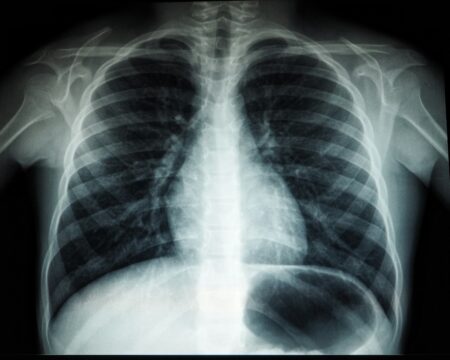
“When we talk about flu and COVID, the similarities also extend into the fact that the primary organ that is involved is the lungs, the respiratory system,” Chahal said. “What’s also common is that if you were to obtain X-rays of patients with flu and of patients with COVID, you’ll see pretty much the same images on the chest X-rays — similar-looking pneumonia, what we typically call viral pneumonia, where you might not necessarily see one dense patch but you might see some diffuse inflammation in both the lungs.”
One key symptom of COVID-19 that differs from flu is a patient’s loss of taste and smell, Chahal said. In addition, he said people with COVID seem to have an increased risk of forming blood clots in the lungs which can lead to heart attack and stroke.
Chahal said there’s another important consideration when discussing COVID and flu.
“Having one doesn’t really provide you any protection against the other. You could easily have one without the other or have both infections at the same time,” he said.

Most patients who seek medical care and have symptoms of both COVID and flu will be tested for both illnesses, according to Chahal. Patients diagnosed with both would be typically be treated with Tamiflu for influenza, while also receiving Remdesivir, steroids, and other supplements to treat COVID.
Chahal again stressed the importance of the flu vaccine so that more hospital resources can be preserved as COVID cases continue to climb.
“Take the flu vaccine because, yes, we don’t have a COVID vaccine yet, but we do have a flu vaccine. You’re not only helping us; you’re helping the whole nation, the whole healthcare system, and the world because when you don’t get flu, you don’t come into our E.R.’s,” he said. “You’re not coming into our hospitals, which means we have to do less testing, and those tests can be used judiciously for the patients who would actually need those tests.”
As of Friday afternoon, just over 20,200 cases of COVID-19 had been confirmed statewide in the last 14 days, 358 of those in Walker County.
Over 3,100 people in Walker County have been diagnosed with COVID-19 since the pandemic began, resulting in 90 confirmed deaths.
He said people experiencing symptoms of COVID and/or flu should pay special attention to how their activities of daily living are being impacted when considering whether to seek medical care.
“If you have shortness of breath and especially if it’s bad enough that you can’t even walk to your bathroom or your kitchen, you need help,” he said, adding that many people are relying on store-bought pulse oximeters to determine their oxygen level and gauge if they need to see a doctor.
“These devices may not be standardized, so they might not give you very accurate estimations,” Chahal said. “We don’t want you to have a false sense of relief that your numbers are absolutely fine when they actually may not be.”
Even if symptoms are mild, Chahal said being tested for COVID is a smart decision to protect the health of others.
“Confirming the diagnosis definitely means that you’ll take more precautions to protect your near and dear ones,” he said.
Chahal encourages people to continue wearing face masks, to social distance, and to practice good hygiene to protect against COVID and other illnesses common in the fall and winter months.
“It’s the safest thing to do, to assume that anyone around you has COVID. Wear a mask, keep your distance,” he said. “What we’re seeing is once someone gets an infection in the household, it spreads pretty quickly to the other people in the household. The ability of this virus to disseminate and spread, how contagious it is, it’s just extraordinary.”