




Here’s what you need to know about the coronavirus right now:
India’s COVID deaths cross 500,000
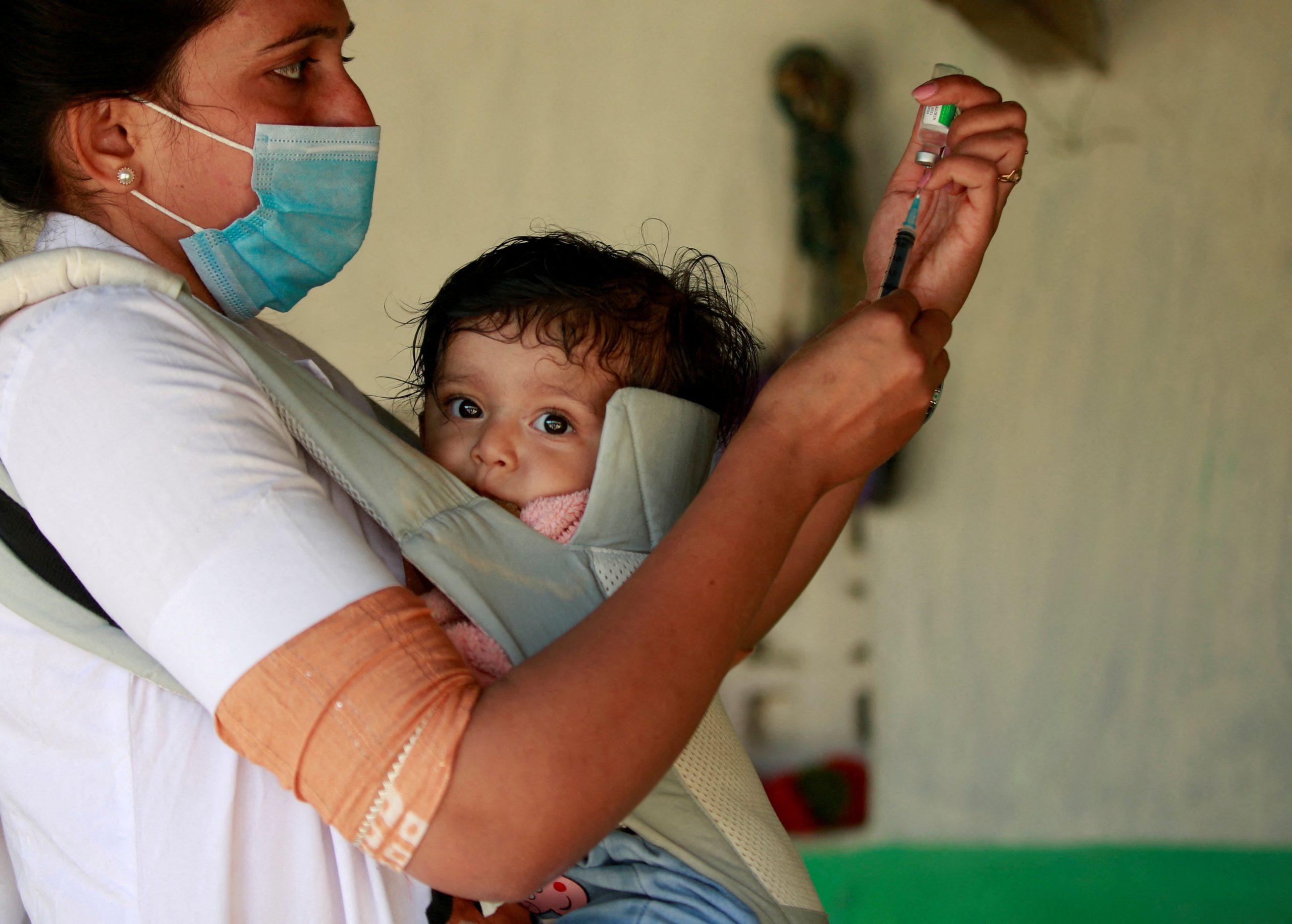
India’s official COVID-19 death toll crossed 500,000 on Friday, a level some data analysts said was breached last year but was obscured by inaccurate surveys and unaccounted dead in the hinterlands, where millions remain vulnerable to the disease.
The country, which has the fourth-highest tally of deaths globally, recorded 400,000 deaths by July 2021 after the devastating outbreak from the Delta variant, according to official data.
South Korea extends social distancing rules
South Korea extended social distancing rules on Friday for an additional two weeks as Omicron variant infections soar, including a 9 p.m. curfew for restaurants and a six-person limit on private gatherings.
The restrictions were due to end on Sunday but Prime Minister Kim Boo-kyum said the extension was necessary to slow the spread of Omicron amid fears the Lunar New Year holiday, which ended on Wednesday, may have fuelled infections.
Hong Kong to roll out rapid antigen tests for all residents
Hong Kong plans to roll out rapid antigen tests for COVID-19 to all its 7.5 million people in the near future, city leader Carrie Lam said on Friday, as the increasingly isolated global financial hub tries to control a new outbreak.
Lam said her government was working on increasing testing, contact tracing and vaccination capacity and making plans to send hospitalised asymptomatic patients to a quarantine facility reserved for close contacts as infections add up.
Race to send vaccines as COVID reaches Pacific islands
Pacific island nations that are some of the last places in the world to be hit by the pandemic are recording a growing number of COVID-19 cases, prompting a rush to provide vaccines, medical teams and food aid.
Concern about the detection of the coronavirus in tsunami-hit Tonga, where one new case was recorded on Friday, has been heightened by thousands of infections sweeping neighbouring Pacific islands.
South Africa seeing more cases of Omicron sub-variant
South Africa is seeing more cases of the BA.2 sub-variant of the Omicron coronavirus variant and is monitoring it, but there is no clear sign that BA.2 is substantially different from the original Omicron strain, a senior scientist said on Friday.
Michelle Groome, from the National Institute for Communicable Diseases, showed in a presentation that BA.2 accounted for 23% of the 450 samples from January sequenced by South Africa’s genomic surveillance network and the original strain 75%.
Spain to scrap mandatory outdoor masks
Spain will next week lift a requirement for people to wear masks outdoors, extending a wider rollback of restrictions as coronavirus slowly recedes in the country.
Mask wearing outdoors was reinstated in late December to curb the spread of the emergent Omicron variant.
Greece to scrap negative COVID test demand for travellers
Greece will allow tourists with a European vaccination certificate to enter the country without having to show a negative test for COVID-19 from Feb. 7, the tourism and health ministries said on Friday.
The Mediterranean country, which relies heavily on tourism, has been gradually easing travel restrictions.
UK scientists look to repurpose existing antiviral drugs for COVID
British researchers want to repurpose existing antiviral therapies to treat COVID-19, the University of Oxford said on Friday, in an attempt to sidestep lengthy development processes through readily available drugs.
Scientists will initially screen 138 drugs with known antiviral activity against the COVID-causing SARS-CoV-2 virus to study and identify potent combinations, the university said.
(Compiled by Linda Noakes)
Follow Canada News Media
Get the day's top Canadian stories and our two daily 60-second news videos wherever you scroll.
X Threads Facebook Instagram LinkedIn TikTok YouTube Pinterest Reddit Substack Flipboard Newsletter RSS