


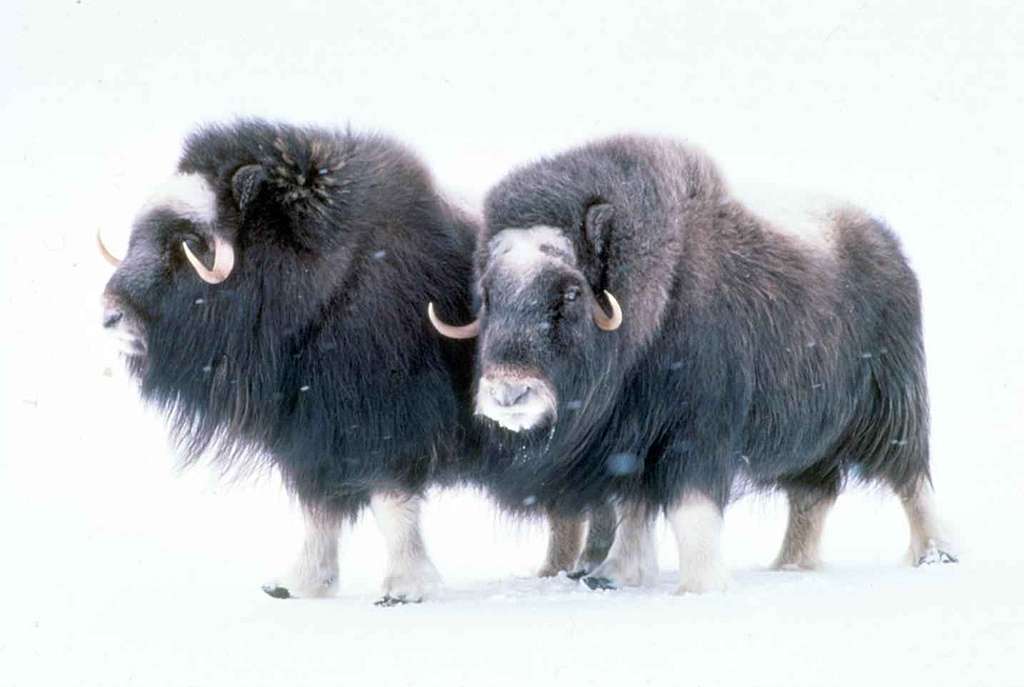
Muskox, the tundra’s ultimate survivors, have survived ice ages ending and extreme commercial hunting when many species did not. They’ve been reduced to numbers as low as 400, tucked away in pockets of Canada and northeastern Greenland, yet rebounded. But these challenges have taken their toll.
Evolutionary biologists at the University of Copenhagen have delved into the muskox’s history by collecting DNA samples from remote parts of Canada and Greenland — and one 21,000-year-old sample from Wrangel Island, Siberia. Using these samples, the researchers analyzed the whole genome of more than 100 muskoxen. They found that the muskox has lost a big proportion of its genetic diversity over the past 20,000 years. Even the most diverse of present-day muskoxen have only about a third of the diversity that the Siberian muskox had 21,000 years ago.
They are the least diverse ungulate, and in a range where most top predators usually end. Yet, unlike other species with similar genetic diversity such as the cheetah, snow leopard or white rhino, the muskox is widespread and counts close to 170,000 animals.
They owe this to their adaptation to the harshest of environments Earth has to offer. However, with the Arctic climate heating rapidly, muskox are likely to face their biggest challenge yet. Their major food sources could be cut off, and diseases previously held at bay by the cold of the Arctic are now spreading further north. With their genetic diversity so low, can these shaggy survivors come out on top once more?
A tough meal