


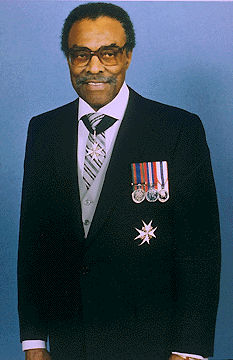
As Black History Month unfolds in Canada in 2025, one towering figure stands out — Lincoln MacCauley Alexander, a trailblazer whose life and achievements continue to inspire generations of Canadians, particularly those from Black and marginalized communities. Celebrating his legacy is more than a look at the past; it’s a call to action, a reminder of the ongoing fight for equality, and a reflection on the obstacles still faced by Black Canadians today.
Lincoln Alexander’s story is one of perseverance, breaking barriers, and challenging the status quo. Born on January 21, 1922, in Toronto, Ontario, Alexander went on to achieve numerous firsts in Canadian history: the first Black Canadian Member of Parliament, the first Black Cabinet Minister, and the first Black Lieutenant-Governor of Ontario. His life’s work helped lay the foundation for a more inclusive and equitable Canada, but his story also highlights the systemic racism and colonialism that continues to affect Black and Indigenous Canadians.
Early Life and Challenges
Born to Caribbean immigrant parents — a mother from Jamaica and a father from St. Vincent and the Grenadines — Lincoln Alexander was no stranger to the hardships that came with being Black in Canada. His father, a carpenter by trade, worked as a sleeping car porter for the Canadian Pacific Railway, one of the few jobs available to Black men at the time. His mother, Mae Rose, worked as a maid, which was often the only employment available to Black women.
Growing up, Alexander experienced the harsh realities of racism and discrimination. In his autobiography, Go to School, You’re a Little Black Boy, he reflected on these early experiences: “The colour of my skin was a reminder to some that I did not belong, that I was not equal.”
When his parents separated during his teenage years, Alexander moved to Harlem, New York, to live with his mother. It was there, in the heart of a thriving Black community, that he first encountered Black role models in positions of authority and respect. “It stiffened my resolve to be more than a porter,” Alexander later wrote. Harlem helped him realize that Black people could succeed, something that wasn’t often visible in Canada at the time.
Upon his return to Canada in 1939, just before the outbreak of the Second World War, Alexander joined the Royal Canadian Air Force (RCAF), despite the military’s history of restricting non-White applicants. Though his poor eyesight prevented him from engaging in combat, Alexander served as a wireless operator, marking the beginning of a life dedicated to service and advocacy for racial equality.
Political Career and Breaking Barriers
After the war, Alexander pursued higher education, earning a BA from McMaster University and a law degree from Osgoode Hall Law School. By 1968, he entered politics and won a seat in Parliament as the first Black Canadian MP. His election marked a pivotal moment in Canadian history, not just for Black Canadians but for the country as a whole.
In his first speech in the House of Commons, Alexander made it clear that while he did not claim to be the spokesperson for all Black Canadians, he felt a deep responsibility to represent their voices: “Do not let me ever give anyone the impression that I am here as a spokesman for the Negro. However, I accept the responsibility of speaking for those who feel they are discriminated against because of race, creed, or colour.”
His time in office wasn’t without controversy. One notable incident was in 1971 when Alexander accused Prime Minister Pierre Trudeau of mouthing a profanity during Question Period. The “fuddle duddle” incident, as it came to be known, demonstrated Alexander’s fearlessness in confronting even the most powerful figures in the country.
In 1979, Alexander was appointed Minister of Labour, becoming the first Black Canadian to hold a Cabinet position. His political career was marked by a dedication to advancing workers’ rights and combating racism. However, his most significant contribution came in 1985 when he was appointed Ontario’s lieutenant-governor, the first Black person to hold a viceregal position in Canada.
During his tenure, Alexander focused on multiculturalism, youth advocacy, and fighting racism, leaving an indelible mark on Canadian society.
Honouring Lincoln Alexander’s Legacy
In 2013, the Ontario legislature declared January 21 Lincoln Alexander Day, recognizing his life as an “example of service, determination, and humility.” Since 2015, the day has been celebrated nationwide, reminding Canadians of his enduring legacy.
“Lincoln Alexander’s life showed us what is possible when we refuse to accept the limitations others try to impose on us,” said the Honourable Ahmed Hussen, Minister of Housing and Diversity and Inclusion, during a speech marking the 2025 Black History Month celebrations. “He was a trailblazer who never lost sight of the challenges facing Black Canadians, and his legacy is a powerful reminder that we must continue the fight for equality.”
For many Black Canadians, however, the celebrations come with a sobering reminder of the work that remains to be done. “It’s inspiring to reflect on Lincoln Alexander’s achievements, but the reality is that systemic barriers still exist for Black Canadians,” said Dr. Hadiya Roderique, a Toronto-based lawyer and advocate for racial equity. “While we’ve come a long way since his time, Black Canadians still face significant obstacles in employment, education, healthcare, and the criminal justice system.”
The Ongoing Fight Against Racism
Despite the progress made since Alexander’s time, racism and discrimination continue to affect Black Canadians in profound ways. A 2020 report by the Canadian Human Rights Commission found that Black Canadians are disproportionately represented in low-income brackets, experience higher rates of unemployment, and are more likely to face discrimination in housing, education, and healthcare.
“Racism is still very much alive in Canada, even if it’s not always as overt as it once was,” said Kofi Hope, a community organizer and founder of the Black Daddies Club. “Lincoln Alexander’s story is one of triumph, but we have to remember that his success didn’t come without significant resistance. For many Black Canadians, the barriers he faced still exist today.”
One of the most pressing issues for Black Canadians in 2025 is the ongoing struggle for economic equity. Despite initiatives aimed at increasing diversity and inclusion, many Black Canadians feel excluded from economic opportunities. “It’s frustrating to see so many programs that are supposed to support Black entrepreneurs, but the reality is that access to financing, mentorship, and resources is still limited,” said Janaya Khan, co-founder of Black Lives Matter Toronto.
Lincoln Alexander’s Impact on Indigenous Communities
While Lincoln Alexander is primarily celebrated for his contributions to the Black community, his legacy also resonates with Indigenous Canadians, who continue to face systemic racism and colonial oppression. “Lincoln Alexander fought for equality for all Canadians, not just Black Canadians,” said Cindy Blackstock, a prominent Indigenous rights advocate. “His fight against racism and discrimination is something that Indigenous communities can relate to, as we continue to push for recognition and justice.”
In recent years, there has been growing recognition of the need for solidarity between Black and Indigenous communities in the fight against racism and colonialism. “We share a common history of exclusion and marginalization,” “Lincoln Alexander’s story is a reminder that the fight for justice is not just for one community, but for all marginalized groups in Canada.”
Moving Forward: Continuing the Legacy
As Canadians celebrate Lincoln Alexander Day in 2025, it is an opportunity to reflect on the progress that has been made and the challenges that remain. “Lincoln Alexander’s legacy is one of hope and resilience, but it’s also a reminder that the fight for equality is far from over,” said Anthony Morgan, a lawyer and director of the City of Toronto’s Confronting Anti-Black Racism Unit.
For Black Canadians, celebrating Lincoln Alexander’s achievements is a source of pride, but it also serves as a call to action. “We need to continue pushing for change in all areas of society — from politics to education to healthcare,” said Morgan. “The best way to honour Lincoln Alexander is to continue the work he started, to fight for a Canada where everyone, regardless of their race, has an equal opportunity to succeed.”
In 2025, Black History Month in Canada is not just a time to celebrate past achievements but to confront the ongoing challenges that Black Canadians face. Lincoln Alexander’s life serves as a powerful reminder of what is possible, but it also highlights the need for continued activism and advocacy in the pursuit of racial justice and equality.
As we celebrate Black History Month in 2025, the legacy of Lincoln MacCauley Alexander stands as a beacon of hope and progress for all Canadians. His life’s work — breaking racial barriers in politics, law, and public service — has left an indelible mark on Canadian society. Yet, the challenges that Black Canadians continue to face remind us that the fight for equality is ongoing. By reflecting on his achievements and confronting the systemic issues that still plague Black and marginalized communities, Canadians can honour Alexander’s legacy and work toward a more just and inclusive future.
Follow Canada News Media
Get the day's top Canadian stories and our two daily 60-second news videos wherever you scroll.
X Threads Facebook Instagram LinkedIn TikTok YouTube Pinterest Reddit Substack Flipboard Newsletter RSS