


Recent developments:
What’s the latest?
Ottawa’s medical officer of health explains why she signed a letter saying the current Ontario shutdown is not enough to end the pandemic’s third wave, pushed to new highs with more dangerous coronavirus variants.
Dr. Vera Etches says she’ll change rules in the capital if the province doesn’t change them across the board, but argues they’re more effective if done widely. She expects an answer this week.
People at or above age 60 in the Outaouais can now make a COVID-19 vaccine appointment.
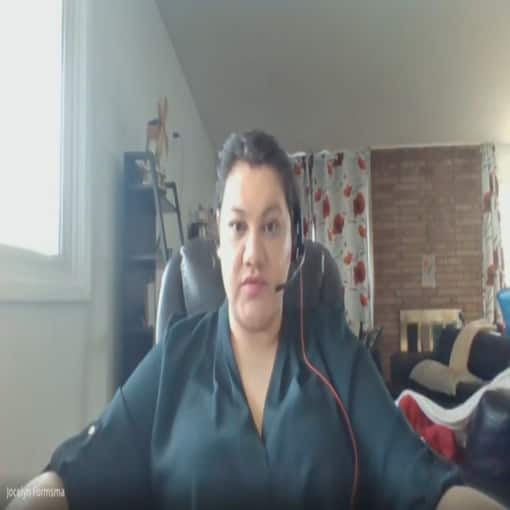
WATCH | The harms of ongoing fundraising challenges:

Jocelyn Formsma, executive director of the National Association of Friendship Centres in Ottawa, says fundraising activities had to be paused during the pandemic, leaving the group struggling to offer the usual support to friendship centres around the country. 1:02
How many cases are there?
As of Monday, 18,260 Ottawa residents have tested positive for COVID-19. There are 1,815 known active cases, 15,977 resolved cases and 468 deaths.
Some of its case counts and averages are at record high levels.
Public health officials have reported more than 33,200 COVID-19 cases across eastern Ontario and western Quebec, including more than 29,200 resolved cases.
Elsewhere in eastern Ontario, 147 people have died. In western Quebec, the death toll is 174.
Akwesasne has had more than 270 residents test positive on the Canadian side of the border and seven deaths. It’s had 560 cases when its southern section is added.
Kitigan Zibi has had 21 confirmed cases and Tyendinaga Mohawk Territory has had nine, with one death.
CBC Ottawa is profiling those who’ve died of COVID-19. If you’d like to share your loved one’s story, please get in touch.
What can I do?
Eastern Ontario:
A top science advisor says Ontario’s COVID-19 spread is out of control, while Ottawa Public Health has said its contact tracers can’t keep up with the pace and its test sites lack capacity.
Those sorts of factors explain why Ontario is now in a provincewide shutdown until at least early May.
WATCH | Ottawa’s request for provincial rule changes:

The medical officers of health from three Ontario regions are pleading with the government to implement a stay-at-home order as case counts reach ‘horrific’ levels. 3:38
Indoor gatherings are not allowed, except for people who live together and the usual exception for those who live alone. Outdoor gatherings can have a maximum of five distanced people. Religious events have different rules.
Gyms and personal care services must close, while restaurants are only available for takeout and delivery.
Non-essential businesses can open at 25 per cent capacity. Essential ones can go to 50 per cent.
Local health units can also set their own rules, like what Prince Edward County’s is doing around travel.
Ottawa’s medical officer of health is one of the officials asking the province for stronger rules, including a stay-at-home order similar to early winter, paid sick leave, travel restrictions within Ontario and more online learning in places where school outbreaks are a problem.
Western Quebec
Quebec is now in its third wave. Premier François Legault said the situation is critical in Gatineau and is asking people there to only leave home when it’s essential.
Schools, gyms, theatres, personal care services and non-essential businesses are closed until Monday at 5 a.m. in Gatineau and in the MRC des Collines-de-l’Outaouais, which almost entirely surrounds the city.
Private gatherings are banned, except for a person who lives alone seeing one other household.
Distanced outdoor exercise is allowed in groups up to eight people. Places of worship can have a maximum of 25 people.
The curfew there now starts at 8 p.m.

The rest of the Outaouais is under red-zone rules, which closes restaurant dining rooms but keeps schools, gyms, theatres, personal care services and non-essential businesses open with restrictions.
The start of the curfew in this area remains at 9:30 p.m.
People across the Ottawa-Gatineau area are asked to only have close contact with people they live with, be masked and distanced for all other in-person contact and only leave their immediate area for essential reasons.
Distancing and isolating
The novel coronavirus primarily spreads through droplets when an infected person speaks, coughs, sneezes, or breathes onto someone or something. These droplets can hang in the air.
People can be contagious without symptoms, even after getting a vaccine. New coronavirus variants can be more contagious and are spreading quickly in some places.
This means it is important to take precautions now and in the future like staying home while sick — and getting help with costs if needed — as well as keeping hands and surfaces clean and maintaining distance from anyone you don’t live with, even with a mask on.
WATCH | This wave’s problems for hospitals:

The fast-spreading third wave of COVID-19 is making younger people sicker and it’s renewing the pressure on hospitals across the country. 1:49
Masks, preferably ones that fit snugly and have three layers, are mandatory in indoor public settings in Ontario and Quebec.
OPH says residents should wear masks outside their homes whenever possible.
WATCH | School changes have forced some students to essentially drop out:

When the COVID-19 pandemic forced schools to close, tens of thousands of students never moved to online learning and many have effectively dropped out. 2:03
Health Canada recommends older adults and people with underlying medical conditions and/or weakened immune systems stay home as much as possible and get help with errands.
People have to show proof of a recent negative COVID-19 test to enter Canada by land without a fine and have to pay for their stay in a quarantine hotel if entering by air.
Anyone with COVID-19 symptoms should self-isolate, as should those who’ve been ordered to do so by their public health unit. The length varies in Quebec and Ontario.
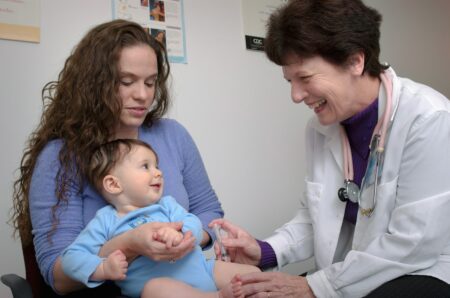
Vaccines
Four COVID-19 vaccines have been approved in Canada.
Canada’s task force said first doses offer such strong protection that people can wait up to four months to get a second.
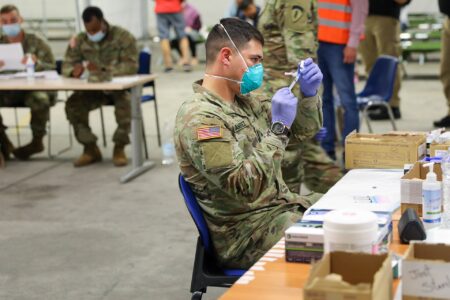
About 312,000 doses have been given out in the Ottawa-Gatineau region since mid-December, including about 130,000 doses to Ottawa residents and about 45,000 in western Quebec.
Ontario’s first doses of Phase 1 generally went to care home residents and health-care workers.
All health units in eastern Ontario are now vaccinating people aged 70 and older. People can book appointments online or over the phone.
Phase 2 should include people with underlying health conditions in April, followed by people who can’t work from home or are 60 and older in June.
Phase 3, slated to begin in July, will involve vaccinating anyone older than 16.
Local health units have some flexibility in the larger framework, so check their websites for details.
Some Ottawans in certain neighbourhoods can check their eligibility online and call the city at 613-691-5505 for an appointment. So can Indigenous people over age 16.
People who are above or turning age 55 can contact participating pharmacies for a vaccine appointment as part of a pilot project.
Quebec also started by vaccinating people in care homes and health-care workers.
The vaccination plan now covers people age 60 and older at western Quebec clinics. That will be followed by essential workers and finally the general public.
Officials expect everyone who wants a shot to be able to get one by by Fête nationale on June 24.
People who qualify can make an appointment online or over the phone. Pharmacists there will also be giving shots and people can book their appointments now in Grenville-sur-la-Rouge.
Symptoms and testing
COVID-19 can range from a cold-like illness to a severe lung infection, with common symptoms including fever, a cough, vomiting and loss of taste or smell. Children tend to have an upset stomach and/or a rash.
If you have severe symptoms, call 911.
Mental health can also be affected by the pandemic, and resources are available to help.
In eastern Ontario:
Anyone seeking a test should book an appointment.
Ontario recommends only getting tested if you have symptoms, if you’ve been told to by your health unit or the province, or if you fit certain other criteria.
People without symptoms but who are part of the province’s targeted testing strategy can make an appointment at select pharmacies.
Travellers who need a test have very few local options to pay for one.
Check with your area’s health unit for clinic locations and hours. Some are offering pop-up or mobile clinics.
In western Quebec:
Tests are strongly recommended for people with symptoms and their contacts.
Outaouais residents can make an appointment in Gatineau at 135 blvd. Saint-Raymond or 617 ave. Buckingham. They can check the wait time for the Saint-Raymond site.
There are recurring clinics by appointment in communities such as Maniwaki and Petite-Nation.
Call 1-877-644-4545 with questions, including if walk-in testing is available nearby.
First Nations, Inuit and Métis:
Akwesasne has a COVID-19 test site by appointment only and a curfew of 11 p.m. to 5 a.m. It’s closed to non-essential visits until April 11.
Anyone returning to the community on the Canadian side of the international border who’s been farther than 160 kilometres away — or visited Montreal — for non-essential reasons is asked to self-isolate for 14 days.
People in Pikwakanagan can book a COVID-19 test by calling 613-625-1175. Anyone in Tyendinaga who’s interested in a test can call 613-967-3603 and in Kitigan Zibi, 819-449-5593.
Inuit in Ottawa can call the Akausivik Inuit Family Health Team at 613-740-0999 for service, including testing and vaccines, in Inuktitut or English on weekdays.
For more information

Follow Canada News Media
Get the day's top Canadian stories and our two daily 60-second news videos wherever you scroll.
X Threads Facebook Instagram LinkedIn TikTok YouTube Pinterest Reddit Substack Flipboard Newsletter RSS