

In 1930, 25-year-old amateur astronomy Clyde Tombaugh spy on a small dim object in the night sky.
A glimpse of what was considered the ninth planet using a blinking comparator (a special type of microscope that allows you to examine and compare images) while working at the Lowell Observatory in Flagstaff, Arizona for about a year. Is done. In our solar system: Pluto.
Pluto was-well-strange in all accounts. At some point, astronomers believed that it could be larger than Mars (but not). Its anomalous 248 orbit is known to cross the path of Neptune. Today, Pluto is recognized as the largest celestial body in the Kuiper belt, but it is no longer considered a planet.
In 2006, the International Astronomical Union agreed to downgrade Pluto, defining a planet as an object that orbits the Sun, rounding its shape and “clearing its orbital circumference from other planets.” In other words, it is dominated by gravity and there are no objects in the orbit zone other than your own satellite. Pluto did not check its third box, so it was considered a dwarf planet.
Currently, the new concept mission submitted to NASA aims to take a closer look at Pluto and its nearby systems. Proposed in late 2020, Persephone will investigate whether Pluto has an ocean and how the planet’s surface and atmosphere have evolved.
Persephone sent a spacecraft equipped with a high-resolution camera into Pluto’s orbit for three years, mapping its surface to the surface of its largest satellite, Karon.
But why is Pluto worth a visit?
In the same year that Pluto was pushed out of the planet’s pedestal, NASA sent a New Horizons mission to Pluto and the Kuiper belt to better understand the outer edges of the solar system.
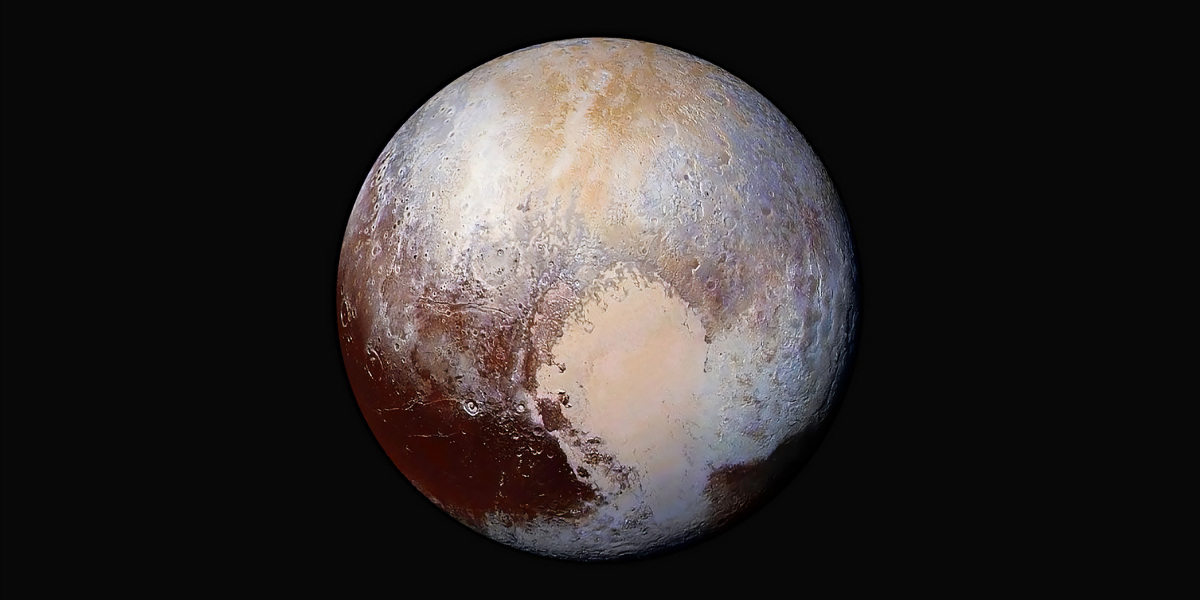
After arriving in Pluto in 2015, New Horizons struck the equivalent of a scientific treasure. Pluto’s close-up reveals an astonishing record of potentially active mountain ranges, flowing ice, and the geological history of its surface.
Curly Howett, a planetary physicist and senior researcher at Persephone, says New Horizons has shown us how complex that part of the universe really is.
“New Horizons didn’t have basically new technology, but it gave people insight into what the Pluto system looks like,” says Howett. “The world saw Pluto for the first time.”