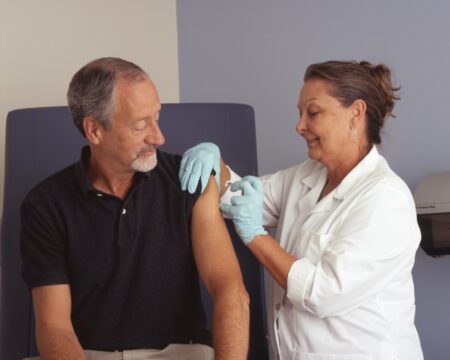




Dr. Matt Binnicker, an expert in the diagnosis of infectious diseases, explains why hospitalization rates are the key metric against which to measure the success of Covid-19 vaccines.
Although more than 350 million doses of Covid-19 vaccines have been administered in the United States, the SARS-CoV-2 delta variant is racing across the nation, causing an increasing number of infections and hospitalizations. On July 12, 2021, the Centers for Disease Control and Prevention (CDC) reported 22,457 new cases of Covid-19. A month later, that number spiked to 146,949. During the same timeframe, the number of new hospital admissions due to Covid-19 increased from 2,779 on July 12 to 11,493 on August 12.
It is now clear that vaccinated individuals can test positive for Covid-19, although at a significantly lower rate compared to the unvaccinated population. The CDC recently reported an outbreak of Covid-19 in Barnstable County, Massachusetts, in which 74% (346 out of 469) of cases occurred among those who were fully vaccinated. This has raised questions about the efficacy of Covid-19 vaccines and led to social media claims that vaccinated persons are ”super spreaders.“
When Vaccinated Individuals Test Positive for Covid-19, Does That Mean Vaccines Are Ineffective?
For infectious diseases, like Covid-19, there are three key terms to be aware of that influence discussions on vaccine efficacy. The first is exposure, which means coming into contact with the virus. This may occur when someone with Covid-19 coughs nearby, or when an individual touches a door handle or surface that is contaminated with the virus. Vaccines don’t prevent exposures, and it’s likely that many of us have been, or will be, exposed to SARS-CoV-2. The second term is infection, which occurs after an exposure and requires that the virus infects our cells and replicates. Some – but not all – vaccines can prevent infection, yet the current Covid-19 vaccines don’t appear to result in sterilizing immunity (i.e., the ability to prevent infection). In other words, even those who are vaccinated against Covid-19 may be infected with the virus. Importantly, not everyone who is infected with SARS-CoV-2 becomes ill. The third term is disease, which means that the viral infection results in clinical signs or symptoms (e.g., cough, fever, shortness of breath). The Covid-19 vaccines have been shown to be highly effective at preventing disease.
Most Covid-19 tests look for viral RNA, which is copied inside our host cells after an infection occurs. These tests (e.g., PCR) are very sensitive, meaning that they can detect extremely small amounts of the viral RNA, even in persons who don’t develop disease. As the number of vaccinated individuals increases in the country, it is expected that the number of positive tests among the vaccinated population will also increase, especially as testing continues to be performed in the asymptomatic population. Because of this, test positivity rates provide a good indication of viral prevalence (i.e., how much virus is in a community), but are not a reliable measure of vaccine efficacy.
What Should Be Used to Assess Vaccine Efficacy?
Covid-19 vaccines have been shown to be highly effective at preventing symptomatic disease, with the Pfizer and Moderna mRNA vaccines demonstrating >90% protection during clinical trials. As the delta variant has become predominant in the United States, the number of hospitalizations – including among pediatric patients – has skyrocketed in certain parts of the country. However, a common theme is being observed at healthcare centers across the nation – the vast majority of hospitalizations are occurring among the unvaccinated. Vermont, the state with the highest vaccination rate (67%), reported a new daily admission rate of 0.5 per 100,000 population on August 13. In comparison, Alabama, which has the lowest vaccination rate in the country (35%), experienced a new admission rate of 8.65 per 100,000 residents. Among states with at least 50% of residents being fully vaccinated, the average new daily admission rate is 1.3 per 100,000 residents compared to an average rate of 3.9 per 100,000 in states with less than 50% of residents who are vaccinated.
Matt Binnicker
To Avoid Severe Disease and Hospitalization, Get Vaccinated
The true measure of success for current Covid-19 vaccines is the reduction in severe disease and hospitalization among infected individuals. Vaccinated persons can still be infected, and may test positive for Covid-19, but the rate of serious illness requiring hospitalization among the vaccinated population is significantly reduced. However, given the uncertainty of the long-term consequences of Covid-19, it will be important to take measures to prevent infections until most, especially young children, have had the opportunity to be vaccinated. This will require a continued focus on additional mitigation measures, such as masking and physical distancing.
Full coverage and live updates on the Coronavirus