


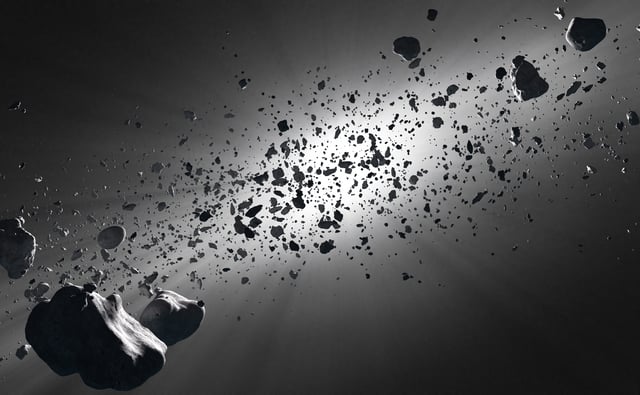
The earth is set to narrowly avoid an Armageddon scenario in January 2022 (image: Shutterstock)
” height=”3500″ width=”4950″ srcset=”https://www.nationalworld.com/jpim-static/image/2022/01/13/12/shutterstock_488993764.jpg?&width=320 320w, https://www.nationalworld.com/jpim-static/image/2022/01/13/12/shutterstock_488993764.jpg?&width=640 640w, https://www.nationalworld.com/jpim-static/image/2022/01/13/12/shutterstock_488993764.jpg?&width=990 990w” layout=”intrinsic” class=”i-amphtml-layout-intrinsic i-amphtml-layout-size-defined” i-amphtml-layout=”intrinsic”><img alt="
 <img alt="
The earth is set to narrowly avoid an Armageddon scenario in January 2022 (image: Shutterstock)
” fallback layout=”responsive” height=”3500″ width=”4950″ src=”https://www.nationalworld.com/img/placeholder.png” class=”i-amphtml-layout-responsive i-amphtml-layout-size-defined” i-amphtml-layout=”responsive”>
The earth is set to narrowly avoid an Armageddon scenario in January 2022 (image: Shutterstock)
Or even, from outer space.
And on Tuesday (18 January), another massive space rock 10 times the size of London’s Big Ben and almost three times bigger than the Empire State Building in New York City missed the earth by an astronomical whisker.
If you’ve just watched recently released Netflix film Don’t Look Up, starring Leonardo DiCaprio and Jennifer Lawrence, this news might even have seemed a little too close to home.



So is there any danger this latest big asteroid could wipe out humanity like the comet in Don’t Look Up – and what is being done to stop asteroids from hitting the earth?
Here’s what you need to know.
Will a massive asteroid hit earth in 2022?
The asteroid 7482 (1994 PC1) brushed past the earth on 18 January.
But a near-miss in astronomical terms wouldn’t be considered close at all by most people’s standards here on earth.
The space rock passed by at a distance of more than 1.2 million miles – or roughly five times the distance between the earth and the moon.

This is half the distance at which 4660 Nereus passed the earth in December – the last time a massive space rock ‘narrowly’ avoided a collision with our planet.
While that’s probably close enough for your liking, asteroid 7482 (1994 PC1) has come much closer to earth in the past.
In 1933, the asteroid shot by at a distance of just 700,000 miles.
How big is the asteroid?
At more than a kilometre in diameter (1,052m) and travelling at almost 44,000 miles per hour, the space rock has the potential to destroy life on earth.


It is also defined this way because it has and will approach the earth at less than half the distance from the earth to the sun – around 93 million miles.
This means any slight deviation in its orbit could put it on a collision course with us.
As things stand, asteroid 7482 (1994 PC1) is not predicted to come as close to the earth again until 18 January 2105.
Other space rocks are set to come even closer in the meantime, but other asteroids or comets could well come out of nowhere – just as the massive one in Don’t Look Up did.
While Nasa says there is no “significant chance” any of the more than 10,000 asteroids over 140m in size it has come across will hit the earth in the next 100 years, it’s estimated these figures account for just half of the potentially deadly objects out there.
In fact, there could be more than 25,000 near-earth objects in space, meaning we have recorded less than half of the killer asteroids out there.
What is Nasa doing to stop asteroids or comets hitting earth?
Work to save humanity from death by asteroid is still very much in its infancy.
And it only launched its first exploratory mission to see how easy it is to knock an asteroid off course in November 2021.


The space agency’s Double Asteroid Redirection Test (Dart) mission will see a spacecraft smash into a harmless Nasa-tracked asteroid in a bid to alter the space rock’s course.
If it succeeds, humanity might have discovered a way to keep itself safe from a future deadly impact.
But it is currently the only real-world experiment taking place in this field, so if it comes to nothing, we’ll still be just as vulnerable as we currently are.
What is an asteroid?
An asteroid is a rocky fragment left over from the formation of the solar system around 4.6 billion years ago.
Most of them orbit the sun between Mars and Jupiter in the asteroid belt.
Scientists estimate there are millions of space rocks in this part of space – some of which are hundreds of kilometres in size.
Sometimes, these asteroids change their orbits if they come under the influence of a planet’s gravity.
They can also collide with one another – incidents which can throw out smaller, but still hazardous, shards of rock.
One such stray rock – measuring just 20m in diameter – hit the earth in 2013 with up to 33-times the power of the atomic bomb the US dropped on the Japanese city of Hiroshima in World War Two.
This blast took place over the Russian city of Chelyabinsk and blew out windows in more than 3,600 apartment blocks and injured 1,200 people.
A much larger stray asteroid as big as six miles wide is believed to have wiped out the dinosaurs 66 million years ago.
A message from the editor:
Thank you for reading. NationalWorld is a new national news brand, produced by a team of journalists, editors, video producers and designers who live and work across the UK. Find out more about who’s who in the team, and our editorial values. We want to start a community among our readers, so please follow us on Facebook, Twitter and Instagram, and keep the conversation going. You can also sign up to our email newsletters and get a curated selection of our best reads to your inbox every day.