



That seems flat-out wrong to me. The whole point of the ungainly U.S. withdrawal from Afghanistan was to enable the United States to focus more on its strategic interests, such as Europe and the Indo-Pacific. This was the logic that President Biden articulated at the time. Actions taken since that time make it clear that the United States takes both of these regions pretty seriously.
Let me suggest that if Afghanistan had anything to do with Ukraine, the problem is less about perceptions of resolve that perceptions of competency. As previously noted in this space, the Afghanistan withdrawal was badly botched. Subsequent moves like AUKUS or the current warnings about Ukraine have also come with a lack of diplomatic coordination. Allies are important to any American response in either Eastern Europe or the Pacific Rim, so ham-handed implementation might encourage more aggressive behavior from China or Russia.
This is normally the moment when critics of Biden’s foreign policy will trot out lines like “Putin is playing chess while Biden is playing checkers” or “Xi is playing the long game and Biden is just reactive” or something like that. I can’t get there. If the current crises reveals anything it is the nonsense behind these statements. Neither Putin nor Xi Jinping is a strategic giant.
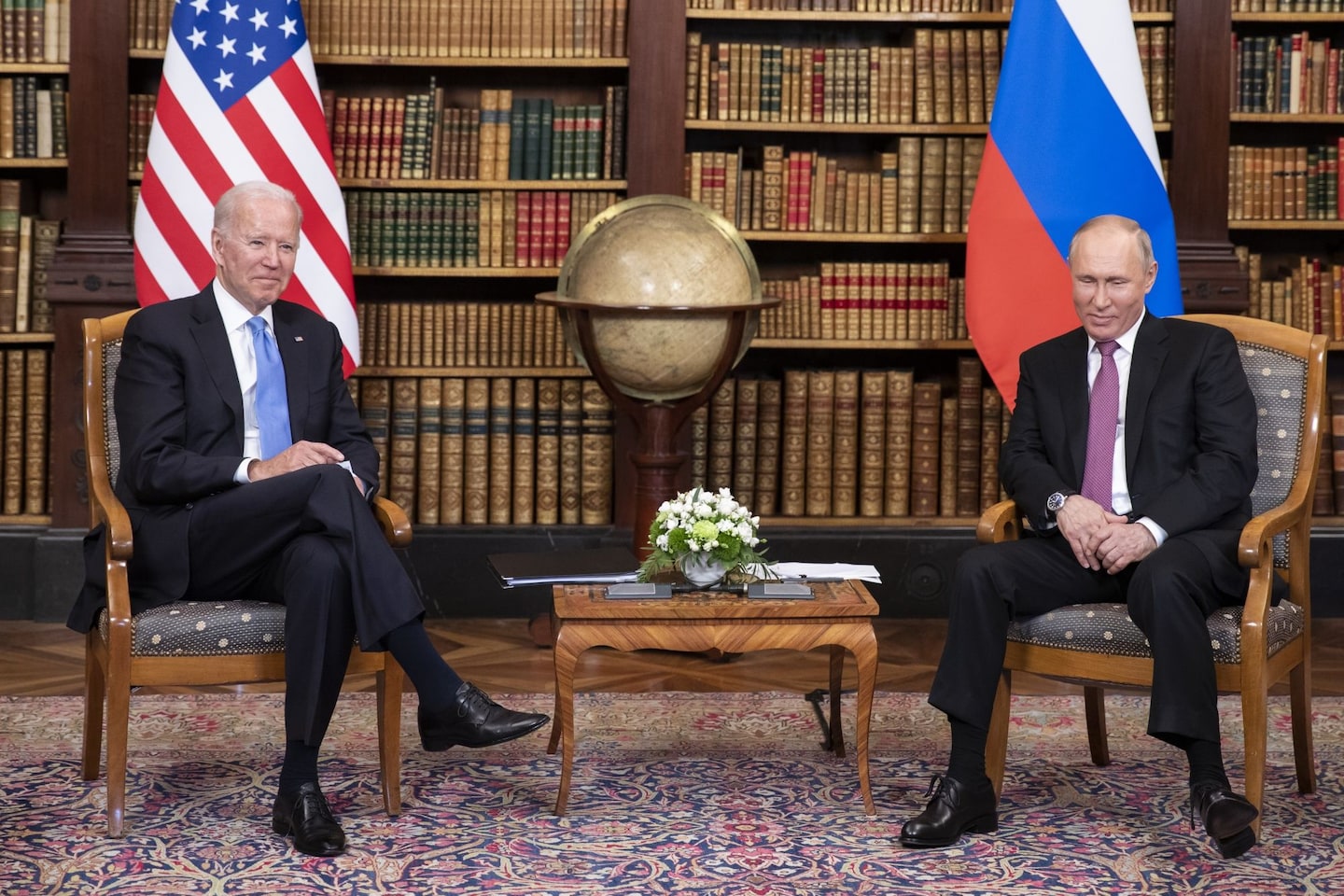
Let’s get back to why Putin is fomenting the current crisis. Might it have something to do with the fact that, in retrospect, his 2014 incursions into Ukraine have not played out as anticipated?
Sure, Russia annexed Crimea and exerts control over parts of the Donbass. This has come at a huge strategic cost, however. Russia alienated the rest of Ukraine and turned what had been a divided polity in its outward orientation to one that is manifestly looking to the West rather than to Russia. Indeed, the proximate trigger for Putin’s aggression has more to do with the failure of Ukrainian President Volodymyr Zelensky to be more pliable to Russian demands and less (though not nothing) to do with the Biden administration’s focus on the Indo-Pacific.
Putin might be willing to pay the price to reverse Ukraine’s drift, but — yet again — the price will be high. The resulting sanctions will hurt the Russian economy. The resulting strategic situation will be the precise opposite of what Putin wants as well. As John Sipher noted in The Washington Post a few days ago, “Upon taking office in 2009, NATO Secretary General Anders Rasmussen met Putin and stated that he was committed to increased cooperation with Russia. Putin reportedly responded with a question: ‘Do you know my mission, Mr. Rasmussen? It is to make sure that your organization no longer exists.’ ”
If that is the case, then as Sipher notes Putin has failed and failed spectacularly. Sipher is not the only analyst to make this observation. Emma Ashford is a leading proponent of the “restraint school” of American foreign policy. Nonetheless, she also told the New York Times’ Max Fisher that Putin’s actions create “a risk of pushing Europe together, of amplifying more hawkish voices and capitals” and that “there’s the risk of pulling America back in, even as [Moscow is] trying to push America out of Europe.” Even Latynina acknowledges that “instead of trapping the United States, Mr. Putin has trapped himself.”
An implicit assumption embedded within a lot of international relations is that the great powers are acting rationally and strategically, trying to maximize their advantage. What 2022 is revealing, however, is that maybe these great power leaders have not thought things out fully.

Follow Canada News Media
Get the day's top Canadian stories and our two daily 60-second news videos wherever you scroll.
X Threads Facebook Instagram LinkedIn TikTok YouTube Pinterest Reddit Substack Flipboard Newsletter RSS