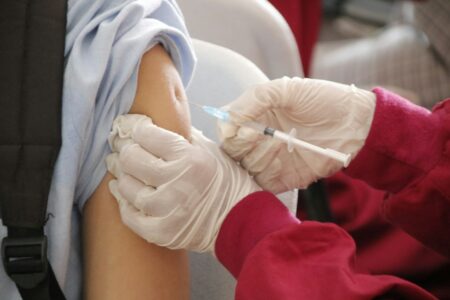



(Bloomberg) — Covid-19 vaccines protected children and adolescents from severe disease even after the immune-evasive omicron variant emerged, according to findings from U.S. government reports.
After omicron became dominant in the U.S. late last year, protection against infection and urgent care visits declined for 5- to 17-year-olds who’d received primary inoculations, according to U.S. Centers for Disease Control and Prevention data released Tuesday. However, vaccinated children and teens were still less likely to get infected than their unvaccinated peers, the agency said in its Morbidity and Mortality Weekly Report.
The findings may add confidence in moves to relax social Covid measures as infections fall across the U.S. The CDC released recommendations last week saying that schools in areas of low and moderate risk can drop indoor mask mandates, the first update to its guidance on the topic since July.
Pfizer Inc. and BioNTech SE’s vaccine is the only shot that has been authorized for use in children ages 5 to 17 in the U.S. The CDC looked at vaccine protection against infection, urgent care visits, hospitalization, and death among vaccinated children ages 5 through 11 and adolescents ages 12 through 17 before and during the omicron surge.
In one study that looked at more than 39,000 Covid-related emergency department and urgent care encounters across multiple states, vaccine effectiveness against hospitalization was as high as 94% in teens ages 12 through 17 during last summer’s delta wave. After omicron became the dominant U.S. strain, efficacy in children ages 5 through 11 was estimated at 74%, based primarily on cases during the omicron wave.
Researchers also noted that 5 months after a second shot, effectiveness was significantly lower, dropping as low as 38%. However, among 16- to 17-year-olds, a third dose restored effectiveness to 86%.
Separate Analysis
After the recommended two doses, efficacy for children ages 5 to 11 was 46% — significantly lower than for teens. Researchers attributed the difference to the dominance of the highly transmissible omicron variant during data collection.
In a separate analysis of surveillance data from 29 jurisdictions posted on CDC’s Covid Data Tracker, unvaccinated children and adolescents ages 5 through 17 were more likely to die as a result of Covid than those who where vaccinated. From April to the beginning of January, there were nine deaths among those who were immunized in the age group, compared to 121 deaths among those without shots.
Another study found that 91% of side effects from booster shots in children ages 12 to 17 were not serious. One government safety monitoring system found 64 reports of myocarditis among adolescents who had received booster doses. The rare form of heart inflammation has been associated with mRNA Covid-19 vaccines, with 32 cases confirmed at the time the report was published.
While kids generally don’t get as sick as adults from Covid, clearing a vaccine for elementary school-age children marked a major milestone in the pandemic. It provided peace of mind for many concerned parents, allowing kids to resume activities that had been on hold since the virus first began spreading in the U.S.
Still, many parents have been slow to get shots for their kids since the vaccine was recommended in November. Covid vaccinations among kids ages 5 to 11 years have fallen to their lowest levels since the shots were first cleared, according to recent CDC data.
©2022 Bloomberg L.P.

Follow Canada News Media
Get the day's top Canadian stories and our two daily 60-second news videos wherever you scroll.
X Threads Facebook Instagram LinkedIn TikTok YouTube Pinterest Reddit Substack Flipboard Newsletter RSS