


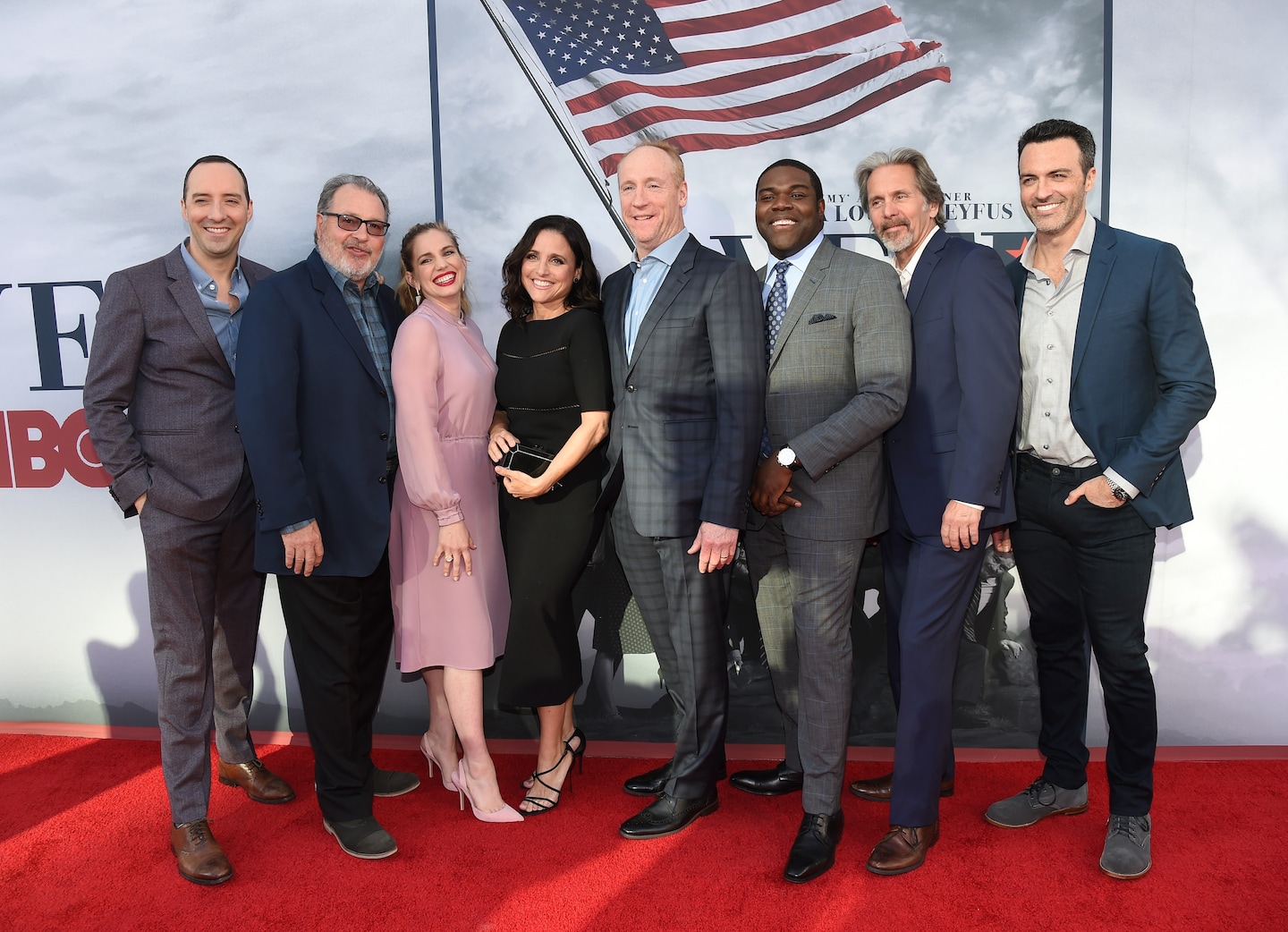

This week, Ipsos released its survey findings after asking Americans which TV shows best captured real-life American politics. Their results? “The public feels West Wing is more realistic than comedies, like Veep and Parks and Rec.”
How best to express my reaction to this information?
Full disclosure: This result was triggering. “The West Wing” has its strengths: It gave good banter. Compared to most political shows, it put some effort into the verisimilitude of how the policy process works.
The problems with “The West Wing,” however, are legion. Aaron Sorkin’s faith in the “Big Speech” theory of politics makes sense for narrative purposes but is wildly unrealistic. Just as bad is the belief that the smarter, better-read guy always wins in political bargaining.
[Fun fact: I remember the one moment when I had a “West Wing”-like exchange in a policy context. I was attending a meeting in which national security folks were consulting with outside experts. Some private-sector dude was trying to impress participants by making a somewhat obscure reference to sound erudite. As it happened, I had read the essay he had referenced and realized he had badly misread it. I interjected and explained that it actually said the opposite of what he had claimed. The effect of this exchange on the subsequent policy debate was minimal. As time has passed, I remember that moment not because it showed me at my best, but it showed me at my most petty.]
A deeper dive into the poll reveals that the finding is less about “The West Wing” per se and more about Americans believing political dramas more accurately reflect American politics than political comedies. Fifty-one percent of Americans believed that “The West Wing” was very or somewhat realistic. But 46 percent said the same thing about “Madam Secretary,” the comfort food of the foreign affairs set; 42 percent thought “Scandal” was accurate, and “House of Cards” and “24” both netted 41 percent. In contrast, “Parks and Recreation” and “Veep” brought up the rear with 39 and 27 percent respectively.
Given the gyrations in American politics over the past five years or so, citizens can be forgiven for believing that American politics is the grist of grand drama. The stakes are certainly high, and bad decisions will get lots of people killed.
That said, as someone who has occasionally witnessed how the policy sausage is made, let me assure readers that unintentional comedy lurks inside an awful lot of American politics and American public policy. No one is as Machiavellian as Frank Underwood in “House of Cards” or as omniscient as Josiah Bartlett in “The West Wing.” Those portrayed as such in the media are on a lucky streak that is about to come to an end.
The Trump years should have disabused everyone of the idea that “The West Wing” is more accurate than “Veep.” This was an administration that beclowned itself on a regular basis. Trump was a radically immature leader who was so uninformed that he asked Kid Rock for advice on what to do in North Korea. Trump cannot offer a coherent answer about what to do to counter Russia in Ukraine. When John Oliver dubbed what Trump officials did as Stupid Watergate: “a scandal with all the potential ramifications of Watergate but where everyone involved is stupid and bad at everything.” That sounds an awful lot like “Veep”:
I wish American politics operated like inspiring drama. As I get older, however, it has become impossible to ignore the abundance of farce.

Follow Canada News Media
Get the day's top Canadian stories and our two daily 60-second news videos wherever you scroll.
X Threads Facebook Instagram LinkedIn TikTok YouTube Pinterest Reddit Substack Flipboard Newsletter RSS