




NASA launched a spacecraft to test asteroid defense hypothesis
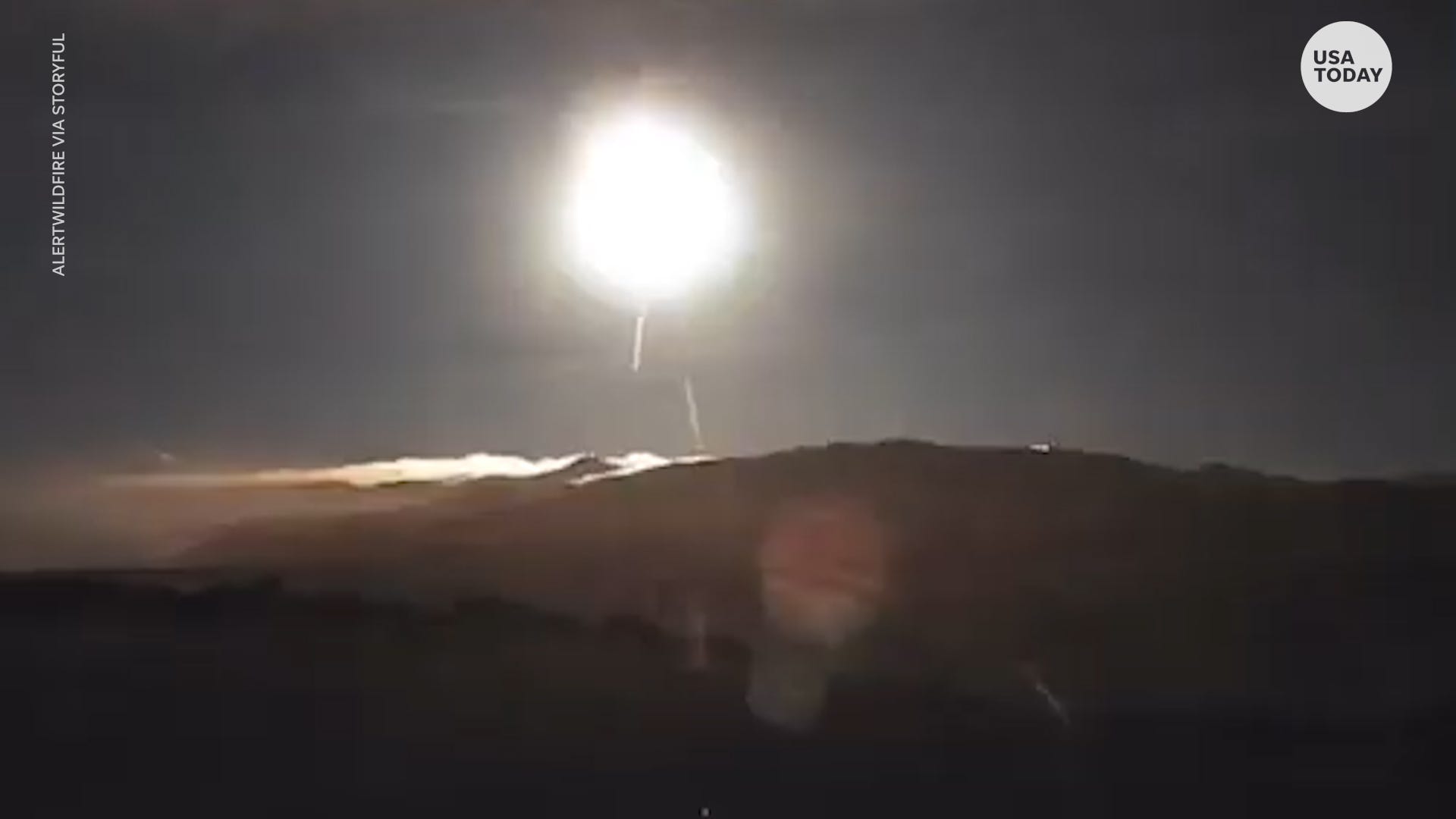
NASA launched a spacecraft on a mission to smash into an asteroid and test whether it would be possible to knock it off course.
USA TODAY, Storyful
A “potentially hazardous” asteroid measuring more than a mile long will zoom past Earth this week, making it the largest asteroid that is expected to get relatively close to our planet in 2022.
The asteroid, named 1989 JA, is estimated to be 1.1 miles long, or 5,905 feet, according to NASA’s Center for Near Earth Object Studies. For reference, the asteroid is twice the size of the Burj Khalifa, the tallest building in the world.
NASA says there are nearly 29,000 near-Earth asteroids in space, but 1989 JA is one of 878 that are at least 3,280 feet wide.
Despite having a size that could cause massive catastrophe on Earth, there is no need to worry about the asteroid hitting the planet. When 1989 JA makes its closest approach to Earth on May 27, it will be 2.5 million miles away, which is about 10 lunar distances and the closest it has ever been to Earth.
Franck Marchis, chief scientific officer telescope company Unistellar and senior planetary astronomer at the SETI Institute, told USA TODAY the asteroid is traveling at roughly 30,000 miles per hour.
“To provide some context, that is 17 times the speed of a bullet through the air. At this speed, the asteroid could travel around the planet Earth in 45 minutes,” Marchis said.
Past near-Earth encounters: Asteroid bigger than any building in the world flies past Earth
False alarm: 230-foot wide asteroid initially expected to hit Earth in 2023 was false alarm
Discovered in 1989 by astronomer Eleanor Helin at the Palomar Observatory in Southern California, the asteroid is labeled “potentially hazardous” because it is an Apollo asteroid, meaning it crosses Earth’s orbit.
This week will mark the closest the asteroid gets to Earth in the next 172 years, NASA projects.
While 1989 JA won’t impact Earth, NASA is preparing in case any catastrophic-sized asteroid will hit the planet. The agency launched the Double Asteroid Redirection Test, or DART, on Nov. 25, with the goal of testing to see if it is possible to knock an asteroid away from its path, should one ever be headed towards Earth.
The Virtual Telescope Project will live stream the asteroid flying past Earth on Thursday and Friday in partnership with Telescope Live. The live stream will stream from Chile on May 26 at 7 p.m. ET, and from Argentina on May 27 at 9 a.m. ET. The live stream can be viewed here.
Follow Jordan Mendoza on Twitter: @jordan_mendoza5.

Follow Canada News Media
Get the day's top Canadian stories and our two daily 60-second news videos wherever you scroll.
X Threads Facebook Instagram LinkedIn TikTok YouTube Pinterest Reddit Substack Flipboard Newsletter RSS