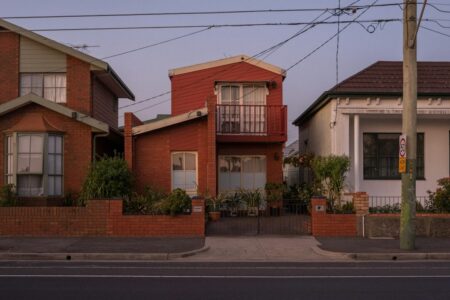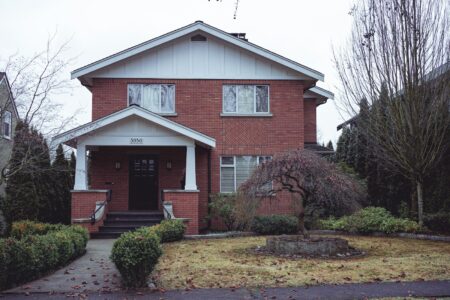



Once labelled the hottest real estate market in the country, Windsor-Essex is now on a list of regions expected to see the biggest decline in home prices as the market corrects itself, according to a new report.
The Desjardins Group’s recent Canadian Residential Real Estate Outlook report states that Chatham-Kent and Windsor-Essex are among the top three regions in Ontario to be hit, with Bancroft in first place.
“What our report says is that those markets that have seen the biggest appreciation in the last couple years are going to be the most vulnerable to the price declines,” explained Jimmy Jean, vice-president and chief economist with Desjardins, who oversaw the report, which was published in early June.
The pandemic encouraged people to move out of city centres to cheaper locations like Windsor-Essex, and that’s why areas a few hours outside of Toronto are now expected to see this drop, Jean added.
That means Windsor’s red-hot spike in prices have now put it in the red zone on the flip side.
Ontario-wide, the report projects an average price decline of about 18 per cent. Windsor-Essex is expected to see a price decline of 44 per cent from its peak, according to Jean, but that comes after a 100 per cent appreciation from December 2019 until the recent peak in house prices. Chatham-Kent is predicted to experience a 47 per cent drop from its peak.
Growing interest rates are a significant factor in why, Jean explained.

However, the president of the Windsor-Essex County Association of Realtors, Elica Berry, disagrees with this prediction.
“My prediction — our prediction — based on some of our financial advisors and everything, we’re thinking that it’s going to stay stable,” Berry said.
“We’re not going to be dropping significantly. We have a lot of things going on in our economy here, so we don’t see it dropping. I cannot imagine it dropping to that extent here in Windsor.”
She added it would also be far too soon to tell.
According to data from the Windsor-Essex County Association of Realtors, the average price of a home in Windsor-Essex reached its peak in March at $723,739. The average dipped down to $692,759 in April, continuing down to $647,331 in May.
Jean predicts prices will continue go down, though he doesn’t expect a full roll back to pre-pandemic price levels, and added that in 2023, prices will still be higher than they were at the end of 2019.
Relief for some, blow for others
This will likely be a blow to those who made purchases at the market’s peak, he explained.
“Those are going to be the individuals that are going to be most affected in terms of their wealth,” Jean said, but stressed that this correction won’t last long, and that appreciation should rise again following the end of 2023.

Here’s what economist Jimmy Jean anticipates in the real estate market over the next couple of years.
While it will sting some, this market correction will also provide “temporary relief” for others, Jean added.
Given that the pandemic saw a rise in over-bidding and practices like buying “sight unseen,” this shift will help reduce those practices.
“Those are very unhealthy market behaviours and it’s the reason that we will have some individuals who will find themselves underwater as this unfolds. But at the same time, for new buyers in the next couple of years, it’s going to be a market that’s going to have more choice. It’s also going to be a market that’s more affordable and more aligned with what actual incomes can and should be paying.”
Shift in the market
Though Berry doesn’t anticipate the kind of decline Jean is predicting, she does acknowledge that there has been a shift in the market in recent months.
“We’re wondering where all the buyers went,” Berry said.

She explained that months ago, a listing would get up to 20 offers and would sell within a week, but now it’s taking weeks to sell, sometimes getting as little as two offers on a listing.
Berry said homes are still selling over-asking, but not to the same extent as before, and so sellers have to adjust to the market.
It’s also led to some listings being cancelled and re-listed after not getting the hoped-for response to that property.
Berry stresses that while we’re not seeing the same spike as before, the market here is still strong.
“It’s still there, still in the 600K range, so we’re catching up with the rest of Canada.”
Looking forward, Jean looks forward to a return to “more sanity” in the market.
“This will be a healthy correction re-balancing. But the market should be able to find its footing. So, that’s why we were saying this is not a reason to panic,” he said.
“What we saw in the last couple of years was just unsustainable.”