
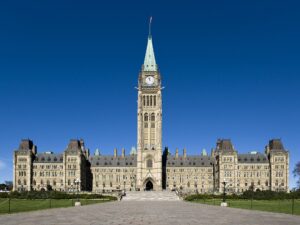


Here is our first annual edition of the Most Powerful People In Canada. The list includes regular citizens to the Prime Minister. In this year’s list, there are more female than male counterparts, according to a study by the Canadian Centre for Policy Alternatives, women will make up the majority of the most powerful people in Canada by 2040. This is due to a number of factors, including more women being educated than men and more women entering the workforce. In fact, there are more female than male counterparts in many fields, including politics, business, and law. While there are still some areas where women are underrepresented, such as science and technology, it is clear that women are making great strides and achieving equality in many aspects of Canadian society.
Here is Canadanewsmedia list of Most Powerful People In Canada:
1. Justine Trudeau
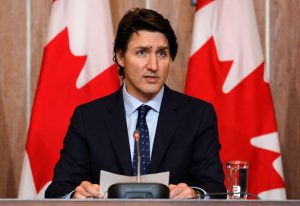
Let’s be honest here, from occupying the highest elected office in the country to being a celebrity politician, Justine Trudeau is not scared of using his power. Dismiss the Prime Minister if you like, knock his brains, his choices, his often demonstrably shaky adherence to principle. But in 2020, 2021, and even 2022 the central fact of Justin Trudeau’s place in the nation’s life was that he had and used power on a scale nobody in the country could match.
2. Chrystia Freeland
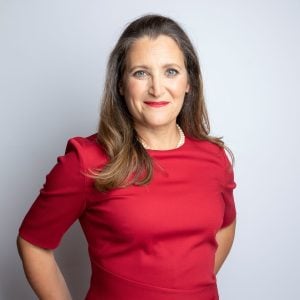
Chrystia Freeland is a Canadian journalist, author and politician who has served as the Minister of Foreign Affairs for Canada since November 2015. Previously, she was a journalist and political commentator and was editor-in-chief of The Huffington Post Canada from 2013 to 2015. In 2014, she was nominated for the prestigious Queen Elizabeth II Diamond Jubilee Medal and is the current deputy prime minister and finance minister.
Chrystia Freeland wields serious clout, in both the present and future-hypothetical tenses. Along with being deputy prime minister and finance minister—the first woman to hold that prestigious post—she is one of Prime Minister Justin Trudeau’s closest confidants and a leading candidate to succeed him as a Liberal leader whenever the post-Trudeau era should dawn. But that sword cuts both ways: Freeland enjoys the benediction of the inner circle, but that aura could become a shadow of the boss’s missteps and curdled reputation.
–Shannon Proudfoot
3. Sherry Brydson
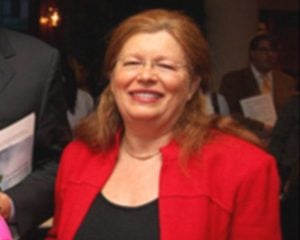
Sherry Brydson was raised in Toronto and attended the University of Toronto where she was news editor of the campus paper, The Varsity. In 1969, she authored a series of three articles on pollution that are credited with sparking the Canadian environmental movement, according to a story in the University of Toronto Magazine in 1999. She graduated in 1970 with a degree in political science and left to pursue a career in journalism in the UK, according to the article.
She later moved to Victoria, British Columbia, and began using a closely held company she owns, Westerkirk Capital, to manage a part of her fortune held under the Woodbridge company. Among its investments: developing hotels with Marriott in Nova Scotia, making Twin Otter aircraft in Vancouver Island through her Viking Air subsidiary, and owning a series of AM and FM radio stations through Vista Radio.
Through the Irma J. Brydson foundation, she has given money to support the Toronto YWCA among other social institutions in Canada.
Sherry Brydson is one of the richest Canadians. She owns 23% of the Thomson family’s investment firm, Woodbridge. Brydson’s ventures also go beyond Woodbridge via investment firm Westerkirk Capital, which manages investments in hospitality, aviation and media like Ontario’s Moose FM radio stations. Besides these million-dollar investments, Brydson owns a few small businesses in Toronto including Thai restaurant Bangkok Garden and Elmwood Spa. Bloomberg puts Sherry Brydson’s net worth at $17.38 billion CAN ($13.8 billion US).
4. Tiff Macklem
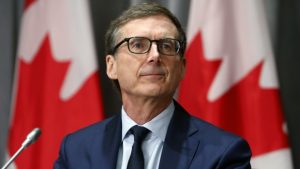
Tiff Macklem was appointed Governor of the Bank of Canada, effective June 3, 2020, for a seven-year term. As Governor, he is also Chair of the Board of Directors of the Bank and a member of the Board of Directors of the Bank for International Settlements. He is chair of the Group of Governors and Heads of Supervision, the oversight body of the Basel Committee on Banking Supervision, and co-chair of the Financial Stability Board’s Regional Consultative Group for the Americas.
Canadians’ biggest concern as 2021 wound down wasn’t the pandemic, health care or the national debt. It was the cost of living. You can blame the free-spending feds, but more responsibility lies with Tiff Macklem, governor of the Bank of Canada. Since his appointment in May 2020, he’s steered the economy through a unique recession with a bond-buying spree and record-low interest rates. Spring 2022 will test Macklem’s choices: the bank’s promised rate hikes may tame inflation yet also throw a wrench into the soaring housing market.
–Michael Fraiman
5. Anita Anand

Anita Anand was first elected as the Member of Parliament for Oakville in 2019. She has previously served as Minister of Public Services and Procurement.
Born and raised in rural Nova Scotia, she moved to Ontario in 1985.
In her Oakville community, she has served on the Board of Directors of the Lighthouse Program for Grieving Children, the Oakville Hospital Foundation, and Oakville Hydro Electricity Distribution Inc.
Anand has worked as a scholar, lawyer, and researcher. She has been a legal academic, including as a Professor of Law at the University of Toronto where she held the J.R. Kimber Chair in Investor Protection and Corporate Governance. She served as Associate Dean and was a member of the Governing Board of Massey College and the Director of Policy and Research at the Capital Markets Research Institute, Rotman School of Management. She has also taught law at Yale Law School, Queen’s University, and Western University.
Marie-Danielle Smith explains why Anita Anand is No. 5 on The Power List.
6. Jim Pattison
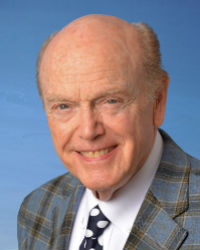
Jim Pattison oversees a sprawling group that operates 25 divisions including packaging, food and entertainment. Pattison’s first business was a GM dealership he bought in 1961. The Canadian billionaire also controls more than 40% of publicly-traded forest products company Canfor. His entertainment division includes Guinness World Records, the Ripley’s Believe It Or Not! chain and Great Wolf Lodge’s Canadian franchise rights.
Jim Pattison is an investor, philanthropist and businessman. He is the head of an empire that operates in some 85 countries spanning an array of industries such as supermarkets, lumber, fisheries, disposable packaging, theme parks, auto dealers and more. He opened a Pontiac dealership in 1961; 25 years later, he was selling more cars than anyone else in Western Canada. He grew his business to include other companies such as Overwaitea Foods, Ripley’s Believe It Or Not!, Save-On-Foods, Guinness World Records and numerous TV and radio stations across British Columbia, Alberta, Saskatchewan and Manitoba. Forbes puts Jim Pattison’s net worth at $15.37 billion CAN ($12.2 billion US).
7. Rosanne Casimir
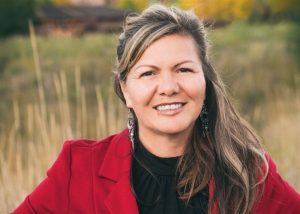
Image Credit: FACEBOOK/ Rosanne J. Casimir
Rosanne Casimir elected Kukpi7/Chief for Tk’emlúps te Secwépemc is the 14th elected Kukpi7/Chief for Tk’emlúps te Secwépemc. Kukpi7 Roseanne has lineage to the hereditary Chief Louis Clexlixqen (1852 -1915), (Chief Clexlixqen-Casimir and Elizebeth-Patrick and Lucindy-Thomas and Sadie- Kyé7e Annie and Stanley- Kí7ce Patricia and Qé7tse George).
The impassioned yet level response by Kúkpi7 (Chief) Rosanne Casimir of Tk’emlúps te Secwépemc to unmarked residential school graves made her a leading voice on the injustice and the challenge of moving forward. She extracted an apology from the Prime Minister for hitting a Tofino, B.C., beach on the National Day for Truth and Reconciliation, and she will be among Indigenous leaders visiting the Vatican this year. Casimir has asked Pope Francis to visit Tk’emlúps; she wouldn’t handle a slight too gently.
–Jason Markusoff
8. Sheila Watt-Cloutier
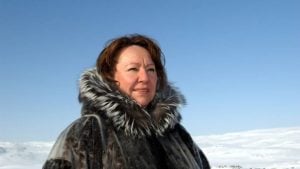
Sheila Watt-Cloutier Nobel Peace Prize nominee is in the business of transforming public opinion into public policy. Experienced in working with global decision-makers for more than a decade, Watt-Cloutier offers a new model for 21st century leadership. She speaks with passion and urgency on the issues of today — the environment, the economy, foreign policy, global health, and sustainability — not as separate concerns, but as a deeply interconnected whole. At a time when people are seeking solutions, direction, and a sense of hope, this global leader provides a big picture of where we are and where we’re headed.
9.David Cheriton
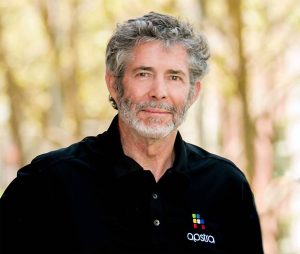
David Cheriton, who is professor emeritus at Stanford University, made his fortune thanks to an early investment in Google.
Cheriton and Andreas von Bechtolsheim (also now a billionaire) each invested $100,000 in Google when it was just getting started.
The pair cofounded 3 companies: Arista Networks (IPO in 2014), Granite Systems (sold to Cisco in 1996) and Kealia (sold to Sun Microsystems in 2004).
Cheriton resigned from Arista’s board in March 2014 and has been unloading his stock; he still owns nearly 10% through a trust for his children.
Cheriton became chief data center scientist at Juniper Networks after the acquisition of his company Apstra in 2021.
10. Taylor Thomson
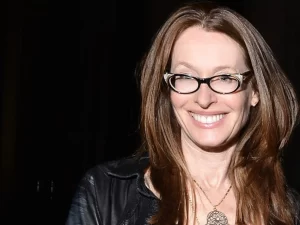
Taylor Thomson is the granddaughter of Roy Thomson. She owns a 14% stake in her family’s investment company, Woodbridge. Born Lynne Thomson, she later changed her name to Taylor Thomson. The young billionaire passed the bar exam and worked as a lawyer before diving into the world of acting. Taylor Thomson appears to be focusing on building her real estate portfolio with more than $ 120 million worth of real estate in California alone. Bloomberg puts her net worth at $10.78 billion CAN ($8.56 billion US).
Follow Canada News Media
Get the day's top Canadian stories and our two daily 60-second news videos wherever you scroll.
X Threads Facebook Instagram LinkedIn TikTok YouTube Pinterest Reddit Substack Flipboard Newsletter RSS