

/arc-anglerfish-tgam-prod-tgam.s3.amazonaws.com/public/LCYVUCBCQFFPXNPQL4VUFNN4FQ.jpg)
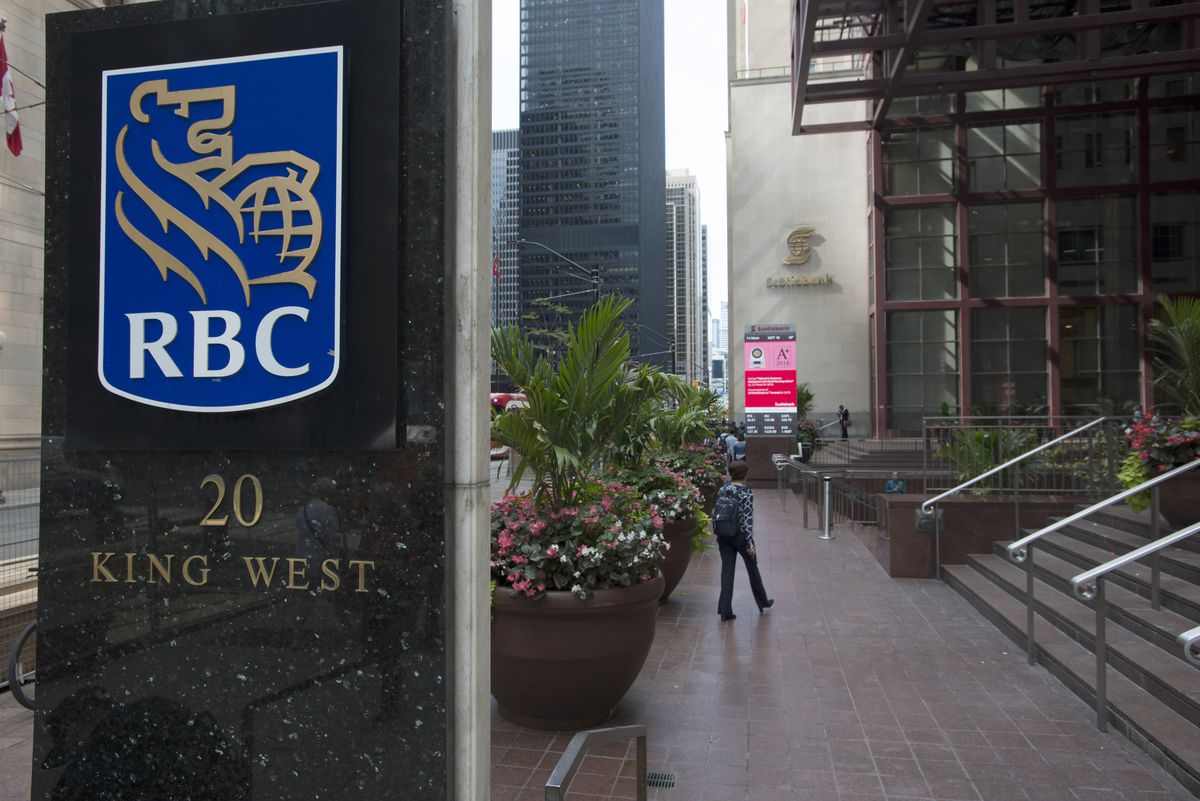
An RBC logo is seen in Toronto’s financial district, in a Sept. 18, 2019, file photo.
Doug Ives/The Canadian Press
Royal Bank of Canada reported an 11-per-cent rise in quarterly profit and raised its dividend, driven by a bounceback quarter from its capital markets arm and strong results from retail banking.
The country’s largest bank is the first major lender to report results for the fiscal first quarter, which ended Jan. 31, and RBC’s results set a standard for its peers to meet. Analysts expected a strong quarter from markets-sensitive business lines, such as trading, but predicted more modest growth from personal and commercial banking in Canada.
RBC earned $3.51-billion, or $2.40 per share, compared with $3.17-billion, or $2.15 a share, a year ago. On average, analysts expected earnings per share of $2.26, or adjusted EPS of $2.30, according to data from Refinitiv.
The bank raised its quarterly dividend by three cents, or 3 per cent, to $1.08 per share.
The largest bump in profit came from RBC’s capital markets arm, where net income was $882-million, up 35 per cent from a year ago. The first fiscal quarter is typically banks’ best quarter for trading revenue, though results were unusually weak in the same quarter last year, setting up a favourable comparison. Higher fixed income trading revenue and more activity in mergers and acquisitions were key factors in the improved performance.
Earning from RBC’s core retail banking operations increased 7 per cent to $1.69-billion, as loans increased by 7 per cent and deposits by 9 per cent. The bank’s residential mortgage leading also increased by nearly 9 per cent.
Profit from wealth management was up 4 per cent to $623-million, and insurance profits improved 9 per cent to $181-million. But RBC’s investor and treasury services division continued to struggle, with a year-over-year decline in profit of 11 per cent, to $143-million.
The strong performance, especially in capital markets and investment banking, also drove bonuses and stock-based pay higher. RBC’s total expenses increased 8 per cent to $6.38-billion, compared with a year earlier. But stripping out performance pay, expenses would have risen only 3 per cent, according to the bank. Revenue rose nearly 11 per cent to $12.84-billion.
RBC also reported lower provisions for credit losses – which is the money banks set aside to cover bad loans – of $419-million. Loan loss provisions have been rising from unusually low levels at Canadian banks, due to what executives have described as a “normalization” of credit. But lower provisions in capital markets – where the bank had a large loss on a single client last year – and in wealth management helped RBC reduce its projected losses.
Bank of Nova Scotia and Bank of Montreal will report first-quarter results on Feb. 25, followed by Canadian Imperial Bank of Commerce on Feb. 26. Toronto-Dominion Bank and National Bank of Canada will wrap up earnings season for the six largest banks on Feb. 27.
Your time is valuable. Have the Top Business Headlines newsletter conveniently delivered to your inbox in the morning or evening. Sign up today.